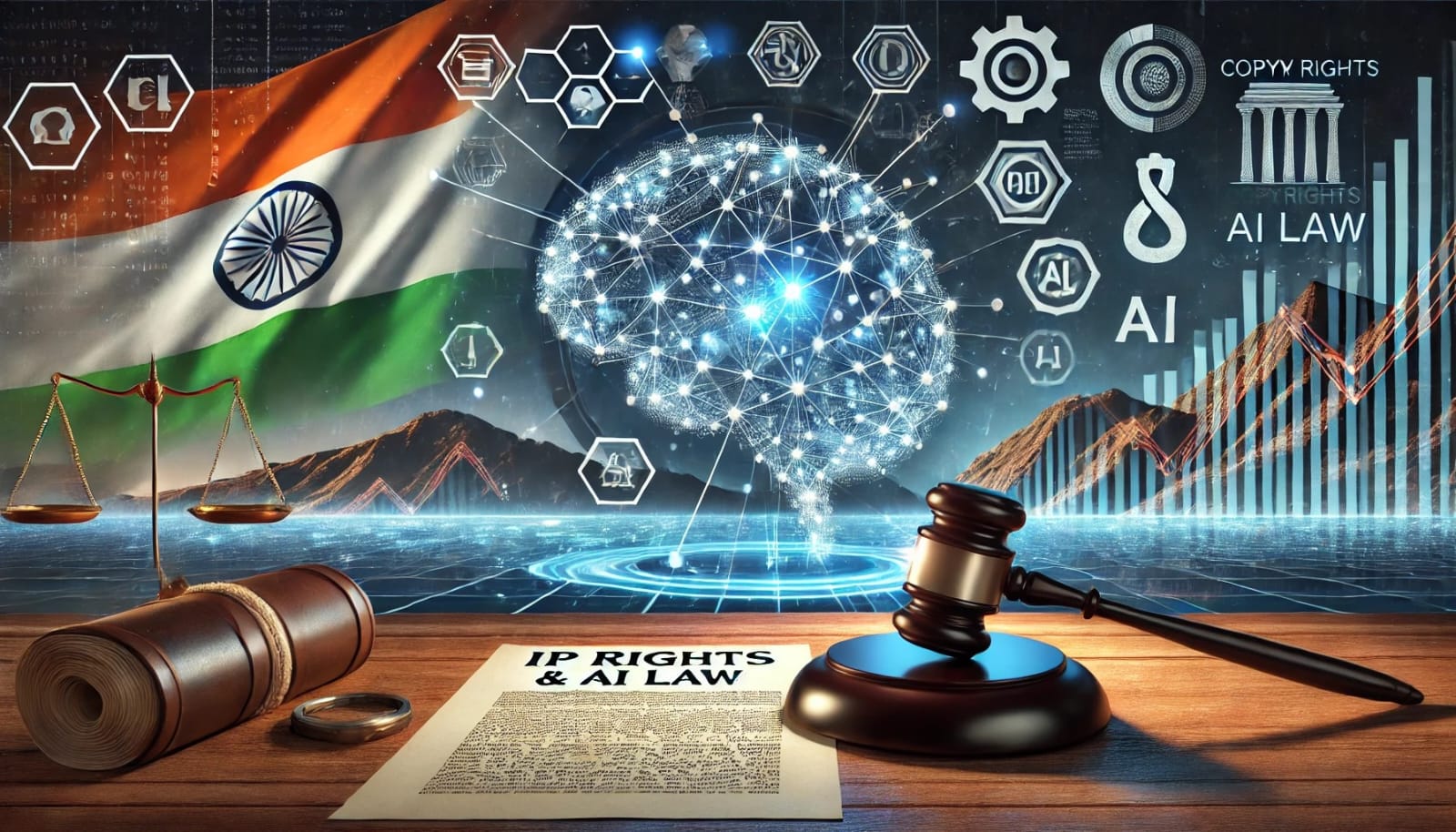



Artificial Intelligence is rapidly transforming India’s economy, governance, and legal systems. However, the country still lacks a dedicated AI law, relying instead on fragmented regulations and guidelines. Experts warn that while innovation is accelerating, India must strengthen legal frameworks to address algorithmic accountability, data protection, and ethical AI deployment.
Artificial Intelligence (AI) is rapidly reshaping India’s digital ecosystem, influencing sectors such as finance, healthcare, governance, and law enforcement. From automated hiring tools to predictive policing systems, algorithms are increasingly making decisions that affect millions of citizens. This technological shift has triggered a critical debate: Is India’s legal system ready for the algorithmic age?
Despite India’s growing leadership in AI innovation, the country still does not have a comprehensive law dedicated to regulating artificial intelligence. Instead, governance is currently guided by a combination of policies, guidelines, and existing legislation such as the Information Technology Act, the Digital Personal Data Protection (DPDP) Act 2023, and sector-specific regulatory rules. While these frameworks provide partial oversight, experts argue they are insufficient to fully address the risks associated with autonomous and algorithmic decision-making.
The Indian government has recently taken steps to develop a more structured approach. New AI governance guidelines emphasize responsible innovation, fairness, transparency, and accountability while establishing institutions like an AI Governance Group and an AI Safety Institute. These initiatives aim to create a techno-legal framework that balances technological progress with public safety and ethical standards.
At the same time, legal and judicial concerns are emerging. The Supreme Court of India recently warned that relying on AI-generated or fabricated judgments in legal proceedings could amount to judicial misconduct, highlighting the risks of overreliance on algorithmic tools in sensitive legal contexts.
Key Highlights
-
India currently lacks a standalone Artificial Intelligence law despite rapid AI adoption across industries and governance systems
-
Existing laws such as the IT Act, Digital Personal Data Protection Act 2023, and intermediary rules indirectly regulate AI-related activities
-
Government AI governance guidelines promote a principle-based approach focusing on fairness, transparency, accountability, and innovation
-
Proposals like the Artificial Intelligence Ethics and Accountability Bill aim to establish a dedicated legal framework for AI regulation
-
Judicial authorities have raised concerns about misuse of AI in legal processes, emphasizing the need for human oversight
-
Experts stress that algorithmic accountability, bias mitigation, and data protection will be critical for responsible AI deployment in India
As India continues its digital transformation, the challenge for policymakers is to create laws that encourage innovation while protecting citizens’ rights. The coming years may determine whether India can successfully build a legal framework capable of governing the powerful technologies shaping the algorithmic age.
Sources: Kashmir Reader, Times of India, PIB India, Lexology, Drishti IAS, Nemko Digital.