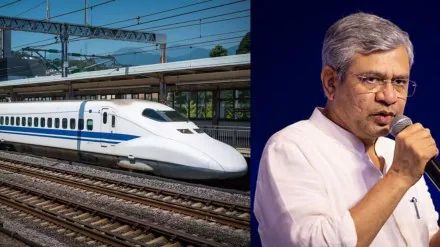

Railway Minister Ashwini Vaishnaw announced that India’s upcoming bullet train service will operate at intervals of 15–20 minutes during peak hours, ensuring high-frequency travel between Mumbai and Ahmedabad. Designed for speed, efficiency, and passenger convenience, the project aims to transform India’s rail infrastructure and redefine long-distance commuting standards.
News Body
India’s ambitious Mumbai–Ahmedabad bullet train project is gearing up to deliver world-class travel experiences. Railway Minister Ashwini Vaishnaw confirmed that trains will run at 15–20 minute intervals during peak hours, offering seamless connectivity for thousands of daily commuters.
The project, built with Japanese collaboration, is expected to cut travel time between Mumbai and Ahmedabad from six hours to just over two hours. With advanced technology, modern stations, and high-capacity scheduling, the bullet train promises to revolutionize India’s passenger rail system.
Officials highlight that the service will prioritize frequency, punctuality, and affordability, making it a viable alternative to air travel. The initiative is part of India’s broader push toward modernizing transport infrastructure and enhancing economic integration across regions.
Notable Updates and Major Takeaways
Peak-hour frequency: Trains every 15–20 minutes.
Route: Mumbai–Ahmedabad corridor.
Travel time: Reduced from six hours to just over two.
Technology: Built with Japanese collaboration, featuring advanced safety systems.
Impact: Boosts connectivity, reduces congestion, and supports economic growth.
Vision: Positions India among nations with high-speed rail networks.
Conclusion
The bullet train project represents a milestone in India’s transport modernization, promising faster, more reliable, and more frequent travel that could reshape commuting patterns and regional economies.