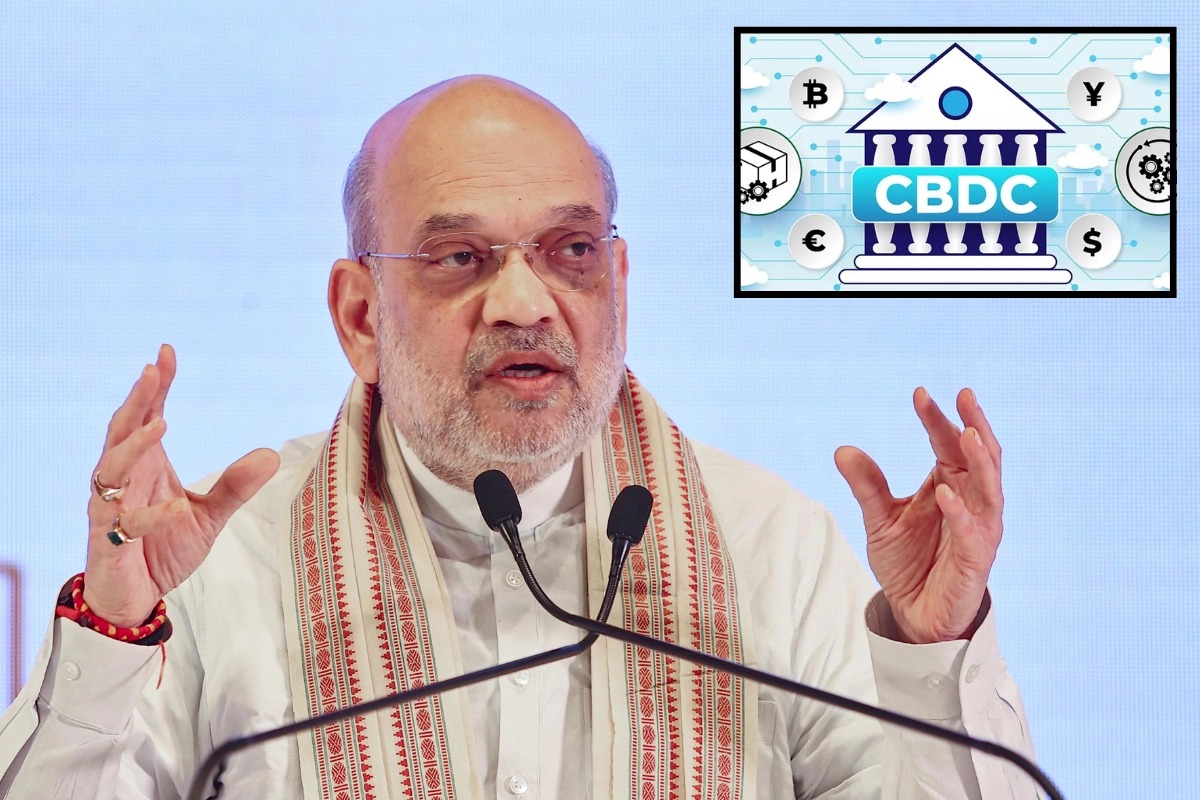





Union Home Minister Amit Shah inaugurated India’s first Central Bank Digital Currency (CBDC)-based Public Distribution System (PDS) in Gandhinagar, Gujarat, on 15 February 2026. The pilot covers 26,333 families across four districts, enabling subsidy transfers via RBI-authorized digital tokens. Innovations include QR-based authentication and Annapurti Grain ATMs for faster ration delivery.
Key Highlights
Historic Launch: India’s first CBDC-based PDS was inaugurated at Mahatma Mandir, Gandhinagar, marking a milestone in digitized welfare delivery.
Pilot Coverage: The initiative currently covers 26,333 families in Ahmedabad (Sabarmati zone), Surat, Anand, and Valsad. Beneficiaries receive subsidies directly into digital wallets authorized by the Reserve Bank of India.
Digital Authentication:
-
Smartphone users authenticate transactions via QR codes.
-
Feature phone users rely on Aadhaar-based OTPs, ensuring inclusivity across demographics.
Innovative Infrastructure: The launch featured the Annapurti Grain ATM, capable of dispensing 25 kg of grain in 35 seconds, alongside standardized one-kilogram packs for pulses to streamline distribution.
Technology Backbone: Developed in collaboration with Punjab National Bank, the system issues digital tokens specifying commodity, quantity, and price, ensuring transparency and reducing leakages.
Additional Initiatives: The event also saw the signing of MoUs for a Consumer Responsibility Index and the launch of a malnutrition alleviation campaign in Narmada district, expanding the scope of welfare reforms.
Leadership Presence: The inauguration was attended by Gujarat CM Bhupendra Patel, Union Minister Pralhad Joshi, and Deputy CM Harsh Sanghavi, underscoring the political and administrative significance of the rollout.
Why This Matters
-
Digital Governance Leap: The CBDC-based PDS represents a paradigm shift from cash and card-based subsidies to blockchain-backed digital tokens.
-
Transparency & Efficiency: By eliminating middlemen and ensuring direct transfers, the system reduces leakages and enhances accountability.
-
Scalability Potential: If successful, the pilot could expand nationwide, transforming India’s food security framework.
-
Citizen Empowerment: Faster, more reliable ration delivery strengthens trust in welfare schemes and highlights India’s digital innovation in governance.
Closing Note
The launch of India’s first CBDC-based PDS in Gujarat is more than a technological experiment—it’s a bold step toward digitally empowered welfare delivery. By combining innovation with inclusivity, the initiative sets the stage for a future where subsidies are transparent, efficient, and citizen-centric.
Sources: The Financial Express, Lokmat Times, News18, Indian Express