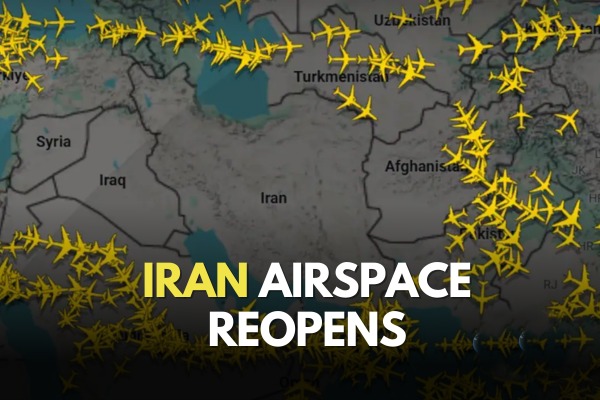








Iran reopened its airspace after a nearly five-hour closure that forced airlines worldwide to reroute or cancel flights. The shutdown, triggered by heightened tensions with the United States, caused widespread diversions across Asia and Europe. Normal operations have now resumed, though airlines remain cautious amid ongoing regional security concerns.
Air travel across Asia and Europe faced major disruption on January 14, 2026, as Iran temporarily closed its airspace amid fears of possible military action. The closure, which lasted nearly five hours, forced carriers including Air India, IndiGo, and Scoot to reroute or cancel flights, leading to delays and passenger advisories.
According to the US Federal Aviation Administration (FAA), Iran restricted its skies to all flights except those with official permission. The move sparked immediate diversions, with global carriers avoiding Iranian routes until the airspace reopened early Thursday.
While operations have resumed, aviation experts caution that airlines may continue to exercise restraint in using Iranian corridors, given the volatile geopolitical backdrop.
Key Highlights
-
Duration: Airspace closed for ~5 hours on Jan 14.
-
Reason: Rising tensions between Iran and the US.
-
Impact: Widespread flight rerouting, delays, and cancellations.
-
Airlines Affected: Air India, IndiGo, Scoot, and several global carriers.
-
Resumption: Airspace reopened early Jan 15, restoring normal traffic.
-
Caution Ahead: Airlines remain wary of future disruptions in the region.
The incident underscores how geopolitical tensions can swiftly ripple across global aviation networks, affecting passengers far beyond the immediate conflict zone.
Sources: The Straits Times, CNBC, Channel NewsAsia, Business Standard