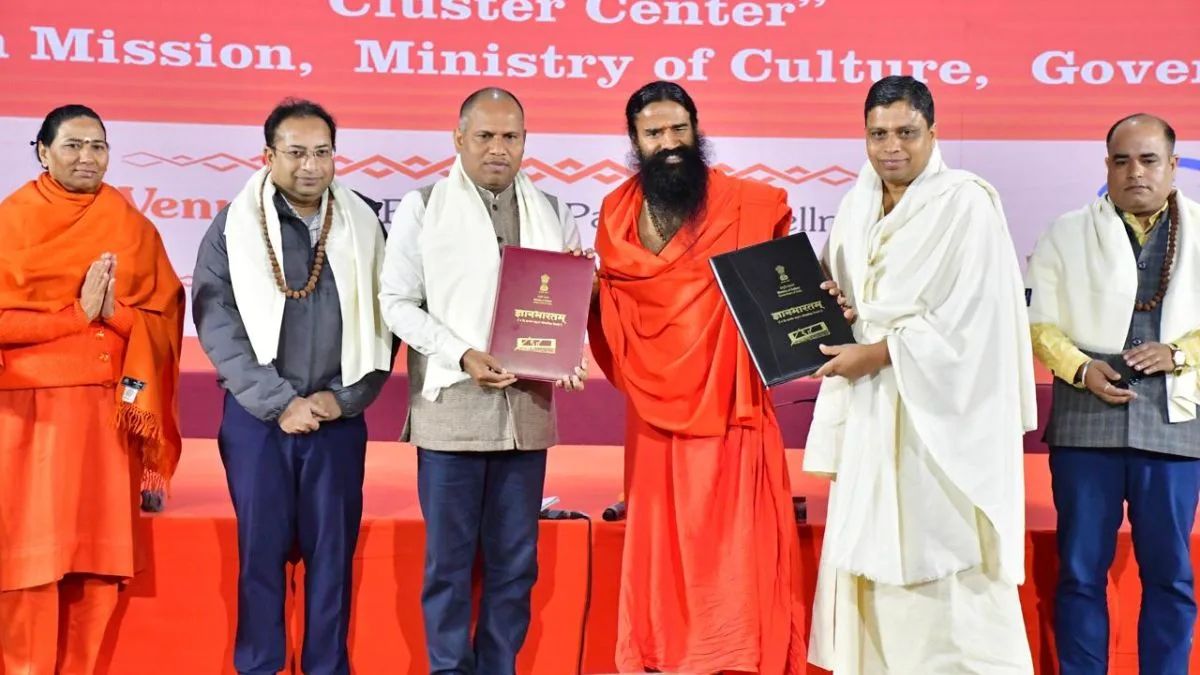





University of Patanjali has been designated a “Cluster Center” under the Ministry of Culture’s Gyan Bharatam Mission, with an MoU signed in Haridwar. The initiative will digitize and disseminate India’s manuscript heritage via a national repository powered by AI, strengthening scholarly access and institutional collaboration across the country.
The University of Patanjali has been formally recognized as a “Cluster Center” by the Gyan Bharatam Mission, Ministry of Culture, at a ceremony in Haridwar. The MoU was signed in the presence of Chancellor Yogaguru Swami Ramdev, Vice-Chancellor Acharya Balkrishna, and mission officials, marking a strategic partnership for manuscript conservation and access.
Gyan Bharatam is the Ministry of Culture’s flagship initiative to survey, document, conserve, digitize, and disseminate India’s manuscript heritage, targeting more than one crore manuscripts and building a National Digital Repository supported by advanced technology and AI. The program has been sanctioned ₹491.66 crore for 2025–2031 and launched via a dedicated digital portal.
The mission’s technology stack spans AI-assisted transcription, OCR, blockchain for provenance, and cloud preservation, with APIs to integrate national and international archives—positioning cluster centers like Patanjali University as hubs for scholarly leadership and implementation.
Major takeaways
Cluster designation: University of Patanjali joins the national network to drive manuscript digitization and access.
Scale and funding: Mission targets 1+ crore manuscripts with ₹491.66 crore sanctioned through 2031.
Tech integration: AI, OCR, blockchain, and cloud ensure smart access and long-term preservation.
Scholarly leadership: Multidisciplinary teams and institutional strengthening guide implementation.
National repository: Centralized digital access for researchers and the public.
Conclusion
By becoming a Cluster Center, University of Patanjali will accelerate preservation and digital access to civilizational knowledge, aligning local scholarly effort with national infrastructure and advanced technologies—an essential step toward democratizing India’s manuscript heritage.
Sources: The Statesman; Press Information BureauPress Information Bureau; Ministry of Culture