A Fresh Approach to Stance Detection
• Researchers from Indian Institute of Technology (IIT) unveiled a new model called SPLAENet (Stance Prediction through Label-fused dual cross-Attentive Emotion-aware neural NETwork), aiming to detect stance in misinformative social media content more accurately by combining emotional cues with dual attention mechanisms.
• Core idea: decisions about whether someone supports, denies, queries, or is neutral about a claim aren’t just about words; emotions between source text and responses often factor in. SPLAENet tries to capture those subtle affective signals and how they align (or clash) between messages.
Key Highlights
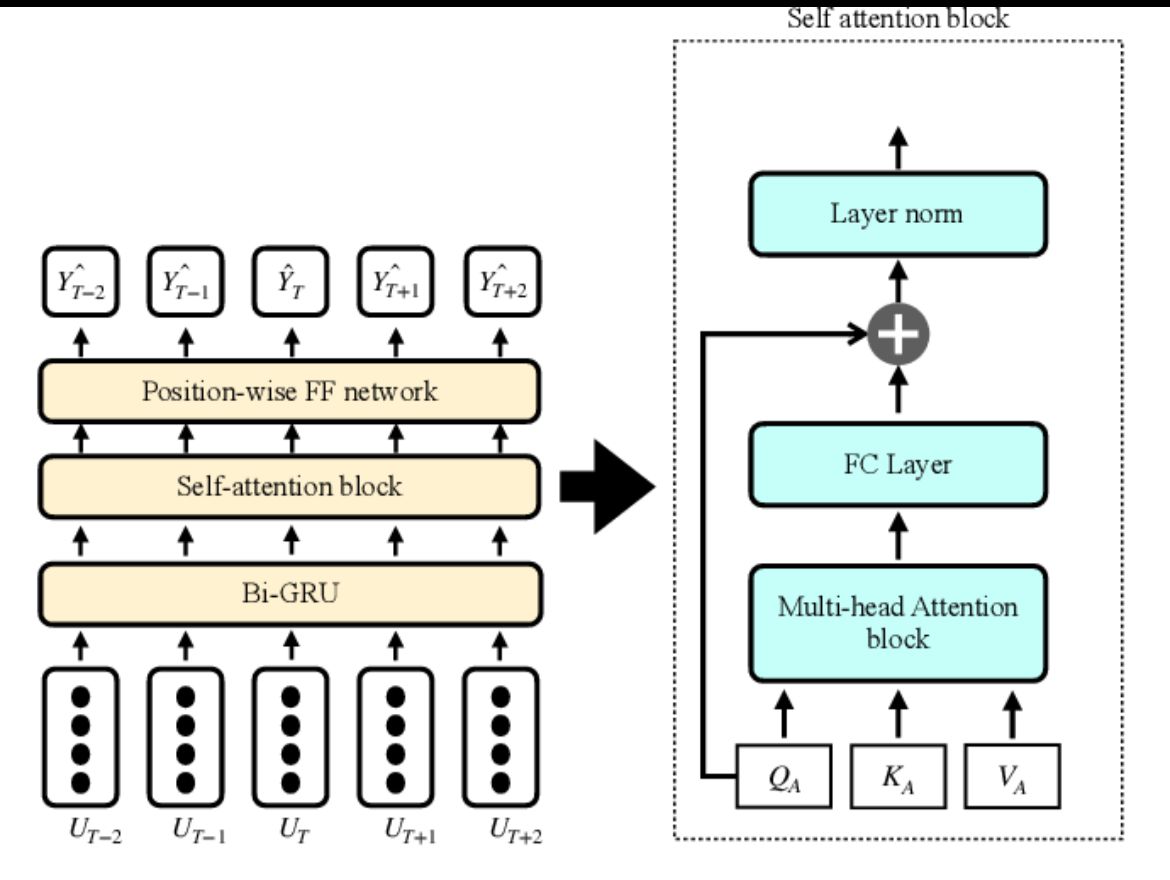
• Model structure: dual cross-attention network plus hierarchical attention to capture both inter-text (between source and reply) and intra-text relationships. Emotions are incorporated to sharpen distinctions between stance classes. Label fusion via distance metric learning aligns features more precisely with stance labels. 
• Performance leap: On benchmark datasets (RumourEval, SemEval, P-stance), SPLAENet delivers substantial gains over existing systems — roughly +8-10% accuracy and +10-17% improvement in F1-score depending on dataset. 
• Data span: method tested across multiple public datasets with varying styles of misinformation content, showing robustness across formats and topics.
Technical Details You Should Know
• Dual cross-attention: text from original content and replies are processed in both directions so the model knows which parts of the reply refer to which parts of the original and vice versa. This context mapping helps spot subtle cues. 
• Hierarchical attention: allows layering of attention focus from sentence level up to the full response discourse, so that important sub-sentences or phrases get more weight.
• Label fusion: beyond class-ifying based purely on feature extraction, SPLAENet uses a distance metric learning to fuse features with labels, improving how tightly the model’s predictions map to true stances.
Implications & Why It Matters
• Misinformation battle: better stance detection helps platforms, fact-checkers, and researchers separate supportive vs. oppositional vs. neutral responses quickly, improving understanding of how rumors spread, who amplifies them, and how they’re challenged.
• Emotion tracking: integrating emotions isn’t just decorative — it helps resolve ambiguous cases where sentiment or tone shifts stance. This could reduce false positives / negatives where semantic cues alone fail.
• Broader NLP gains: SPLAENet’s approach may be extended to moderating harmful content, detecting hate speech, or understanding polarization dynamics — any setting with complex interaction between what’s said and how it’s said.
Challenges & Open Questions
• Emotion accuracy: detecting emotions in text (especially short replies) is noisy; sarcasm, mixed tones or neutral wording with emotional undercurrent can confuse models. How SPLAENet handles these remains to be seen in real-world settings.
• Dataset bias: datasets used (RumourEval, SemEval, P-stance) may have specific language styles or topic bias; generalisation to multilingual or low-resource contexts might be limited.
• Scalability and speed: dual attention and hierarchical layers increase model complexity — deployment at scale (millions of posts daily) requires optimisation for inference speed and resource use.
What Comes Next
• Real-world testing: as with many new models, performance in lab / dataset settings doesn’t always translate directly into noisy, varied, adversarial real-world text on social media platforms. Pilot studies or partnership with platforms could test SPLAENet’s performance in the wild.
• Multilingual & multimodal extension: exploring beyond English text; integrating images or video replies could add crucial context for stance and emotion especially where visual memes or videos carry meaning.
• Open-sourcing & interpretability: transparency about how SPLAENet reaches its conclusions (which phrases and emotional features) would help with trust, auditing bias, and improving adoption among fact-checkers.
Final Thought
SPLAENet represents a promising leap forward in detecting stance in misinformation-rich environments, marrying emotion awareness and attention mechanics in a sophisticated blend. While there are practical hurdles ahead in deployment, scaling and generalising, the shift from “just what was said” to “how it makes you feel” could mark a turning point in how we fight online misinformation.
Sources: arXiv.org, ScienceDirect, Engineering Applications of Artificial Intelligence