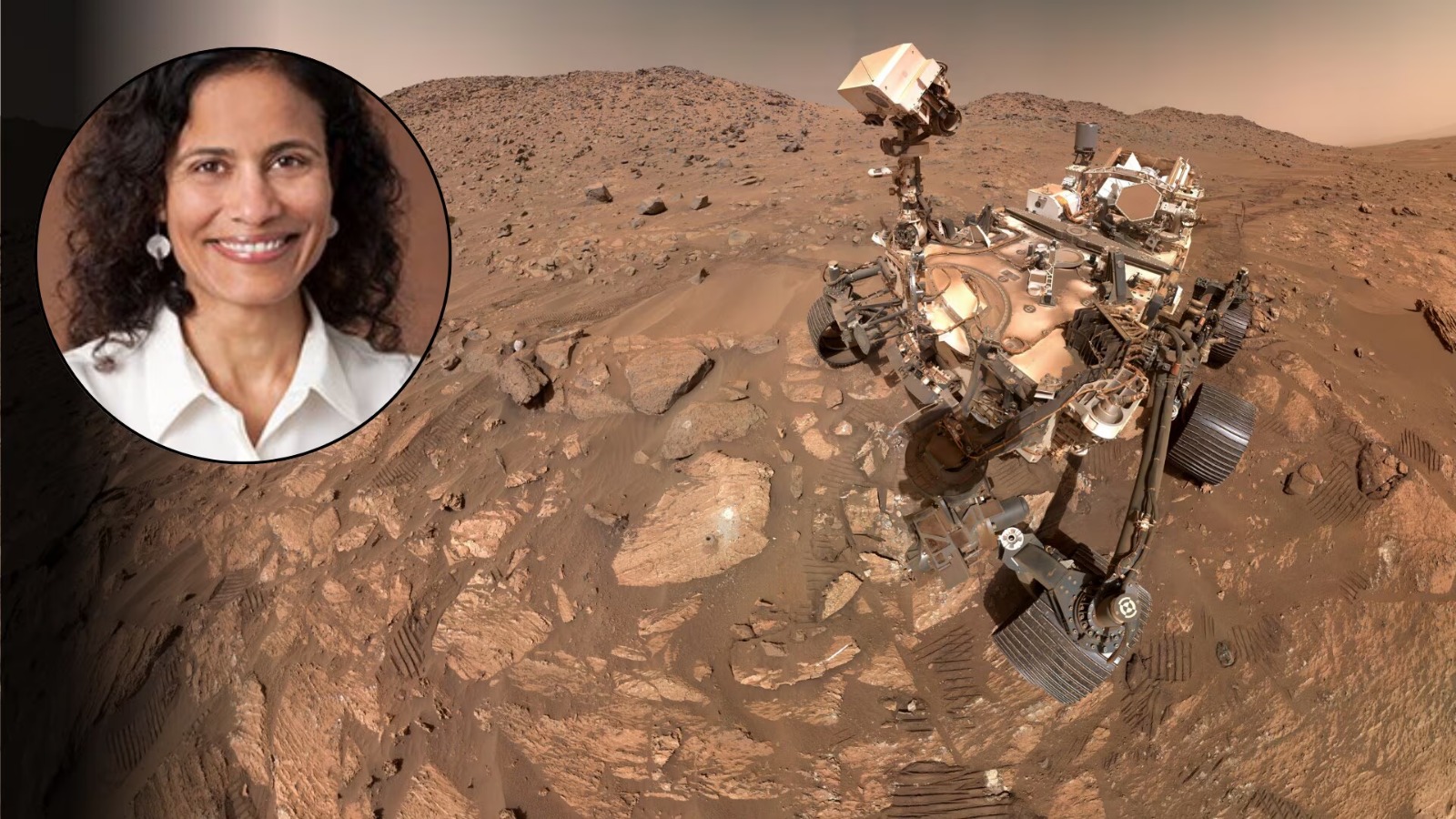

NASA’s Perseverance rover achieved a historic milestone in December 2025 by completing the first-ever AI-planned drives on Mars. At the forefront of this achievement is Indian-origin scientist Vandi Verma, a senior engineer at NASA’s Jet Propulsion Laboratory, whose pioneering work in robotics is reshaping the future of autonomous space exploration.
NASA has scripted history with the Perseverance rover’s first autonomous drives on Mars, guided entirely by artificial intelligence. This breakthrough reduces reliance on Earth-based commands and marks a new era in planetary exploration. Leading this innovation is Vandi Verma, an Indian-origin robotics engineer whose expertise has been pivotal in advancing rover autonomy.
Key Highlights:
-
Historic Achievement: On December 8 and 10, 2025, Perseverance completed AI-planned drives on Mars.
-
Role of Vandi Verma: Principal Engineer and Deputy Section Manager at NASA’s Jet Propulsion Laboratory; Chief Engineer of Robotic Operations for Mars 2020.
-
AI Navigation: Advanced systems analyzed terrain, identified hazards, and generated safe driving routes without human intervention.
-
Global Impact: Demonstrates how future missions to the Moon and Mars can operate independently, reducing delays caused by Earth-Mars communication gaps.
-
Background: Born in India, Verma has been instrumental in developing robotic systems, including the PLEXIL execution language used in space missions.
Analysis:
This milestone highlights how AI is transforming space exploration. By enabling rovers to “think” and act independently, scientists like Vandi Verma are paving the way for deeper, faster, and safer interplanetary missions.
Sources: NASA, Reuters, The Hindu BusinessLine