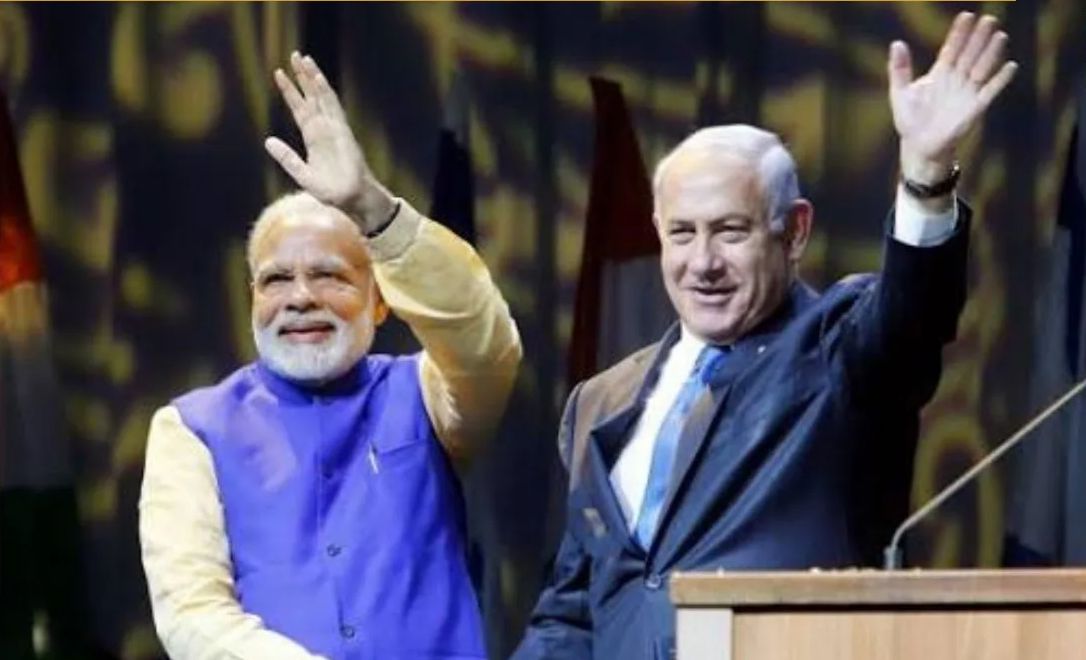






Israeli Prime Minister Benjamin Netanyahu has unveiled a strategic vision called the “hexagon of alliances”, placing India at its core. The bloc aims to unite India, Arab states, African partners, Greece, Cyprus, and Asian nations for economic, diplomatic, and security cooperation, countering Iran’s influence while expanding technology and defense ties.
Ahead of Prime Minister Narendra Modi’s visit to Israel (Feb 25–26, 2026), Netanyahu announced the formation of a hexagon alliance designed to reshape regional geopolitics. He described Modi as a “personal friend” and India as a “global power,” emphasizing India’s pivotal role in linking Asia with the Middle East.
The alliance envisions coordinated efforts in trade, defense, artificial intelligence, and energy security, while countering Iran’s regional influence. By including diverse partners—Arab nations, African states, Greece, Cyprus, and Asian countries—Netanyahu aims to build a multilateral framework that strengthens Israel’s diplomatic reach and integrates India into the heart of Middle Eastern strategy.
Major Takeaways
-
Netanyahu announced a “hexagon of alliances” with India at its center
-
Bloc includes Arab states, African partners, Greece, Cyprus, and Asian nations
-
Strategic goals: economic growth, defense cooperation, AI, and energy security
-
Designed to counter Iran’s regional influence and radical extremism
-
Modi’s upcoming Israel visit expected to focus on tech, defense, and trade
-
Netanyahu emphasized India’s role as a global power and personal friendship with Modi
Conclusion
Netanyahu’s hexagon of alliances reflects Israel’s ambition to build a broad regional coalition, with India as the linchpin. By combining economic, technological, and security cooperation, the initiative underscores India’s growing global stature and deepening ties with Israel, marking a significant shift in Middle Eastern geopolitics.
Sources: Moneycontrol, The Hindu BusinessLine, The Economic Times