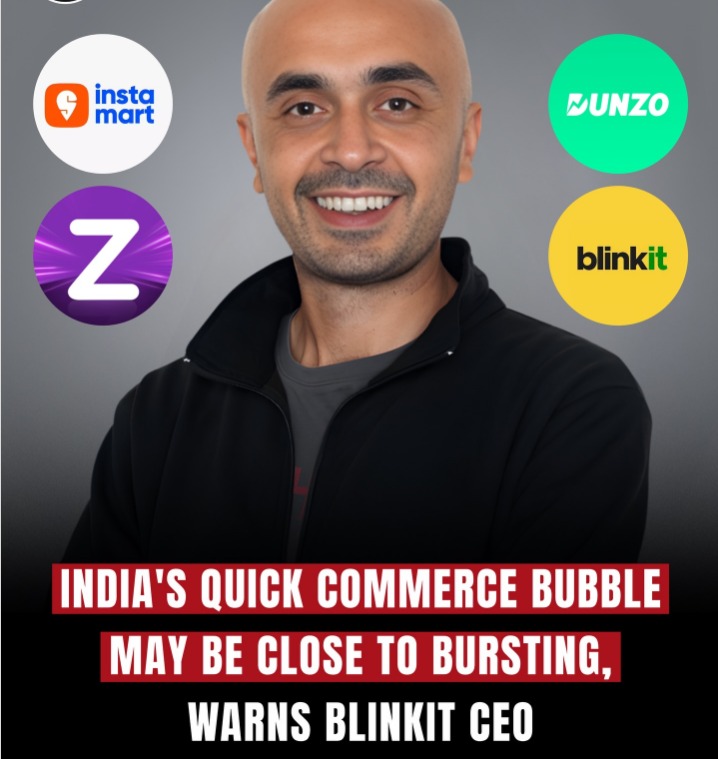




Blinkit CEO Albinder Dhindsa has cautioned that India’s quick commerce sector may be nearing a bubble burst. With rivals burning cash and relying heavily on fundraising, Dhindsa warned that the model is hitting its limits, even as Blinkit continues to expand amid investor caution and rising competition.
In an interview with Bloomberg, Dhindsa said India’s quick commerce industry—led by Blinkit, Swiggy Instamart, and Zepto—faces a major shakeout as relentless fundraising and steep losses become unsustainable. Global investors including SoftBank, Temasek, and Middle Eastern sovereign funds have poured billions into the sector, making India one of the most closely watched rapid‑delivery markets worldwide. While dense urban centers, low labor costs, and digital payments have given India an edge, Dhindsa noted that profitability depends on logistics efficiency and continued access to capital. Similar ventures in the U.S. and Europe have already unraveled, raising concerns about India’s trajectory.
Notable updates
• Blinkit CEO warns quick commerce bubble may burst as cash burn and losses mount
• Investor fatigue evident as reliance on fundraising hits limits
• Rivals Swiggy Instamart and Zepto under pressure amid rising costs
• India’s edge lies in dense cities, low labor costs, and digital payments
• Global context: rapid‑delivery models collapsed in U.S. and Europe
Major takeaway
Dhindsa’s remarks highlight the fragile economics of quick commerce—a sector built on speed, discounts, and capital inflows. As investor caution grows, India’s rapid‑delivery startups must pivot toward efficiency and sustainable growth to avoid repeating global failures.
Sources: Bloomberg, Livemint, Business Standard, Hindu BusinessLine