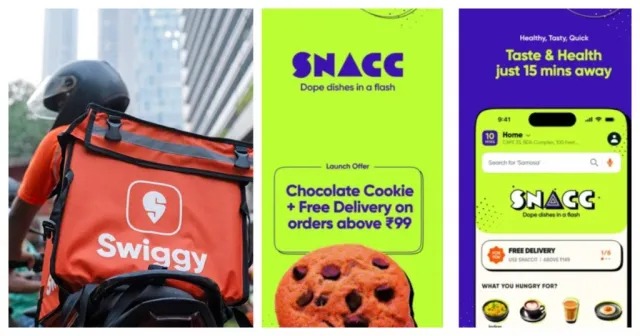




Swiggy has shut down its ultra-fast food delivery app Snacc, launched in January 2025, citing unsustainable unit economics and profit pressures. Despite early signs of product-market fit, the company concluded scaling was unviable. The move underscores the challenges of 10–15 minute food delivery in India’s competitive quick commerce market.
Swiggy has officially discontinued Snacc, its 10–15 minute food delivery app, just a year after launch. The Bengaluru-based company announced the decision on February 19, 2026, citing profit pressures and weak unit economics. Snacc, which offered quick meals, beverages, and impulse-driven assortments within minutes, struggled to achieve sustainable margins despite demand.
Key Highlights
-
Swiggy shuts down Snacc after one year of operations due to profit pressures
-
App offered meals, coffee, bakery products, and snacks delivered in 10–15 minutes
-
Dark kitchens used for Snacc will be repurposed for Instamart pods
-
Corporate team expected to be absorbed into other Swiggy business verticals
-
Decision reflects broader industry challenges in scaling ultra-fast food delivery models
Strategic Impact
The shutdown highlights the brutal economics of ultra-fast food delivery, where high operational costs, discounts, and logistics complexities outweigh potential revenue. While demand existed, sustainable profitability remained elusive. Swiggy’s move signals a strategic reset, with focus shifting toward scalable platforms like Instamart and food delivery services that offer long-term value.
Industry analysts note that Snacc’s closure raises questions about the viability of ultra-fast food delivery in India’s discount-driven quick commerce market. The decision reflects a broader trend where companies are prioritizing profitability and operational efficiency over aggressive expansion in experimental formats.
By repurposing Snacc’s infrastructure for Instamart, Swiggy aims to strengthen its quick commerce business while consolidating resources. The move underscores the company’s commitment to sustainable growth and its recalibration of strategies in response to evolving market realities.
Sources: YourStory, Economic Times, TechStory, Inc42, Indian Food Times