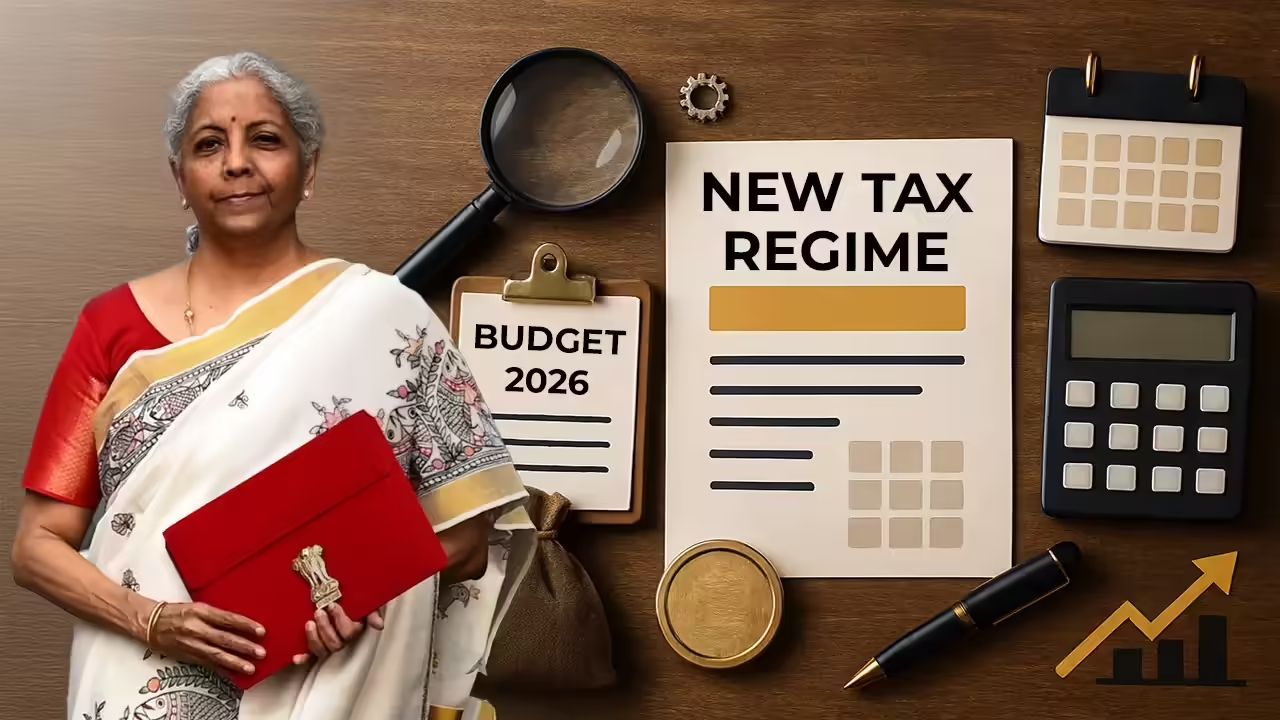






Ahead of the Union Budget 2026, experts are urging Finance Minister Nirmala Sitharaman to refine the New Tax Regime. Suggestions include introducing standard deductions, higher exemptions, and simplified slabs to make it more attractive. Analysts believe reforms could ease compliance, boost taxpayer adoption, and balance fiscal needs with affordability.
The New Tax Regime (NTR), introduced as a simplified alternative to India’s traditional tax system, has yet to gain widespread acceptance. As Budget 2026 approaches, tax experts and industry leaders are calling for structural improvements to make the regime more appealing. According to Economic Times, Mint, and Business Standard, the government may consider tweaks that align with both taxpayer expectations and fiscal prudence.
While the NTR offers lower rates with fewer exemptions, many taxpayers still prefer the old regime due to deductions like Section 80C, HRA, and medical insurance benefits. Experts argue that adding standard deductions, raising exemption thresholds, and rationalizing slabs could bridge this gap.
Notable Updates and Major Takeaways
Standard deduction: Calls to introduce a flat deduction for salaried taxpayers.
Exemption tweaks: Higher limits for medical insurance and savings schemes.
Simplified slabs: Rationalization to reduce confusion and improve adoption.
Taxpayer sentiment: Many still prefer the old regime due to richer deductions.
Policy balance: Government must weigh fiscal discipline against taxpayer relief.
Expert view: Reforms could make NTR more inclusive and widely accepted.
Conclusion
Budget 2026 may be a turning point for India’s tax landscape. By fine-tuning the New Tax Regime, the government has an opportunity to simplify compliance, encourage adoption, and deliver taxpayer-friendly reforms—ensuring fiscal stability while easing the burden on households.
Sources: Economic Times, Mint, Business Standard