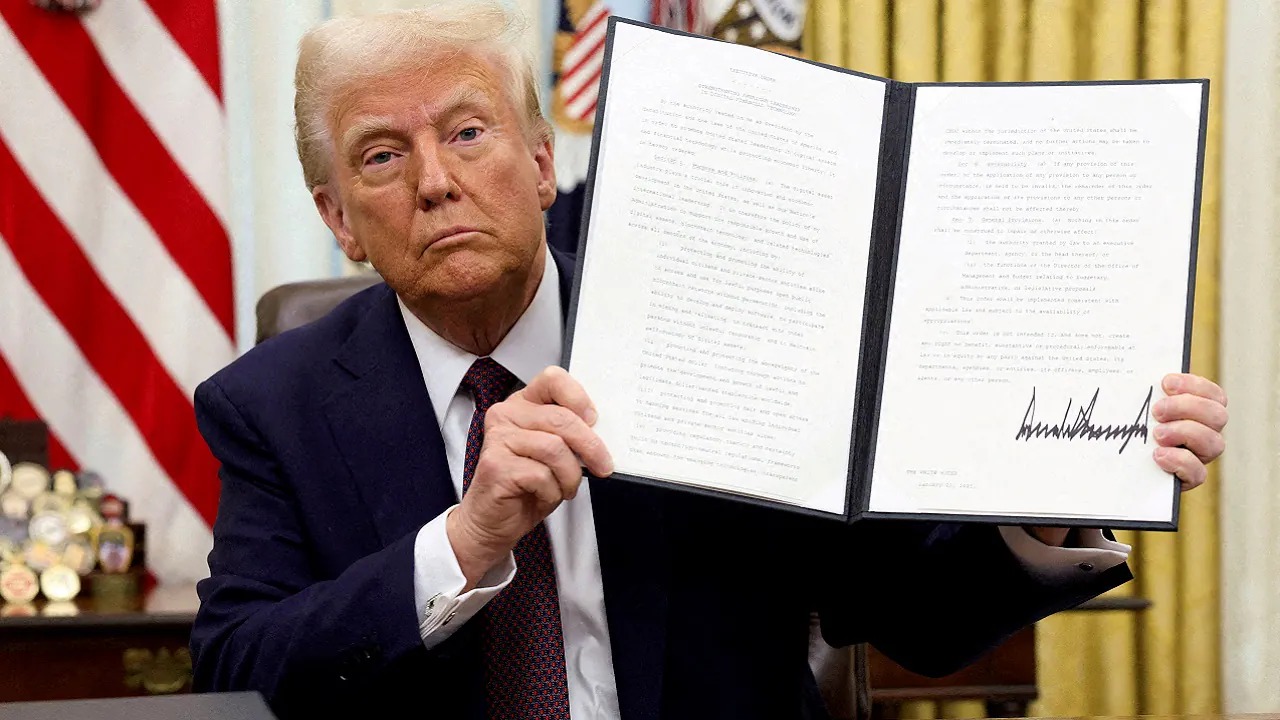


President Donald Trump’s new prescription drug policy, anchored in the “Most Favoured Nation” framework and the TrumpRx initiative, aims to slash U.S. drug prices by benchmarking them against international rates. This move could reshape India-U.S. pharmaceutical trade, pressuring Indian exporters while redefining global pricing structures and market access.
President Trump has unveiled sweeping reforms to tackle America’s high prescription drug costs, a politically charged issue with global implications. His “Most Favoured Nation” policy links U.S. drug prices to those in other countries, while the TrumpRx program promises steep discounts through direct deals with pharmaceutical companies. Together, these measures are expected to shake up India’s pharmaceutical trade, given its role as a leading supplier of affordable generics to the U.S. market.
Key highlights from the announcement include
-
Trump’s policy seeks to cut drug prices by up to 400–600 percent compared to current levels.
-
The “Most Favoured Nation” framework benchmarks U.S. drug prices against those in other wealthy nations.
-
TrumpRx, a government-backed website launching in January 2026, will bypass traditional middlemen to offer direct discounts.
-
India, a major exporter of generics and bulk drugs to the U.S., faces pressure to adjust pricing strategies.
-
Indian pharmaceutical firms could see reduced margins but potentially higher volumes if demand rises under lower U.S. prices.
-
The policy may spark renegotiations of trade terms, impacting India’s $25 billion pharmaceutical export industry.
-
Analysts warn of ripple effects across global supply chains, with India’s competitive advantage in low-cost production under scrutiny.
Industry experts note that while the policy could benefit American consumers, it raises concerns for Indian exporters who rely heavily on the U.S. market. The move may force Indian companies to innovate, diversify markets, and strengthen domestic demand to offset potential losses.
The development underscores the interconnectedness of healthcare policy and international trade. As India evaluates the impact, policymakers and industry leaders will need to balance competitiveness with sustainability, ensuring that the country’s pharmaceutical sector continues to thrive amid shifting global dynamics.
Sources: Times Now, Times of India, NDTV, Bilkul Online