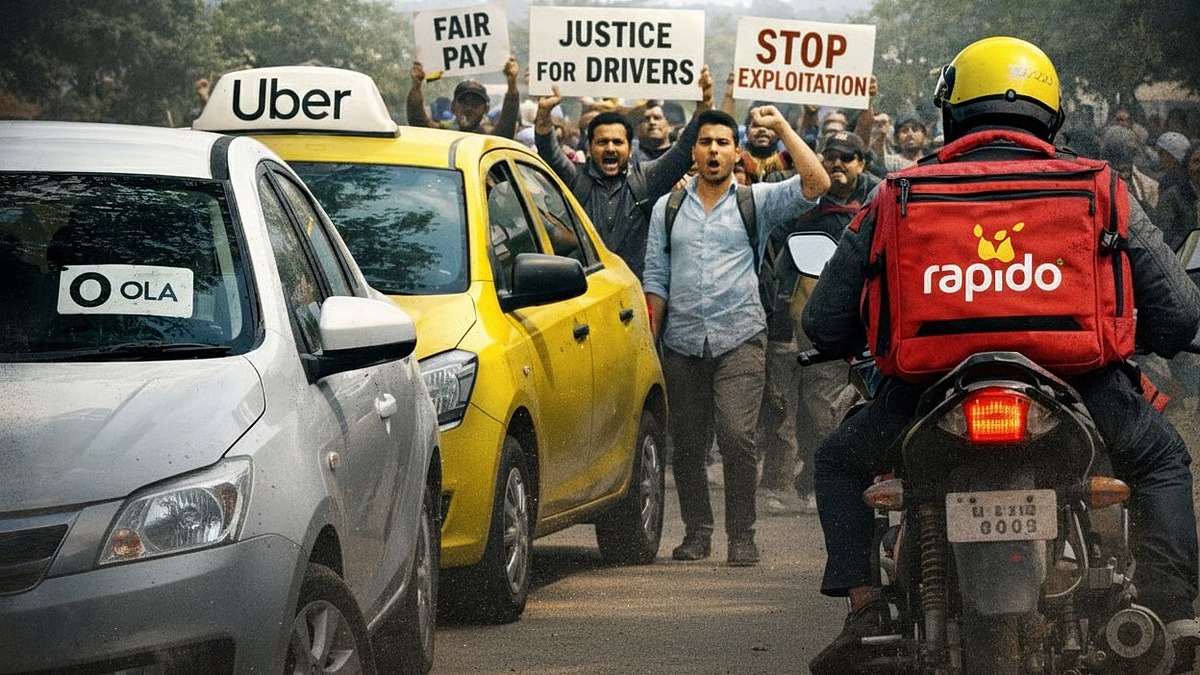
Drivers associated with Uber, Ola, and Rapido staged a nationwide strike on February 7, 2026, protesting against illegal bike taxi services and the financial burden of mandatory panic button installations. Unions highlighted unfair fare policies, rising compliance costs, and income insecurity, calling the protest an “All India Breakdown” affecting major cities.
App-based taxi and autorickshaw drivers across India went offline for several hours on February 7, 2026, in a coordinated nationwide protest. The strike, led by unions including the Maharashtra Kamgar Sabha and the Telangana Gig and Platform Workers Union, was aimed at pressing demands for fairer policies and stricter regulation.
Drivers raised concerns over the unregulated growth of bike taxi services, which they claim are operating illegally and eating into their earnings. Another major grievance was the mandatory installation of panic buttons, costing operators nearly ₹12,000 per vehicle, adding to financial strain.
The protest disrupted services in major cities such as Delhi, Mumbai, Bengaluru, and Hyderabad, where reliance on app-based transport is high. Unions warned of wider agitation if their demands are not addressed.
Key Highlights
-
Nationwide Strike: February 7, 2026, across major Indian cities
-
Main Demands: Action against illegal bike taxis, fair fare policies, reduced compliance costs
-
Panic Button Issue: Mandatory installation costs ~₹12,000 per vehicle
-
Impact: Services disrupted in Delhi, Mumbai, Bengaluru, Hyderabad
-
Union Warning: Threat of intensified protests if demands remain unmet
The strike underscores the growing tension between ride-hailing platforms, regulatory authorities, and driver unions, highlighting the urgent need for balanced policies that ensure safety, fairness, and sustainability in India’s urban mobility sector.
Sources: Rediff, Mint, PTI, The Economic Times