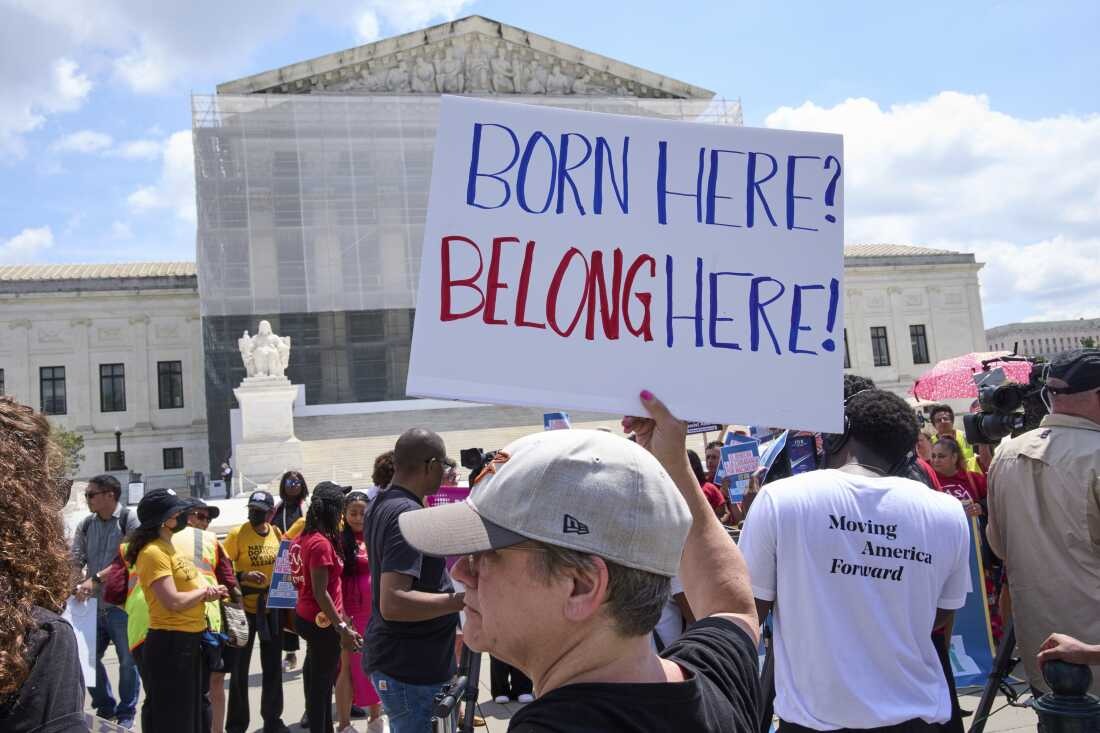





The US Supreme Court has agreed to hear a case challenging President Donald Trump’s executive order restricting birthright citizenship. The order seeks to deny automatic citizenship to children born in the US to undocumented immigrants and certain temporary residents. The ruling, expected by mid-2026, could reshape immigration law.
The United States Supreme Court has taken up one of the most consequential cases in recent history, agreeing to review the legality of President Donald Trump’s executive order that restricts birthright citizenship. The order, issued on January 20, 2025, aims to deny automatic citizenship to children born in the US if their parents are undocumented immigrants or temporary foreign residents. The decision has sparked intense debate over the interpretation of the 14th Amendment, which guarantees citizenship to all persons born or naturalized in the country.
Key highlights from the announcement include
-
The Supreme Court will hear arguments on Trump’s executive order restricting birthright citizenship.
-
The order denies automatic citizenship to children of undocumented immigrants and temporary visa holders.
-
Lower courts blocked enforcement, ruling the directive unconstitutional under the 14th Amendment.
-
The Justice Department has appealed, seeking to uphold Trump’s reinterpretation of the citizenship clause.
-
A ruling is expected by June 2026, with nationwide implications for families and immigration policy.
-
The case, Trump v. Washington, has drawn widespread attention from legal scholars, civil rights groups, and immigrant communities.
-
Protests and rallies have already taken place outside the Supreme Court, with advocates defending birthright citizenship as a constitutional guarantee.
The controversy centers on whether the phrase “subject to the jurisdiction thereof” in the 14th Amendment includes children of undocumented immigrants and temporary residents. Legal experts argue that overturning birthright citizenship would fundamentally alter America’s immigration framework and could leave thousands of children stateless.
This case is poised to become a defining moment in US constitutional law, testing the balance between executive authority and constitutional rights. The outcome will not only determine the future of birthright citizenship but also set a precedent for how immigration policies are interpreted in the modern era.
Sources: Livemint, Times of India, The Conversation, CNBC, Deseret News