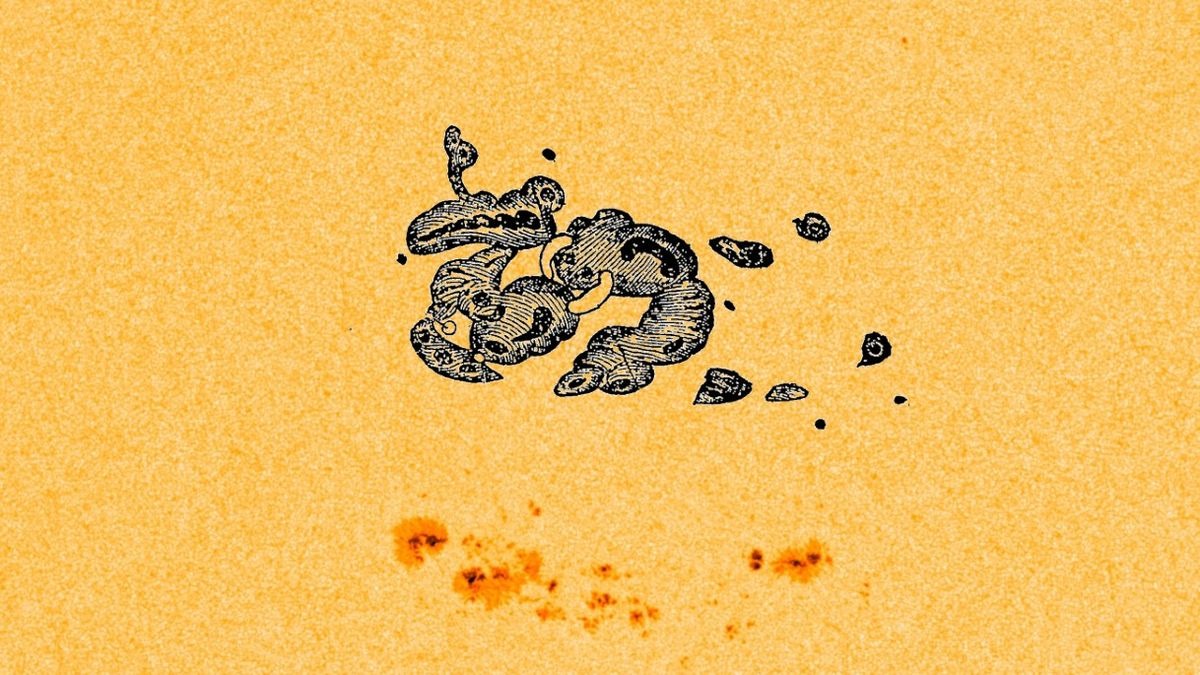




A massive sunspot, comparable in size to the one that triggered the historic Carrington Event of 1859, is currently positioned directly facing Earth. Scientists warn of potential geomagnetic storms if powerful solar flares erupt, which could disrupt satellites, power grids, and communications worldwide. Monitoring is underway by space agencies.
Astronomers and space weather experts have reported the emergence of a giant sunspot on the solar surface, now aligned directly toward Earth. The sunspot’s scale and magnetic complexity have drawn comparisons to the Carrington Event, the largest recorded geomagnetic storm in history. While no immediate catastrophic impact has been confirmed, the situation is being closely monitored by NASA, NOAA, and the European Space Agency.
Key highlights from the announcement include
-
The sunspot rivals the size of the Carrington Event sunspot observed in 1859.
-
It is currently facing Earth, raising the risk of direct solar flare and coronal mass ejection (CME impacts).
-
Space agencies are monitoring for X-class solar flares, which could trigger severe geomagnetic storms.
-
Potential disruptions include satellite operations, GPS navigation, aviation communications, and global power grids.
-
Experts emphasize that modern infrastructure is more vulnerable to solar storms compared to the 19th century.
-
Precautionary advisories have been issued for airlines, telecom operators, and energy companies.
-
Scientists highlight the importance of space weather forecasting to mitigate risks.
The Carrington Event of 1859 caused widespread telegraph failures and auroras visible across the globe. A similar-scale event today could have far-reaching consequences, given humanity’s dependence on digital infrastructure. While the current sunspot has not yet unleashed a major CME, its size and magnetic activity warrant heightened vigilance.
This development underscores the growing importance of space weather monitoring in safeguarding modern society. Agencies are working to provide timely alerts to industries and governments, ensuring preparedness against potential disruptions. For the public, experts advise staying informed but not alarmed, as most solar activity results in minor disturbances rather than catastrophic events.
Sources: Space.com, NASA Solar Dynamics Observatory, NOAA Space Weather Prediction Center, The Guardian