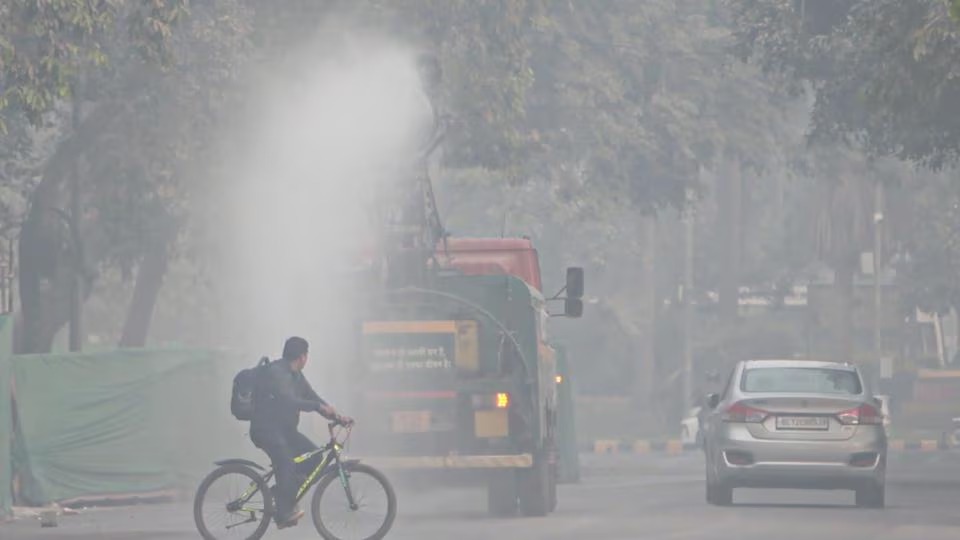
Delhi Chief Minister Rekha Gupta inaugurated six new Continuous Ambient Air Quality Monitoring Stations (CAAQMS) and flagged off 100 ‘Vayu Rakshak’ vehicles to strengthen year-round pollution control. With 46 monitoring stations now active, Delhi boasts India’s largest air quality network, aiming for cleaner air through data-driven enforcement and proactive action.
In a renewed push against air pollution, Delhi has added six new weather and air quality monitoring stations and deployed 100 Vayu Rakshak vehicles to intensify enforcement. Chief Minister Rekha Gupta emphasized that pollution control requires continuous, year-round effort, not just seasonal measures.
The new CAAQMS stations expand Delhi’s monitoring capacity to 46 locations, making it the largest air quality monitoring network in any Indian city. These stations will provide real-time data to identify hotspots and enable faster interventions.
Key Highlights
-
New Monitoring Stations: Six CAAQMS inaugurated across Delhi, including JNU, IGNOU, NSUT Dwarka, Akshardham, Delhi Cantt, and Talkatora Garden.
-
Expanded Network: Delhi now has 46 stations, operated by DPCC, CPCB, IMD, and IITM.
-
Vayu Rakshak Vehicles: 100 deployed for stricter enforcement of pollution control norms.
-
Government’s Goal: One monitoring station for every assembly constituency.
-
Future Plans: 14 more stations to be installed soon.
This initiative reflects Delhi’s commitment to tackling air pollution through technology-driven monitoring and on-ground enforcement, aiming to deliver cleaner, breathable air for residents.
Sources: The New Indian Express, Economic Times, ABP Live, PTI