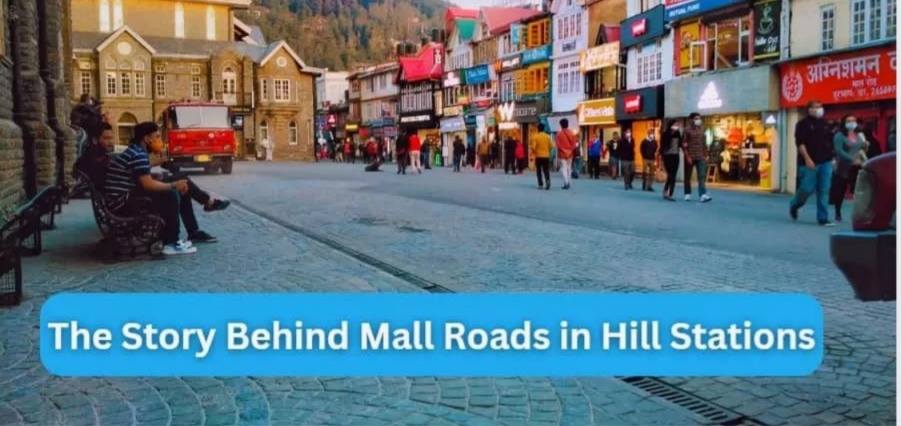




Almost every Indian hill station, from Shimla to Mussoorie, has a Mall Road. These promenades originated during the British colonial era as social hubs, inspired by “The Mall” in London. Over time, they evolved into cultural and commercial centers, blending heritage charm with modern tourism.
Mall Roads are the defining feature of Indian hill stations. Whether in Nainital, Darjeeling, or Manali, visitors encounter lively stretches lined with shops, cafés, and colonial-era architecture. Their presence is rooted in history, geography, and cultural evolution.
During the British Raj, hill stations were developed as summer retreats for officers and families. Inspired by London’s Mall, wide avenues were built for evening walks, parades, and social gatherings. These spaces soon became central community hubs, connecting administrative offices, churches, and marketplaces.
Geography also played a role. Flat land in mountainous terrain was scarce, so Mall Roads concentrated social and commercial activity in one accessible stretch. Over time, they transformed into vibrant tourist destinations, retaining colonial charm while adapting to modern needs. Today, Mall Roads symbolize both heritage and hospitality, making them inseparable from the identity of Indian hill stations.
Key Highlights
-
Originated during British colonial era as promenades
-
Inspired by “The Mall” in London
-
Served as social and administrative hubs in hill stations
-
Geographical constraints concentrated activity on flat stretches
-
Evolved into modern tourist and cultural centers
Sources: News18, NDTV, The Hindu