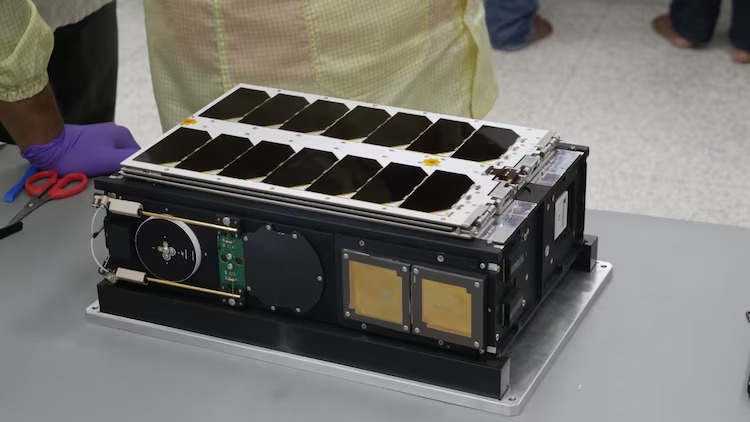
India has launched the world’s first space cybercafé, allowing users to rent satellite bandwidth for the price of a cup of tea. Backed by Ananth Technologies and approved by IN-SPACe, the initiative democratizes space access, enabling affordable satellite internet and innovation while competing with global players like Starlink and OneWeb.
India has taken a bold step in redefining access to space technology with the launch of the world’s first space cybercafé. The concept allows anyone from students and researchers to startups and enterprises to rent bandwidth on an Indian satellite at ultra-low costs, reportedly equivalent to the price of a cup of tea.
Democratizing Space Access
Traditionally, satellite usage has been prohibitively expensive, reserved for governments, defense agencies, and large corporations. By slashing costs and offering micro-rental options, India is democratizing space access, enabling grassroots innovators to experiment with satellite internet, remote sensing, and communication technologies.
Indian Satellite Innovation
The initiative is backed by Ananth Technologies, a Hyderabad-based aerospace firm, which has received approval from IN-SPACe (Indian National Space Promotion and Authorization Center) to launch India’s first private satellite broadband service. This project represents a significant milestone in India’s journey toward becoming a global hub for affordable space-based internet.
Competing with Global Giants
India’s entry into the satellite internet market places it in direct competition with international heavyweights such as Elon Musk’s Starlink, OneWeb, and Amazon’s Kuiper. However, India’s unique selling point lies in affordability and accessibility, targeting rural communities, educational institutions, and small businesses that have traditionally been excluded from satellite services.
Driving Digital Inclusion
The space cybercafé is not just about technology, it’s about digital inclusion. By lowering the cost barrier, India aims to empower students in remote villages, researchers in developing nations, and startups with limited resources. This initiative could accelerate innovation in areas like telemedicine, agriculture monitoring, disaster management, and education.
Looking Ahead
The project is expected to roll out gradually, with pilot programs enabling early adopters to test the service. If successful, India could set a global precedent for low-cost satellite internet access, reshaping how the world connects and collaborates in the digital age.
Key Highlights
-
Affordable access: Satellite bandwidth can be rented at micro-prices, making space tech accessible to students, startups, and small businesses.
-
Indian innovation: The initiative is powered by Indian satellite technology, marking a milestone in democratizing space-based internet.
-
Global competition: India positions itself against global players like Starlink, OneWeb, and Amazon Kuiper.
-
Purpose: Designed to foster innovation, research, and digital inclusion by lowering entry barriers to satellite usage.
-
Launch context: Approved by IN-SPACe, India’s space regulator, with Ananth Technologies and other private players leading the effort.
Conclusion
The world’s first space cybercafé is a landmark in India’s space journey, offering satellite access at the cost of a cup of tea. By democratizing space technology, India is not only competing with global giants but also championing innovation, inclusion, and affordability in the digital era.
Sources: A2DGC, Indian Space Technology Blog – JioSpaceFiber, [Looks like the result wasn't safe to show. Let's switch things up and try something else!](2†source)