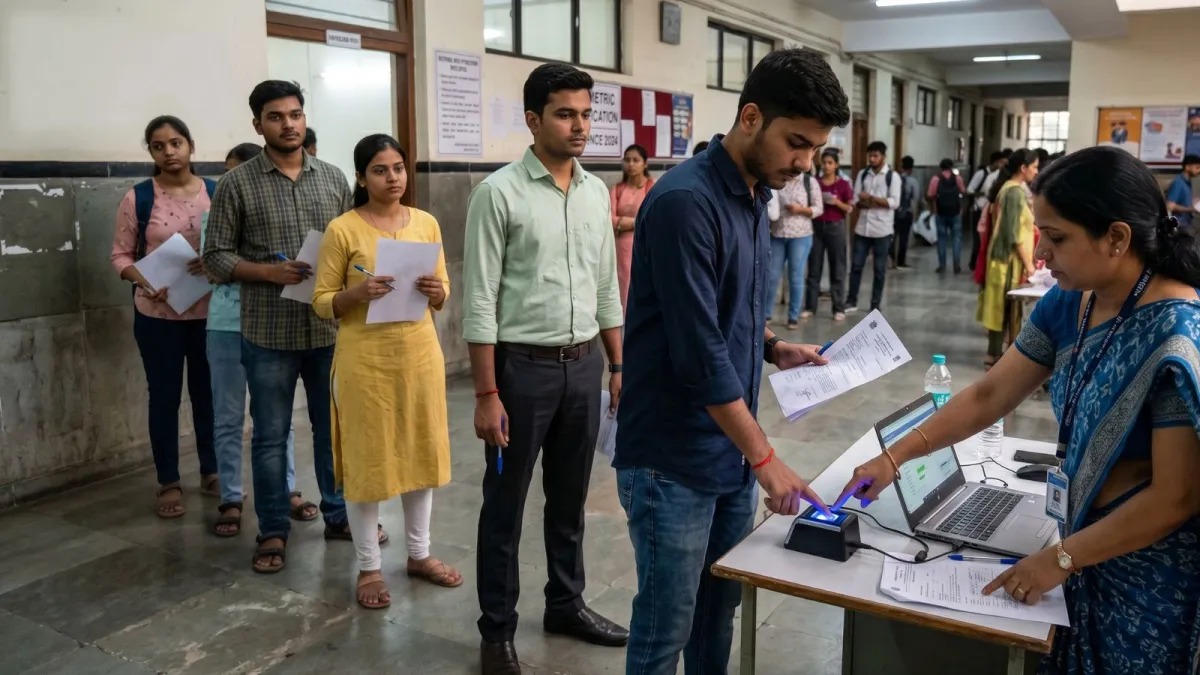
The National Testing Agency has finalized extensive security measures for the upcoming NEET UG retest. To ensure examination integrity, the agency has deployed over two lakh personnel, instituted comprehensive CCTV monitoring, and mandated real-time Aadhaar biometric verification at all entry points to eliminate impersonation risks and secure testing venues.
NEW DELHI — The National Testing Agency (NTA) has finalized a comprehensive security apparatus, featuring mandatory Aadhaar biometric verification and widespread closed-circuit television (CCTV) tracking, ahead of the National Eligibility cum Entrance Test Undergraduate (NEET UG) retest scheduled for Sunday, June 21, 2026. Following specific regulatory mandates to address previous evaluation irregularities, the specialized re-examination will be administered across designated high-security centers nationwide. To ensure systemic compliance and eliminate administrative vulnerabilities, the testing authority has mobilized an unprecedented operational force of over two lakh personnel, marking a significant escalation in India's high-stakes academic security protocols.
Multilayered Security Framework Led by Biometric Verification
To prevent cases of personation and unauthorized entry, the NTA has mandated that every candidate undergoing the retest must pass a strict security check at their designated center. The primary component of this defense system relies entirely on mandatory Aadhaar biometric verification, where fingerprint data and digital facial recognition inputs are cross-checked in real time against central government identification databases before any student is granted entry into the secure examination halls.
According to technical briefs issued by the Ministry of Education, this biometric layer is directly synchronized with digital registration data captured during the initial application cycle. Testing centers have been equipped with high-bandwidth digital scanners to expedite candidate processing, prevent bottleneck queues outside gates, and provide an unalterable digital audit trail of every individual present inside the facility.
Nationwide CCTV Tracking and Central Control Rooms
Beyond physical entrance gates, the testing authority has converted all participating classrooms into active surveillance zones. Continuous CCTV surveillance will be maintained throughout the entire duration of the examination matrix. Every camera feed is securely routed via encrypted digital channels to a central command center managed by the NTA's data integrity task force in New Delhi.
Artificial intelligence tools integrated into the surveillance networks are calibrated to instantly flag anomalous behavioral patterns, unauthorized invigilator movements, or unexpected communication indicators. Officials stated that any center experiencing unexpected localized transmission failures or camera blind spots will face immediate physical intervention from mobile flying squads stationed within close proximity of the venues.
Deployment of Over Two Lakh Security and Administrative Personnel
Executing an operation of this magnitude requires a massive human capital commitment. The NTA has confirmed the mobilization of approximately two lakh personnel to oversee the operational layout. This administrative army comprises:
Independent Observers & City Coordinators: Senior academic professionals tasked with auditing center adherence to the NTA's strict standard operating procedures.
Invigilators & Room Supervisors: Trained staff members responsible for maintaining classroom decorum and enforcing strict time parameters.
Security Officers & Frisking Teams: Specialized personnel equipped with highly sensitive handheld metal detectors (HHMD) to enforce the absolute prohibition of electronic items, smartwatches, communication devices, and unauthorized stationery.
Operational Impact on Candidates, Parents, and Institutions
The implementation of these rigorous protocols introduces immediate procedural changes for all involved stakeholders:
Candidates and Parents: Aspiring medical students must report to their assigned venues significantly earlier than traditional schedules allow. The inclusion of mandatory digital scanning and physical frisking cycles means gate closures will be strictly enforced, leaving zero margin for late arrivals.
Educational Institutions: Selected schools and universities acting as test centers have had to surrender full administrative control of their facilities to NTA representatives, ensuring comprehensive sweeps for hidden communication equipment or signal transmitters are conducted prior to exam day.
Investors & Public Trust: For stakeholders in India’s massive test-preparation sector, the successful, dispute-free execution of this retest is essential to restoring public confidence in national standardized merit systems.
Official Sources Section
The administrative frameworks, staff numbers, and technical procedures detailed in this report are sourced from official notifications published by the National Testing Agency (NTA), backed by policy directives from the Union Ministry of Education. Legal contexts and logistical updates have been verified via official press briefings from the Press Trust of India (PTI).
Quote Section
"According to officials, all arrangements, including mandatory Aadhaar biometric verification, continuous CCTV surveillance, and the deployment of approximately two lakh personnel, have been completed to ensure the smooth and fair conduct of the exam across all centers."
— National Testing Agency (NTA) Operational Briefing
Why It Matters
National entrance tests like NEET UG determine the professional trajectory of hundreds of thousands of students competing for limited higher education seats. When the integrity of these filters is compromised, it damages public trust in academic equity. Implementing advanced safeguards, such as real-time biometric validation and central digital surveillance, sets a new standard for national examinations. This framework shows a structural commitment to protecting honest applicants while systematically blocking organized cheating networks from exploiting administrative gaps.
Key Facts at a Glance
Primary Safeguard: Mandated Aadhaar biometric verification implemented for all candidates at entrance points to prevent identity fraud.
Surveillance Scale: Complete CCTV surveillance coverage established across all test halls, linked directly to central monitoring centers in New Delhi.
Human Infrastructure: More than two lakh specialized personnel deployed nationwide to manage, observe, and secure the examination process.
Strict Prohibitions: Multi-stage physical frisking protocols enforced using advanced handheld metal detectors to eliminate electronic contraband.
FAQ Section
Q1: What identification documents are mandatory for entry at the retest centers? Candidates must present their official NTA-issued admit card, valid passport-sized photographs, and a government-issued photo ID, preferably their Aadhaar card, to successfully complete the mandatory biometric validation process.
Q2: How does the NTA ensure that the CCTV feeds are not tampered with locally? All camera networks are encrypted and streamed live to secure cloud servers monitored directly by the NTA's central command post. Local center authorities do not have administrative access to alter or cut the recording feeds.
Q3: What actions will be taken if a candidate fails the biometric verification at the gate? If a mismatch occurs, the candidate is routed to a specialized verification desk managed by the center's independent observer. A manual review of alternative documentation and registration fingerprints will be performed to resolve the discrepancy.
Source: