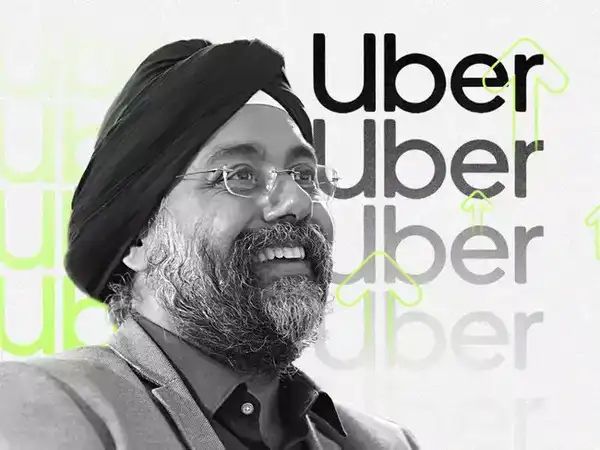
OpenAI has appointed former Uber India President Prabhjeet Singh as its Managing Director for India, effective September 2026. Tasked with driving enterprise adoption and strategic partnerships, Singh will oversee OpenAI’s efforts to integrate advanced artificial intelligence into India’s rapidly evolving consumer and business ecosystem, cementing India as a critical global AI hub.
BENGALURU — In a move that underscores India’s growing influence as a global hub for artificial intelligence, OpenAI has officially named Prabhjeet Singh as its Managing Director for India. The announcement, made on Friday, June 26, 2026, marks the end of Singh's nearly 11-year tenure at Uber, where he most recently served as the President for India and South Asia.
Singh will formally assume his new role in September 2026, reporting directly to Kiran Mani, OpenAI’s Managing Director for the Asia-Pacific region. As the company’s most senior executive in the country, Singh is tasked with leading OpenAI’s expansion across consumer growth, enterprise adoption, strategic partnerships, and regulatory engagement.
Navigating the Frontier of AI Adoption
India currently ranks as one of OpenAI’s top global markets by user base, with significant demand emerging from its vast developer community and a rapidly digitalizing enterprise sector. Industry analysts view Singh’s appointment as a strategic shift for the AI giant: moving beyond being a "ubiquitous consumer application" like ChatGPT toward becoming an embedded infrastructure provider for India’s businesses and government bodies.
According to OpenAI, Singh’s mandate is broad. He will be responsible for building deep-rooted partnerships within India's AI ecosystem, helping institutions—ranging from startups to large-scale public sector organizations—leverage generative AI tools for productivity and innovation. His appointment comes at a critical time when India is actively shaping its sovereign AI policies and digital legislation.
Transitioning from Mobility to Machine Intelligence
Singh’s career at Uber, which he joined in 2015 as Head of Strategy before ascending to regional President in 2020, was defined by his ability to navigate hyper-complex, heavily regulated markets. He successfully led the company through the pandemic-era lockdowns and managed intense competition from domestic rivals like Ola and Rapido.
Observers suggest that this experience in operationalizing technology in a high-density, high-regulation environment is precisely what OpenAI needs to navigate the complexities of India’s enterprise AI landscape. By bringing on a veteran who understands the nuances of local compliance and commercial scaling, OpenAI is positioning itself to be a long-term partner for Indian stakeholders.
Why It Matters
For India, this appointment confirms its status as a primary frontier for AI innovation, where consumer adoption is already world-leading and enterprise-level integration is the next growth frontier. For businesses, the arrival of a senior leader focused on "regulatory engagement and operations" suggests that OpenAI intends to be a permanent, compliant, and deeply integrated player in the Indian economy.
Key Facts at a Glance
The Appointment: Prabhjeet Singh, former President of Uber India and South Asia, joins OpenAI as Managing Director for India.
Strategic Role: He will lead consumer growth, enterprise adoption, and partnerships, reporting to APAC MD Kiran Mani.
Start Date: Singh will assume his new responsibilities in September 2026.
Market Context: India is currently one of OpenAI's largest markets, with explosive growth in Codex adoption and enterprise AI demand.
FAQ
What will Prabhjeet Singh do at OpenAI?
Singh will oversee the company's India operations, focusing on scaling its AI tools among businesses, government institutions, and consumers, while managing regulatory and strategic partnerships.
Why did OpenAI choose an executive from the ride-hailing sector?
Singh’s decade of experience navigating India’s complex regulatory and operational environment at Uber makes him uniquely qualified to lead OpenAI through the regulatory and infrastructure challenges of deploying AI at scale in India.
How does this change OpenAI's strategy in India?
The move signals a transition from pure consumer-focused growth to a more structured enterprise-centric model, with a greater emphasis on local regulatory compliance and strategic institutional partnerships.
Source: OpenAI Official, Uber India Press Room, The Times of India, Fortune India