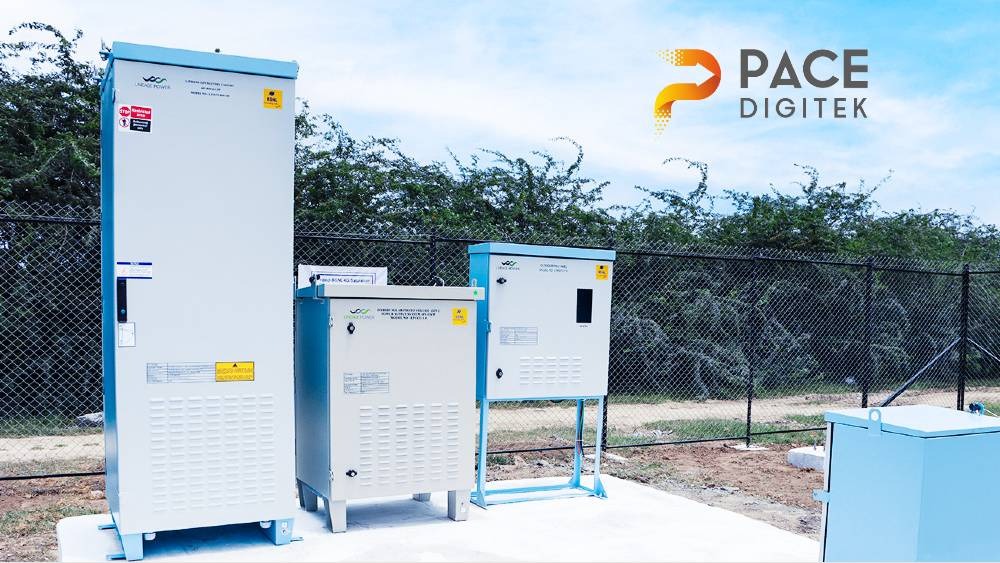
Pace Digitek Limited's subsidiary, Lineage Power Private Limited, has entered into a strategic Memorandum of Understanding (MoU) for the supply of Battery Energy Storage Systems (BESS). The deal utilizes the company’s 2.5 GWh Bidadi facility to supply containerized, liquid-cooled battery solutions, helping address India's rapidly expanding grid stabilization requirements.
BENGALURU, India — Pace Digitek Limited announced on July 9, 2026, that its wholly-owned clean energy subsidiary, Lineage Power Private Limited (LPPL), has formally entered into a major Memorandum of Understanding (MoU) for the multi-year supply of high-capacity Battery Energy Storage Systems (BESS).
The strategic delivery agreement mandates the deployment of containerized, liquid-cooled utility-scale storage blocks engineered specifically for national grid integration and large-scale wind and solar hybrid setups. This development carries profound industrial weight today, coming exactly one year after the group commissioned its high-tech assembly hub in the Bidadi Industrial Area. The contract positions Pace Digitek to secure a major volume share of India’s rapidly accelerating clean energy infrastructure market, where active grid-scale tendering pipelines have surged to an unprecedented 260 gigawatt-hours (GWh).
Expanding the Infrastructure Supply Footprint via Lineage Power
The newly finalized contract utilizes the specialized technical architecture developed by Lineage Power over its prior year of active commercial production. Under the structural conditions of the supply MoU, the unit will deploy pre-assembled, modular cell-to-BESS storage containers featuring integrated power conversion systems (PCS) and intelligent Energy Management Systems (EMS).
The manufacturing model consolidates the entire development process encompassing engineering layout design, advanced cell balancing, thermal battery containment fabrication, and complete Engineering, Procurement, and Construction (EPC) assembly lines under a single, quality-controlled factory footprint in Karnataka.
This vertically integrated manufacturing architecture allows the company to minimize transmission line connection losses and provide commercial developers with a pre-certified, "plug-and-play" utility block capable of absorbing sudden surge patterns typical of solar-hour generation cycles.
Strategic Timing Amid India's National Grid Storage Mismatch
The finalization of this supply framework coincides with an acute structural mismatch currently playing out across India's domestic renewable energy infrastructure sectors. While national energy storage mandates have driven a massive, multi-fold expansion in grid tenders to minimize solar-hour generation curtailments, India's base of fully localized, cell-to-container manufacturing plants remains heavily constrained. According to updated reports from the India Energy Storage Alliance (IESA), the country requires over 888 GWh of total storage system capacity by 2035 to ensure baseline power grid reliability.
By aggressively expanding the order backlog of its 2.5 GWh Bidadi asset through targeted multi-year supply MoUs, Pace Digitek shields its long-term financial forecasts from near-term pricing competition. The volume guarantee enables the company to leverage its substantial cash reserves which stood at ₹769 crore at the close of the prior fiscal period—to lock down bulk lithium-ion cell procurement lines directly from global component manufacturers. This strategy helps avoid the component shortages that frequently delay independent, un-hedged project developers across the country.
Official Sources Section
According to official corporate updates and statutory material disclosures submitted to The National Stock Exchange of India (NSE) on July 9, 2026, the strategic supply framework aligns with a massive expansion in the group's active utility backlog. Exchange filings track a significant rise in the firm's consolidated execution pipeline, which includes a recently secured ₹709.9 crore utility-scale BESS engineering and long-term operations contract from NLC India Renewables Limited.
Quote Section
In comprehensive corporate communications presented to financial analysts regarding the group's expanding multi-gigawatt energy portfolio, Venugopal Rao Maddisetty, Chairman and Managing Director of Pace Digitek Limited, underscored the infrastructural importance of the asset class:
"According to officials, energy storage is now indispensable national infrastructure, enabling renewable energy to become dispatchable, stabilizing the grid, and enhancing resilience. This fresh supply agreement establishes a reliable pathway to scale our integrated cell-to-BESS manufacturing platform while accelerating the country's clean energy transition."
Why It Matters
The deployment of massive, localized battery storage infrastructure directly influences efficiency and operational planning across multiple economic sectors:
For Power Grid Operators: High-capacity liquid-cooled storage containers provide immediate load balancing, reducing transmission bottlenecks and cutting down sudden grid failure risks during peak hours.
For Renewable Project Developers: Access to local, pre-certified BESS supply pipelines prevents long construction delays under tight regulatory commission deadlines.
For Institutional Investors: Securing multi-year supply contracts alongside multi-decade operations and maintenance (O&M) pipelines provides highly predictable long-term revenue streams, shielding the company from volatile telecom hardware markets.
Key Facts at a Glance
Corporate Integration: Pace Digitek's subsidiary, Lineage Power, signs a strategic MoU for battery energy storage supply.
Manufacturing Scale: The project leverages a specialized 2.5 GWh manufacturing hub located in Bidadi, Karnataka.
Production Milestones: Follows the successful manufacturing of over 260 utility-scale BESS containers within the past 12 months.
Market Backdrop: Contract deployment matches an expanding national pipeline where storage tenders have hit 260 GWh.
FAQ Section
What primary technical specifications are featured in Lineage Power’s BESS solutions?
The systems consist of containerized, liquid-cooled lithium battery assemblies integrated with specialized power conversion systems (PCS) and customized energy management software designed to balance load spikes.
Why is the expansion of domestic BESS production critical for India's power grid?
As India aggressively installs wind and solar projects, localized BESS units are critical to store excess power generated during peak daylight or windy hours, discharging that electricity back into the grid when generation ceases.
Where can shareholders monitor updated contract realization figures?
All major project milestones, supply volumes, and quarterly financial contributions from the energy infrastructure division are archived transparently via the disclosure portals of The National Stock Exchange of India (NSE).
Source: Official regulatory material disclosures archived on the portal of The National Stock Exchange of India (NSE), project tracking dossiers managed via The India Energy Storage Alliance (IESA) Market Review, and corporate operational performance data from the Lineage Power manufacturing desk.