An Indian HR professional’s viral LinkedIn post has sparked a fierce debate across corporate circles after she revealed that an employee resigned just five minutes after receiving their first salary. The incident, described as both shocking and symbolic, has ignited conversations around wor...
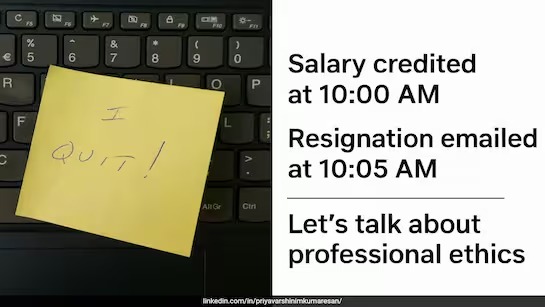
An Indian HR professional’s viral LinkedIn post has sparked a fierce debate across corporate circles after she revealed that an employee resigned just five minutes after receiving their first salary. The incident, described as both shocking and symbolic, has ignited conversations around workplace ethics, employee accountability, and the evolving dynamics of professional loyalty.
Key highlights from the viral post:
1. The HR professional, Priyavarshini M, shared that the employee’s salary was credited at 10:00 AM
2. By 10:05 AM, the resignation email had landed in her inbox
3. The company had invested significant time in onboarding and training the new hire
4. The HR’s post questioned the ethics of such a swift exit and urged professionals to “Pause. Reflect. Communicate.”
The HR perspective: A call for professionalism
The post wasn’t just a vent—it was a manifesto. Priyavarshini expressed deep frustration over what she called a lack of maturity and accountability. She emphasized:
- Every job requires patience, effort, and commitment
- Growth doesn’t come with the first paycheck—it comes with perseverance
- Sudden resignations, especially without prior communication, undermine trust and waste organizational resources
- Employees should speak up if something feels off, rather than opting for a “convenient exit”
Her concluding message was a plea for introspection: before blaming company culture or role mismatch, professionals should take ownership of their decisions.
The internet reacts: A divided debate
The post quickly went viral, garnering thousands of reactions and hundreds of comments. But the response wasn’t one-sided.
Some users supported the HR’s stance:
- They argued that such behavior reflects poor ethics and disrespects the time and effort invested by the company
- One user wrote that professionalism is defined by actions, not just posts or paychecks
Others, however, defended the employee:
- Salaries are compensation for work already done—not a bribe to stay longer
- If someone resigns after getting paid, they’ve fulfilled their obligation for that month
- Many pointed out that companies often terminate employees without notice, so why should employees be held to a higher standard?
Broader reflections: Ethics, loyalty, and the modern workplace
This incident has become a microcosm of larger tensions in today’s job market:
- Changing expectations: Younger professionals often prioritize mental health, work-life balance, and cultural fit over long-term loyalty
- Corporate contradictions: While companies expect commitment, they also practice abrupt layoffs and restructuring
- Communication gaps: Many resignations stem from unmet expectations or misaligned roles—issues that could be resolved with honest dialogue
Takeaway: A moment for pause and perspective
Whether one sides with the HR or the employee, the incident underscores a crucial truth: the workplace is evolving, and so must our understanding of professionalism. Sudden exits may be symptomatic of deeper issues—poor onboarding, mismatched roles, or unrealistic expectations.
But equally, employees must recognize the ripple effects of their decisions. A five-minute resignation might seem trivial, but it can disrupt teams, delay projects, and erode trust.
In the end, the message is clear: before hitting send on that resignation email, take a moment to pause, reflect, and communicate.
Sources: Financial Express, Indian Express, OneIndia, OdishaTV, Republic World