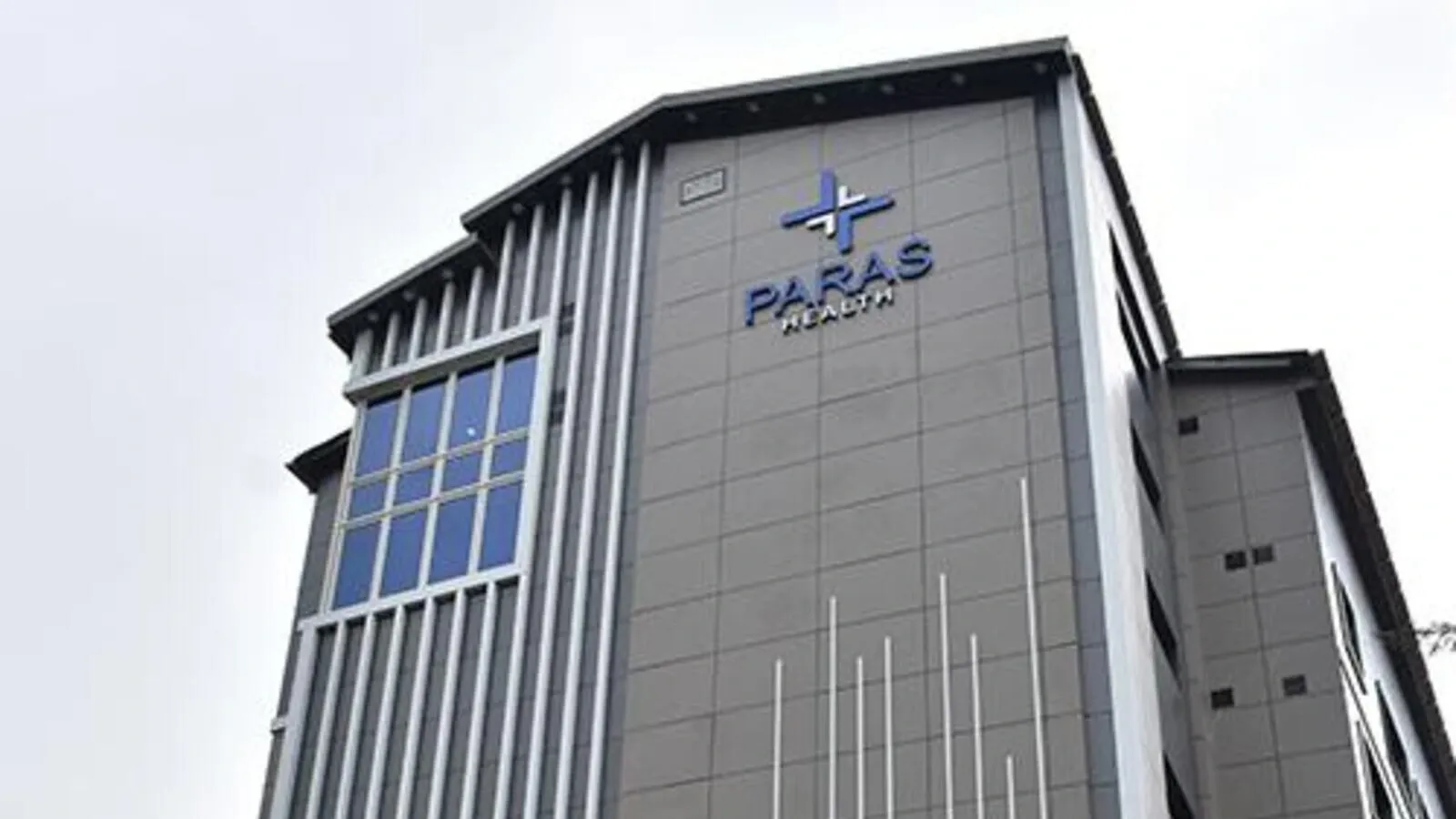
Paras Healthcare Limited has filed a draft red herring prospectus with market regulator SEBI to launch an 18-billion-rupee initial public offering. The issue combines a 5-billion-rupee fresh share issuance aimed at debt reduction with a 13-billion-rupee secondary stake sale by existing promoters and investors.
NEW DELHI — Hospital chain Paras Healthcare Limited has formally filed its draft red herring prospectus (DRHP) with the market regulator, the Securities and Exchange Board of India (SEBI), to raise 18 billion rupees ($216 million) through an initial public offering (IPO). The capital market entry marks a key step in the company's regional consolidation plan as private healthcare providers expand clinical footprints across regional urban hubs.
Strategic Capital Allocation Centers on Debt Reduction
The proposed 18-billion-rupee market float is structured as a combination of fresh capital generation and a secondary share monetization pool. According to the regulatory filing, the book-built initial public offering comprises a fresh issuance of equity shares worth up to 5 billion rupees, alongside an offer for sale (OFS) component valued at 13 billion rupees.
The corporate entity has detailed a highly defensive asset allocation strategy for the incoming funds. Corporate finance data shows that a significant portion of the fresh proceeds will be used for the prepayment or scheduled repayment of outstanding borrowings accrued by the parent company and its wholly owned subsidiaries, alongside general corporate purposes. Analysts note that reducing total borrowings will immediately optimize interest coverage ratios and lower debt service burdens, improving net margin efficiencies across its healthcare network.
Regional Dominance Targets Under-Served Regional Healthcare Hubs
Unlike larger metropolitan competitors focused heavily on Tier-1 capitals, Paras Healthcare has structurally positioned its operational network across key economic centers in North India, Bihar, and Jharkhand. The group currently commands a regional network of eight operational hospitals specializing in high-complexity clinical disciplines including cardiac sciences, oncology, neurosciences, and orthopedic care.
The platform expanded its aggregate bed capacity from 1,250 beds in March 2022 to 2,135 beds by March 2024. This aggressive asset ramp-up aims to capture rising regional healthcare consumption in regions historically characterized by lower institutional bed densities. Financial disclosures indicate that while total income reached 11.51 billion rupees in the fiscal year ended March 31, 2024, rising operational outlays linked to new bed additions resulted in a consolidated net loss of 153.3 million rupees.
Official Sources Section
The financial parameters, allocation objectives, and organizational histories have been sourced from regulatory declarations published by the Securities and Exchange Board of India (SEBI). Legal advisory and transaction formatting are managed by a group of tier-one merchant banking institutions, with equity listings planned for both the National Stock Exchange (NSE) and the BSE. The primary institutions directing the corporate public issue include:
Quote Section
"Our company expects to receive the benefits of listing its equity shares on the stock exchanges, including enhancing its visibility and brand image, and creating a public market for our equity shares."
— Paras Healthcare Limited, extract from the official Draft Red Herring Prospectus
"According to market regulators, institutional capital inflows into regional hospital operators continue to mirror a structural shift in consumer demand toward specialized quaternary care across regional hubs."
— Market Analysts
Why It Matters
For public market investors and institutional asset managers, the initial public offering provides a direct gateway into localized healthcare assets where structural demand routinely outpaces current supply. For everyday consumers and patients in North India, the incoming institutional equity allows Paras Healthcare to reinforce its balance sheet, fund advanced diagnostics, and expand complex clinical specialties without relying on expensive bank debt. This long-term fiscal stability ensures continuity of high-quality tertiary care across regional tier-2 and tier-3 ecosystems.
Key Facts at a Glance
Total Issue Size: The company seeks to raise an aggregate of 18 billion rupees ($216 million) through the public market float.
Dual Transaction Structure: The issue features a fresh equity pool of 5 billion rupees and a secondary offer for sale of 13 billion rupees.
Asset Footprint: Paras Healthcare owns and manages eight hospitals comprising 2,135 beds across North India, Bihar, and Jharkhand.
Core Objective: Net proceeds are legally earmarked for the strategic reduction of corporate debt and supporting general corporate expansions.
FAQ Section
What is the specific price band for the Paras Healthcare IPO?
The final price band and specific lot size details have not yet been finalized by the company in consultation with its book-running lead managers. These will be formally declared via a red herring prospectus closer to the official launch date.
How does the secondary offer for sale impact company financials?
The 13-billion-rupee offer for sale component represents a secondary divestment by promoter Dr. Dharminder Kumar Nagar and other selling shareholders. The proceeds from this section flow directly to the selling individuals and do not enter the company's corporate balance sheet.
Where does Paras Healthcare operate its primary medical centers?
The clinical platform focuses on under-served regional cities, operating multi-specialty tertiary hospitals across several states in North India, specifically emphasizing asset placement in Bihar and Jharkhand.
Which platforms will host the equity shares post-listing?
The equity shares are slated for dual listing and open public trading on both the National Stock Exchange (NSE) and the BSE.
Source: Securities and Exchange Board of India (SEBI) Filing Repository, BSE Limited Corporate Filings.