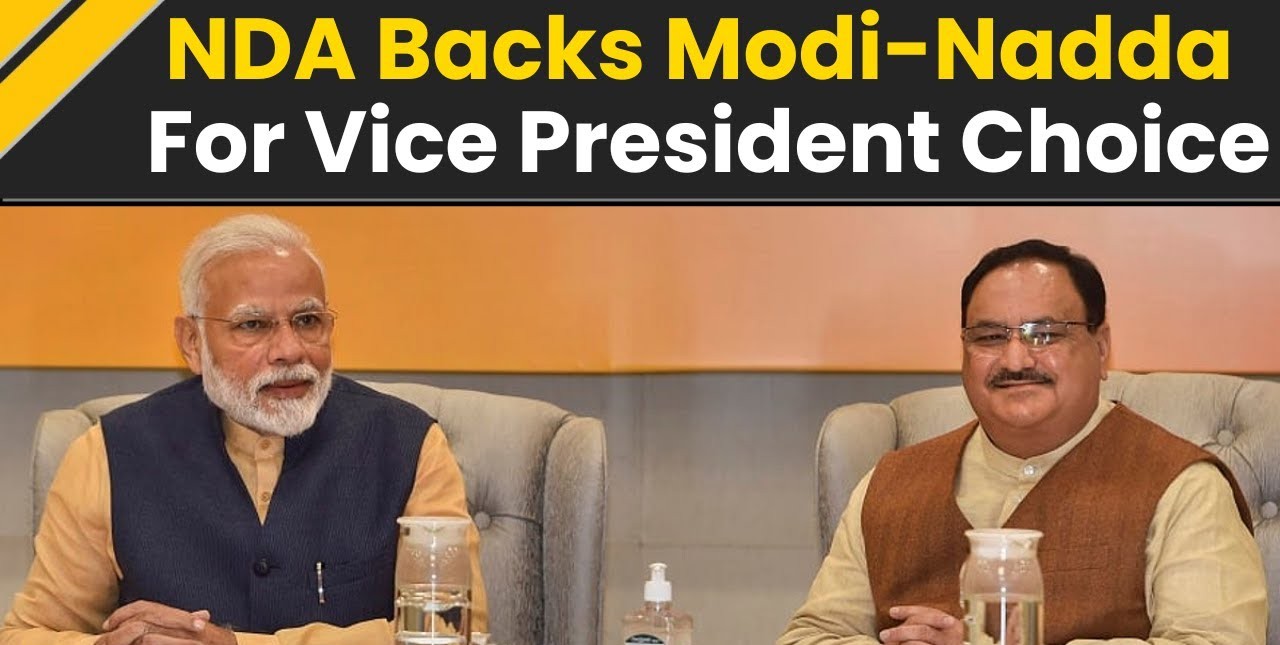
The race for India’s next Vice President is set to take a big step forward today, with Prime Minister Narendra Modi and BJP president JP Nadda expected to announce the National Democratic Alliance’s (NDA) candidate. The decision comes after NDA partners met earlier this week and agree...
The race for India’s next Vice President is set to take a big step forward today, with Prime Minister Narendra Modi and BJP president JP Nadda expected to announce the National Democratic Alliance’s (NDA) candidate. The decision comes after NDA partners met earlier this week and agreed to let the two leaders make the final call.
The timing is tight. Nominations for the post close on August 21, so the alliance wants to settle on a name early, leaving space for campaigning before the vote on September 9. Given the NDA’s majority in Parliament, their nominee will likely start as the clear frontrunner — but politics can still throw surprises.
Why the Post is Vacant
The election is being held mid-term. Jagdeep Dhankhar resigned as Vice President on July 21, citing health reasons, nearly two years before his term was due to end. His exit means the Rajya Sabha lost its presiding officer at a time when Parliament is in the thick of the Monsoon Session.
As Vice President, Dhankhar was also Chair of the Rajya Sabha, a role central to the functioning of the upper house — managing debates, keeping order, and making procedural rulings that can shape legislation. Whoever replaces him will walk into a politically active chamber where government and opposition often clash.
How the Election Works
The Vice President is chosen by an electoral college made up of members from both the Lok Sabha and the Rajya Sabha — including nominated MPs. The vote is held by secret ballot, meaning MPs mark their choice privately rather than by a show of hands or party whip. This process reduces the risk of overt political pressure but can also throw up surprises if MPs decide to break ranks.
This year, the NDA holds enough seats in both houses to put its candidate in a strong position, assuming its MPs vote together. Still, party leaders are making sure members understand the voting process to avoid any invalid ballots — a problem seen in some recent parliamentary polls.
What’s Behind the NDA’s Choice
By asking Modi and Nadda to choose, the alliance is signalling unity and efficiency. It also allows them to weigh political factors more quietly — such as balancing regional representation, rewarding loyalty, or boosting the NDA’s image before key state elections.
Names haven’t been confirmed, but the buzz in political circles suggests that respected senior leaders or experienced administrators are being considered. The ideal candidate will need to manage the Rajya Sabha fairly while still protecting the government’s legislative agenda.
The Opposition’s Strategy
The opposition is reportedly working to field a single consensus candidate. This would give them the best chance to test the NDA’s unity and possibly appeal to non-aligned MPs. But with the numbers stacked in the NDA’s favour, the opposition’s campaign may focus more on making a political statement than on expecting a win.
Key Dates Ahead
-
August 21 – Last day to file nominations
-
August 22 – Scrutiny of nominations
-
August 25 – Last date for withdrawal
-
September 9 – Voting and counting on the same day
Why Today Matters
The NDA’s pick will set the tone for the next few weeks. If the choice is a consensus-builder, it could lower tensions in the Rajya Sabha. If the nominee is a more assertive figure, it may signal the government’s intent to push its agenda harder in the upper house.
Either way, the announcement will officially kick off the Vice Presidential race and give both alliances a focal point for campaigning. With the NDA’s parliamentary strength, the odds are in their favour — but as in any election, the choice of candidate and public perception will still matter.
Sources: IANS, Indian Express, Business Today, Hindustan Times, Election Commission of India updates