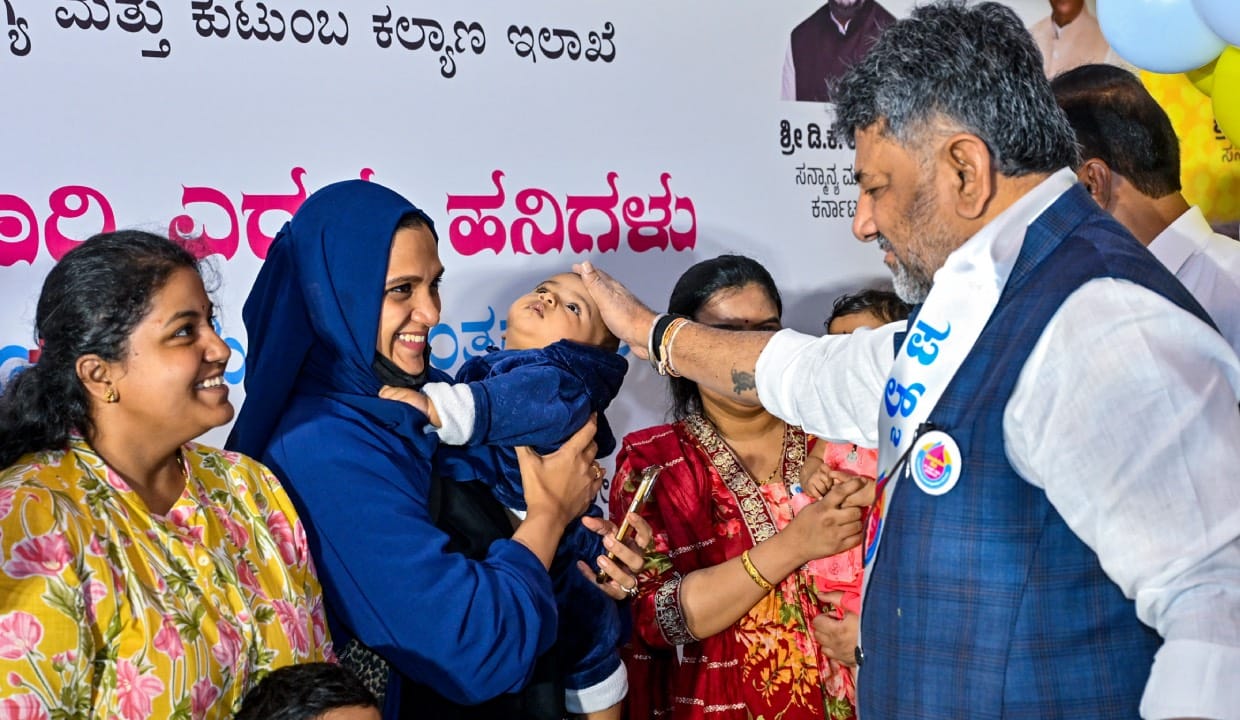
India launched the second phase of its Pulse Polio Drive 2026 on June 28, 2026, targeting over 1.65 crore children under five across Gujarat, Kerala, Karnataka, Jharkhand, and Nagaland. Backed by extensive cold chain logistics and transit teams, the campaign maintains India's vital defenses against global polio resurgence.
NEW DELHI, India — In a major coordinated public health mobilization on June 28, 2026, state governments across India launched the second phase of the Pulse Polio Drive 2026, targeting more than 1.65 crore children below five years of age. Supported by the Union Ministry of Health and Family Welfare, this massive immunization campaign spans several key states including Gujarat, Kerala, Karnataka, Jharkhand, and Nagaland. The program forms the backbone of India's aggressive surveillance and prevention strategy to sustain its official polio-free certification, achieved more than a decade ago, amidst persistent global transmission risks in neighboring regions.
Strategic Micro-Planning and Target Demographics
The scale of the Pulse Polio Drive 2026 necessitates extensive micro-planning tailored to each state’s unique demographic profile. According to official guidelines released by the Ministry of Health and Family Welfare (MoHFW), the multi-state program is engineered to build high population immunity against all remaining strains of the virus.
Individual states have deployed vast logistics networks to hit localized coverage targets:
Jharkhand: Targeting over 61 lakh children across all districts through localized booths.
Karnataka: Deploying over 1,641 vaccination booths in individual districts like Mysuru alone to cover hundreds of thousands of households.
Kerala: Initiating operations via 22,288 vaccination booths to administer drops to roughly 19.8 lakh children statewide.
Gujarat and Nagaland: Activating similar high-density urban and remote rural micro-plans to ensure uniform coverage.
The strategic timeline utilizes a hybrid execution model. On the primary launch date, parents are instructed to bring children directly to fixed vaccination booths set up at primary health centers, schools, and Anganwadi centers. This is immediately followed by a strict two-to-three-day door-to-door search phase, during which healthcare teams visit every household to identify and immunize any children missed during the initial drive.
Logistical Architecture and Cold Chain Preservation
Maintaining the structural integrity of the bivalent Oral Polio Vaccine (bOPV) requires a rigorous cold chain framework. State authorities issued specific directives to electricity distribution corporations to ensure uninterrupted power supply to all rural storage centers. This step is critical for protecting ice packs and maintaining temperature baselines between $2^\circ\text{C}$ and $8^\circ\text{C}$ ($36^\circ\text{F}$ to $46^\circ\text{F}$) during field transit.
To close regional coverage gaps, health departments are utilizing a specialized multi-tiered team deployment structure. According to public health portfolios released by state authorities, the personnel grid features:
| Team Category | Core Operational Focus | Deployment Locations |
| Fixed Booth Teams | Mass community vaccination on day one | Schools, hospitals, Anganwadi centers |
| Transit Teams | Intercepting mobile families on the move | Bus terminals, railway stations, airports |
| Mobile Squads | Reaching isolated or transient populations | Brick kilns, construction sites, slums |
Why It Matters: Maintaining Global Biosecurity
While India was officially declared free of wild polio transmission by the World Health Organization (WHO) in 2014, the Pulse Polio Drive 2026 remains a critical pillar of national biosecurity. Public health experts warn that as long as wild poliovirus cases persist globally, the risk of importation remains a threat.
"Every drop counts in keeping our communities safe," noted a representative from the Karnataka Health Department during a preparatory briefing. "Maintaining high population immunity through consecutive rounds of the Pulse Polio campaign ensures that the virus cannot find a foothold to mutate or spread."
By implementing digital tracking across state borders and leveraging thousands of frontline ASHA and Anganwadi workers, the initiative ensures that dense urban migrations and remote rural pockets receive equal medical coverage, protecting the macroeconomic health of the nation's future workforce.
Key Facts at a Glance
Total Target: Over 1.65 crore children under the age of five across five primary participating states.
Launch Date: Campaign opened on June 28, 2026, with successive house-to-house tracking through July 1.
Vaccine Type: High-quality, WHO-approved bivalent Oral Polio Vaccine (bOPV).
Personnel Grid: Hundreds of thousands of volunteers, including ASHA workers, nursing students, and NGOs like Rotary International.
Special Protocols: Deployment of mobile and transit teams at transit points like railway stations and airports.
Frequently Asked Questions
Why does India continue to hold Pulse Polio drives if the country is already polio-free?
India maintains its polio-free status because of these continuous vaccination campaigns. Because the poliovirus still circulates globally, low vaccination rates could lead to a resurgence via imported cases, making high population immunity essential.
Should a child receive these drops even if they are already up to date on their routine immunizations?
Yes. The oral polio drops given during the national Pulse Polio campaign are supplementary and designed to provide an extra layer of collective immunity. It is safe and highly recommended for children to receive the drops regardless of their past vaccination history.
What happens if a family is traveling during the campaign dates?
To accommodate traveling families, health departments set up transit booths at all major transport hubs, including railway stations, interstate bus terminals, and domestic airports, ensuring children receive the vaccine while on the move.
Source: Official operational circulars from the Ministry of Health and Family Welfare (MoHFW), regional healthcare implementation metrics via the Directorate of Health Services Jharkhand, and public immunization advisories issued by the Government of Karnataka Health Department.