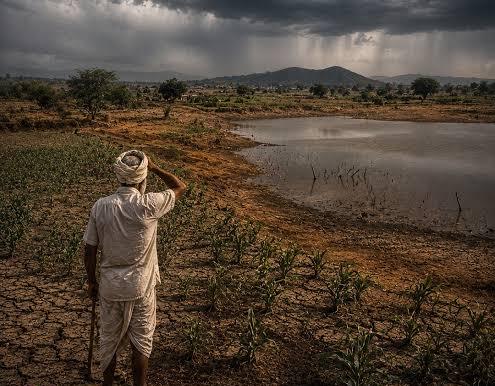
An intensifying El Niño pattern has triggered a critical 42% monsoon rainfall deficit across India as of late June 2026. By weakening a vital input for the country's $300 billion agricultural supply chain, the dry-up delays kharif crop sowing, threatens rural incomes, and risks escalating domestic food inflation.
NEW DELHI, India — An intensifying El Niño climate pattern has severely disrupted the onset of India's southwest monsoon, resulting in a critical 42% cumulative rainfall deficit as of late June 2026. This meteorological dry-up directly weakens a vital logistical input—seasonal rainwater—that anchors the nation’s $300 billion agricultural supply chain. With the critical kharif (summer) planting window closing, the widespread lack of precipitation is threatening crop production across major farming belts, prompting high-level government interventions to prevent food price shocks and secure rural economic stability.
Severe Deficits Across Major Agricultural Belts
The current climate crisis stems from a developing "super" El Niño over the equatorial Pacific Ocean, which has significantly weakened the seasonal winds responsible for drawing moisture across the Indian Subcontinent. According to data tracked by the India Meteorological Department (IMD), roughly half of the country received "deficient" rainfall—ranging from 20% to 59% below the long-period average—during the first three weeks of June. Furthermore, an additional quarter of the country recorded "large deficient" conditions, with rain gauge metrics dropping up to 99% below traditional benchmarks.
The structural dry-up has hit the agricultural heartlands of Maharashtra, Madhya Pradesh, Gujarat, and Telangana particularly hard. These states serve as the main logistical nodes for India's domestic production of soybeans, sugarcane, cotton, and pulses. In key trading hubs like the Nashik district of Maharashtra, cumulative June rainfall reached just 16% of the long-term historical baseline, stalling local cultivation schedules and threatening the supply chain for consumer staples like onions.
Supply Chain Realities and Macroeconomic Pressures
The delay in seasonal rains has transformed what is usually a highly predictable agricultural calendar into a volatile guessing game for farmers. June typically marks the peak period for sowing rain-dependent kharif crops, but the lack of sufficient soil moisture has forced millions of smallholders to halt seeding operations.
While large industrial logistics chains evaluate disruptions through components like microchips, India's agricultural supply chain treats monsoon rainfall as its ultimate variable input. The Food and Agriculture Organization (FAO) of the United Nations has officially classified South and Southeast Asia among the highest global risk zones for agricultural drought this year, warning that prolonged rainfed moisture stress will lower overall yield capacities for staple grains like paddy rice and maize.
To mitigate localized shortfalls, the central government has initiated a series of coordinated emergency meetings:
| Crop Segment | Current Risk Factor | Recommended Contingency Action |
| Paddy Rice & Sugarcane | High water dependence; severe yield drop risks | Switch to short-duration pulses or oilseeds |
| Coarse Cereals & Maize | Germination failures due to topsoil dry-out | Delay seeding; utilize drought-tolerant varieties |
| Vegetables & Onions | Extreme heat spells lowering crop productivity | Optimize existing regional reservoir allocations |
Impact on Consumers, Investors, and Energy Grids
The fallout from the El Niño dry-up extends far beyond rural farm gates, carrying profound financial implications for urban consumers and institutional investors. Food inflation, which had already shown upward momentum in early 2026, is projected to face severe pressure as supply constraints push up the wholesale cost of edible oils, sugar, and protein-rich pulses.
The Reserve Bank of India (RBI) is closely monitoring these climate developments, as persistent supply-side food inflation can limit room for monetary policy easing. Furthermore, according to economic stress simulations conducted by SBI Research, an extreme combination of a strong El Niño and prolonged drought could reduce national GDP growth by up to 65 basis points.
Simultaneously, the lack of rainfall has depleted key surface water assets. Data from the Central Water Commission reveals that while overall national reservoir buffers hover near historical averages, storage levels in the Southern and Eastern regions have fallen 14% and 19% below normal levels, respectively. This drop directly reduces hydroelectric generation capacity, forcing state electricity boards to rely heavily on coal-fired baseload power to meet the soaring peak-power demands triggered by concurrent regional heatwaves.
Official Sources Section
"The monsoon for this year has delivered rains that are 43% below normal for the month of June," stated Union Agriculture Minister Shivraj Singh Chouhan during a high-level state consultative meeting. "State governments must implement robust preparatory measures and immediately deploy local contingency plans to assist affected farmers."
Why It Matters
The prolonged dry-up endangers the financial security of rural households, which drive nearly half of India's aggregate consumer demand. If crop yields drop significantly, lower rural incomes will likely drag down sales volumes for consumer goods, vehicles, and agricultural machinery. Globally, a sustained domestic supply crunch may force the Indian government to maintain or tighten protective trade measures—similar to the historic grain export bans enacted in 2023—subsequently shrinking global trade volumes and escalating international food commodity prices.
Key Facts at a Glance
Monsoon Shortfall: India recorded a cumulative rainfall deficit of 42% to 43% by late June 2026.
Climate Driver: A strengthening "super" El Niño pattern over the equatorial Pacific is suppressing regional monsoon winds.
Affected Commodities: Sowing schedules for vital cash crops—including rice, soybeans, sugarcane, and cotton—are facing severe delays.
Macroeconomic Risk: Potential food supply chain shocks threaten to fuel inflation, potentially shaving up to 65 basis points off GDP growth in extreme scenarios.
Water Resources: Regional reservoir levels in southern and eastern states have dropped up to 19% below normal baseline capacities.
Frequently Asked Questions
How does El Niño directly cause a dry-up in India's monsoon system?
El Niño conditions occur when sea surface temperatures in the central and eastern Pacific Ocean become unusually warm. This shifts global atmospheric circulation patterns, weakening the trade winds that normally carry moisture-laden air across the Indian Ocean, thereby suppressing seasonal rainfall.
What measures is the Indian government taking to protect the food supply?
The Ministry of Agriculture has advised farmers in severely hit districts to transition from water-guzzling crops like sugarcane to short-duration, drought-resilient alternatives like pulses. The government can also utilize open-market buffer releases, stock holding limits, and import tariff adjustments to stabilize consumer food prices.
Will this weather disruption impact the winter crop season?
Yes. A weak southwest monsoon leads to lower soil moisture levels and poor replenishment of groundwater tables and reservoirs. Because winter (rabi) crops like wheat rely heavily on residual moisture and reservoir-fed irrigation, the current dry-up could negatively affect agricultural output well into late 2026 and early 2027.
Source: Seasonal climate monitoring briefings from the India Meteorological Department (IMD), official ministerial statements via the Ministry of Agriculture and Farmers Welfare, macro-agricultural exposure reports from the Food and Agriculture Organization (FAO), and economic impact assessments from SBI Research.