Punjab’s cotton acreage has hit a record low of 70,000 hectares for the 2026-27 season. Persistent pest attacks, climate-related crop losses, and the lure of assured paddy procurement have driven farmers away from cotton, threatening groundwater sustainability and highlighting the urgent need for ecological pest management strategies
Punjab’s cotton cultivation has plummeted to its lowest-ever level in the 2026-27 Kharif season, as recurring pest outbreaks and erratic weather force farmers to abandon the crop in favor of water-intensive alternatives.
CHANDIGARH — The state of Punjab, once a powerhouse of India’s cotton economy, is witnessing a drastic shift in its agricultural landscape. Despite government targets of 1.25 lakh hectares, sowing for the current season has reached only 70,000 hectares—a mere 56% of the intended coverage. This decline signals a deepening crisis for cotton farmers who have faced years of financial instability, prompting a mass migration toward paddy cultivation.
The Factors Behind the Decline
The state’s cotton belt, primarily concentrated in the districts of Fazilka, Bathinda, Mansa, and Muktsar, is struggling under the weight of several compounding issues:
Pest Infestations: Persistent attacks by the whitefly and pink bollworm over the past five years have devastated yields. Farmers report that despite expensive pesticide applications, results remain unpredictable.
Climate Volatility: Even in years when pest pressure is managed, unseasonal rainfall—most notably during the October harvest period in 2025—has caused massive crop losses, stripping farmers of their income.
Economic Disincentives: The Minimum Support Price (MSP) often fails to cover losses when crop quality suffers due to weather or pests, leaving growers in debt.
The Paddy Pivot: In contrast, the paddy-wheat cycle remains highly attractive due to assured government procurement. The expansion of solar-powered tubewells and free electricity has made paddy a safer, more predictable "economic bet" for struggling families.
A Struggle for Sustainability
Agricultural experts warn that this shift carries significant environmental risks. As farmers move away from cotton to paddy, the pressure on Punjab’s already depleted groundwater levels is increasing. Charanjit Singh, Deputy Director (Cotton) at the Punjab Agriculture Department, noted that this trend directly undermines state efforts to promote crop diversification and conserve water.
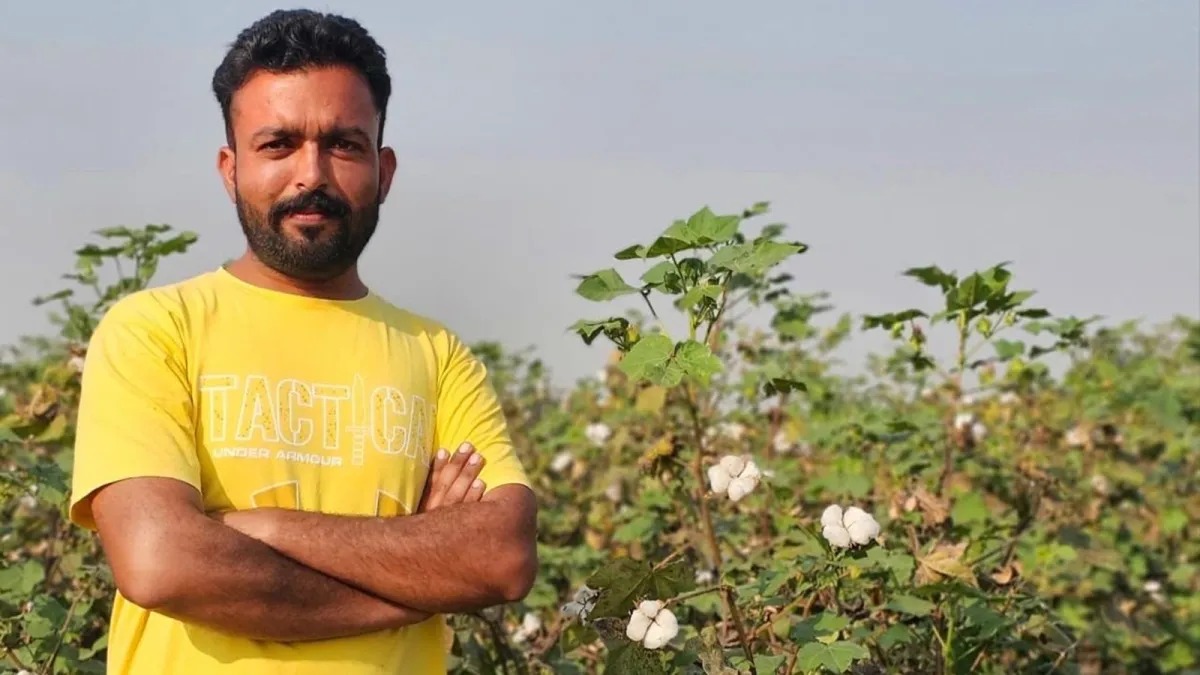
However, a small movement of farmers is attempting to reverse this trend. Eschewing the conventional high-input model, some cultivators are adopting "zero-budget" or ecological farming. By utilizing strategies like Integrated Pest Management (IPM), pheromone traps, and intercropping with resilient Desi (indigenous) cotton varieties, these farmers are attempting to lower production costs and restore soil biodiversity.
"I learnt that not every insect is harmful. Beneficial insects are nature's own pest managers," said Gagandeep Singh, a farmer from Mansa who has successfully cultivated cotton without chemical pesticides for four years. Support organizations like the Manav Vikas Sansthan (MVS) are now scaling these training programs, hoping to show that cotton remains viable if managed through science-based, ecological practices rather than purely chemical ones.
Why It Matters
For policymakers and environmentalists, the collapse of Punjab's cotton acreage is a "canary in the coal mine" for groundwater security. The shift toward paddy, while profitable for individual farmers in the short term, threatens the long-term viability of the state's water table. Revival of cotton is not just an economic priority for the textile sector but a crucial component of Punjab's ecological restoration strategy.
Key Facts at a Glance
Record Low: Only 70,000 hectares sown out of a 1.25 lakh hectare target (56%).
Primary Districts: Fazilka leads production, followed by Bathinda, Mansa, and Muktsar.
Main Threats: Recurring whitefly and pink bollworm infestations, coupled with unseasonal October rains.
Water Impact: Abandoning cotton in favor of paddy significantly accelerates groundwater depletion.
Frequently Asked Questions
Why are farmers abandoning cotton despite government subsidies?
Years of financial losses due to pest outbreaks and erratic weather have eroded confidence. Farmers find paddy more reliable due to assured government procurement and stable yields.
Can cotton cultivation become profitable again?
Experts suggest that shifting to integrated pest management (IPM) and resilient Desi varieties, which reduce reliance on expensive chemical pesticides, can restore profitability and lower risk for farmers.
What is the environmental impact of this trend?
The move away from cotton to water-intensive paddy is putting unsustainable pressure on Punjab’s groundwater, pushing the state toward a potential water crisis.
Official Sources