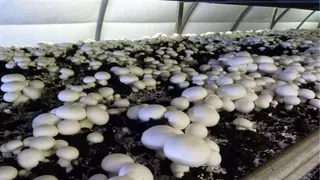
The Punjab government has launched a subsidy scheme offering up to Rs 80,000 to farmers for establishing mushroom cultivation units. Aimed at promoting crop diversification and increasing farm income, the 40% capital subsidy covers units costing around Rs 2 lakh, with additional technical support provided by the Horticulture Department.
As part of a strategic push to diversify agriculture and increase farmer income, the Punjab government has announced a subsidy of up to Rs 80,000 for setting up mushroom production units.
CHANDIGARH — The Government of Punjab, under the leadership of Chief Minister Bhagwant Singh Mann, has unveiled a new financial assistance scheme to encourage farmers to shift from traditional crop cycles to more profitable horticultural practices. The Department of Horticulture is now providing a 40 percent subsidy, capped at Rs 80,000, for establishing mushroom production units under the State Plan Scheme.
Boosting Farmer Incomes via Horticulture
The initiative is designed to address the challenges of declining income from conventional wheat-paddy cultivation. Horticulture Minister Mohinder Bhagat officially announced the subsidy on July 3, 2026, highlighting that mushroom cultivation is an ideal alternative due to its modest capital requirements and relatively low land and water usage.
According to official estimates, a small-scale mushroom production unit can be established with an investment of approximately Rs 2 lakh. By providing the 40 percent capital subsidy, the government aims to lower the entry barrier for small and marginal farmers, allowing them to leverage small spaces—as little as 1,800 square feet—for commercial production.
Strengthening the Horticultural Sector
The move is part of the Punjab government’s broader mission to strengthen the state’s horticultural sector. Beyond the financial subsidy, the Department of Horticulture is committed to providing comprehensive support to beneficiaries, including:
Technical Guidance: Access to expertise on mushroom physiology and production cycles.
Capacity Building: Specialized training programs to ensure high-quality yields.
Operational Support: Necessary logistical assistance to help farmers navigate the setup process.
Minister Bhagat emphasized that this is a "farmer-centric initiative" intended to foster economic sustainability in rural Punjab. The government views mushroom farming as a high-return venture that can offer farmers a viable way to augment their earnings while optimizing resource efficiency.
How to Apply for the Subsidy
For farmers interested in participating in the State Plan Scheme, the process involves a direct engagement with local administrative channels. Interested candidates are advised to contact their nearest District Horticulture Officer (DHO) to submit an application and receive detailed guidance on project requirements.
Officials stated that the departmental staff is prepared to assist farmers with the application process, ensuring that the necessary documentation is handled efficiently. This streamlined approach is aimed at ensuring that even farmers in remote or less-served central districts can easily access the benefits of the scheme.
Why It Matters
For Punjab’s agricultural economy, the subsidy represents a practical step toward "post-paddy diversification." Traditional wheat and paddy farming have faced challenges related to water depletion and shrinking profit margins. Mushroom cultivation offers a high-value, short-cycle alternative that can provide multiple harvests per year, significantly improving the annual cash flow for small-scale agrarian units.
Key Facts at a Glance
Subsidy Amount: 40% of the project cost, up to a maximum of Rs 80,000.
Eligibility: Open to farmers and individuals interested in horticulture; applications are processed through the State Plan Scheme.
Land Requirement: A small, productive unit can be set up in approximately 1,800 square feet.
Estimated Cost: A small production unit is estimated to cost around Rs 2 lakh.
Implementing Agency: The Department of Horticulture, Government of Punjab.
Frequently Asked Questions
Who is eligible to apply for this subsidy?
The scheme is open to farmers and individuals across Punjab interested in diversifying into mushroom production. Applicants should contact their local District Horticulture Officer for specific eligibility verification.
What is the objective of the subsidy?
The primary goal is to encourage crop diversification away from traditional crops, increase income for small and marginal farmers, and promote horticulture as a sustainable business venture.
What support does the government provide beyond the subsidy?
The Department of Horticulture provides essential technical guidance, hands-on training, and necessary support to help farmers successfully manage their mushroom units from setup to harvest.
Source: Department of Horticulture, Government of Punjab, Punjab Agro Industries Corporation, Awaz The Voice