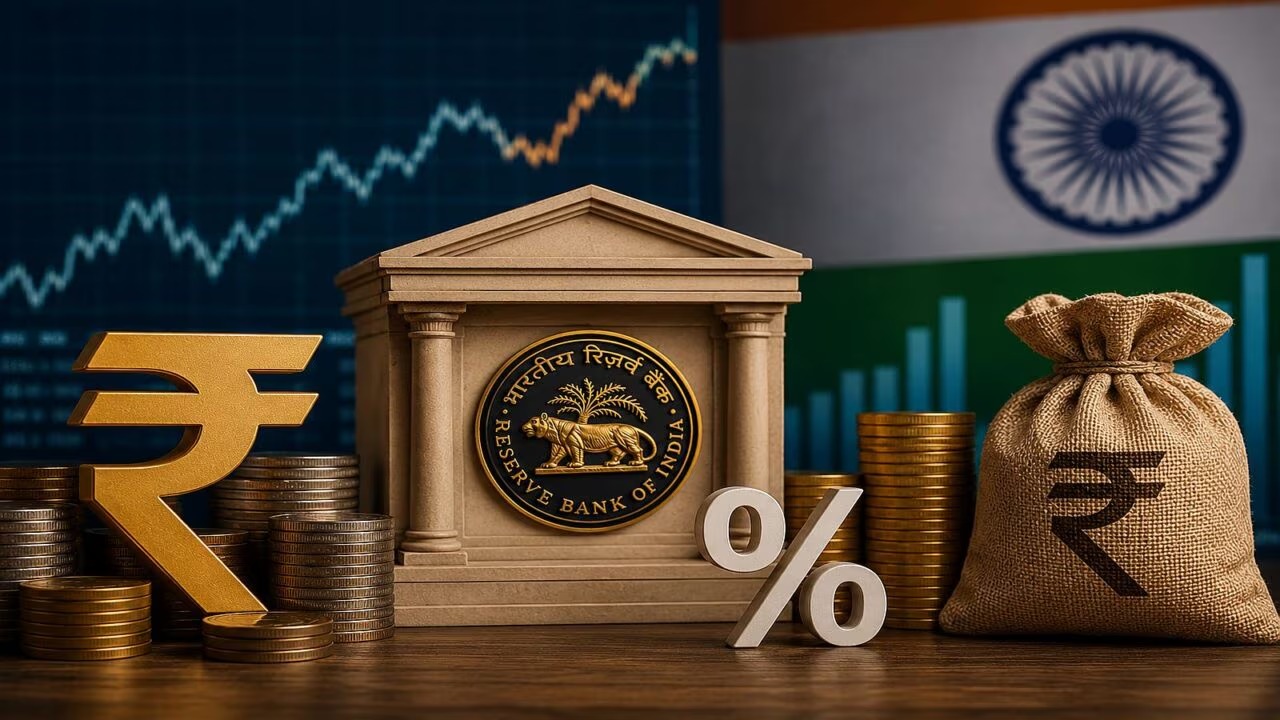
The Reserve Bank of India fully allotted bids worth ₹720.51 billion at a 5.26% cut-off rate during its latest 7-day VRR auction. The total bid volume fell well below the notified ₹1,250 billion target, signaling that temporary cash deficits across commercial banking networks remain comfortably manageable.
MUMBAI, India — The Reserve Bank of India (RBI) has formally injected short-term liquidity into the domestic banking network by fully allotting all bids submitted during its latest market operation.
In a regulatory release published today, July 20, 2026, the central bank confirmed it accepted and allotted bids worth ₹720.51 billion during its scheduled 7-day VRR auction. The total capital uptake by commercial banks came in significantly below the sovereign notified amount of ₹1,250 billion, indicating that while temporary cash mismatches persist within the interbank financial system, the immediate systemic liquidity deficit remains less severe than primary treasury desks initially estimated.
Bidding Metrics and Interest Rate Discovery
The structured liquidity infusion was conducted through the automated electronic portal of the central bank, drawing participation from multiple primary clearing banks and institutional dealers. The operation serves as a fine-tuning mechanism under the updated Liquidity Adjustment Facility (LAF) framework, which is deployed to smooth out transient capital strains driven by quarterly corporate tax outflows, clearing cycles, and seasonal shifts in physical currency circulation.
Operational disclosures reveal a highly uniform pricing structure across the bidding spectrum. The 7-day VRR auction achieved a clear consensus, with the central bank setting a final cut-off rate of 5.26%. Reflecting the tightly clustered bids submitted by the participating commercial banks, the final weighted average rate for the entire allotted sum also settled precisely at 5.26%. This pricing matches long-term money market indicators, signaling a stable alignment between institutional borrowing costs and the central bank's broader policy rates.
Analyzing Subdued Bank Participation and Cash Levels
The decision by commercial banks to draw less than 60% of the total notified capital buffer highlights an important shift in money market conditions. Market analysts note that while systematic credit expansion remains robust across retail and manufacturing corridors, the volume of surplus cash available within the broader interbank grid is keeping overnight rates stable.
Several factors explain the current state of financial system liquidity:
Government Capital Flows: Steady increases in central government spending have gradually returned liquidity to the interbank system, partially counteracting the cash drainage typically caused by routine GST collections.
Selective Treasury Behavior: Treasury desks are adopting a measured approach to short-term borrowing, opting to utilize internal cash surpluses before turning to central bank windows.
Foreign Banking Inflows: Steady foreign investment entering domestic sovereign debt instruments continues to provide a secondary buffer for system-wide cash balances.
Broader Implications for Consumers and Corporations
The results of the 7-day VRR auction carry clear operational significance for corporate treasuries, private businesses, and retail borrowers. By stepping in to inject transient cash whenever interbank liquidity shows signs of tightening, the RBI successfully keeps short-term money market rates from swinging wildly.
This proactive approach provides direct benefits across the wider economic landscape:
Stabilized Lending Benchmarks: Keeping the overnight Call Money Rate aligned with the official repo rate prevents sudden spikes in short-term borrowing benchmarks.
Predictable Commercial Paper Yields: Businesses looking to issue commercial paper or short-term debt certificates can price their instruments predictably, avoiding sudden volatility premium increases.
Consistent Consumer Loan Pricing: Well-managed interbank liquidity ensures that retail banks face no sudden funding pressures that could otherwise translate into higher interest charges for floating-rate home loans or vehicle financing.
Official Sources Section
According to the official money market operations report published by the financial markets operations department of the Reserve Bank of India, the final allocation, cut-off rate calculations, and reverse-delivery schedules comply fully with Section 17 of the RBI Act, 1934.
Quote Section
"According to officials tracking interbank market distributions, the outcome of the 7-day VRR auction demonstrates that systemic liquidity is resting in a comfortable, neutral zone," noted a senior fixed-income macro strategist at a primary domestic clearing desk. "The fact that banks left a large portion of the notified amount unutilized shows they are managing their cash reserve ratios efficiently. This operational comfort reduces the likelihood of aggressive rate spikes in the near term."
Why It Matters
For fixed-income investors, retail consumers, and financial planners, the central bank's steady hand in liquidity management serves as a foundation for economic stability. When the central bank provides flexible funding facilities like the 7-day VRR auction, it prevents temporary tax outflows from blowing up into full-scale cash crunches. This calculated support keeps credit flowing smoothly to manufacturing and commercial enterprises, helping to sustain capital expenditures without adding unnecessary inflationary pressure to retail markets.
Key Facts at a Glance
Allotment Figures: The Reserve Bank of India fully accepted and allotted all incoming bids worth ₹720.51 billion.
Notified Cap Under-Subscription: Lenders left a substantial portion of the offering untouched, bidding for far less than the maximum notified limit of ₹1,250 billion.
Uniform Interbank Pricing: Both the official cut-off rate and the final weighted average rate converged perfectly at 5.26%.
Systemic Health Signal: The moderate demand for transient funds confirms that current short-term funding pressures within commercial bank networks are manageable.
FAQ Section
What is the primary function of a 7-day VRR auction?
It serves as an auction-based liquidity management tool used by the central bank to inject short-term, transient cash into the banking system, allowing commercial banks to cover brief cash mismatches through competitive bidding.
Why did banks borrow less than the full ₹1,250 billion offered by the RBI?
The under-subscription indicates that commercial banking networks possess reasonable internal cash reserves and steady liquidity inflows from government disbursements, reducing their reliance on central bank borrowing lines.
Where can market participants track daily central bank liquidity operations?
Detailed transaction metrics, operational summaries, and upcoming auction calendars are updated daily on the main press release database of the Reserve Bank of India.
Source: Reserve Bank of India Money Market Press Releases, Clearing Corporation of India Market Disclosures.