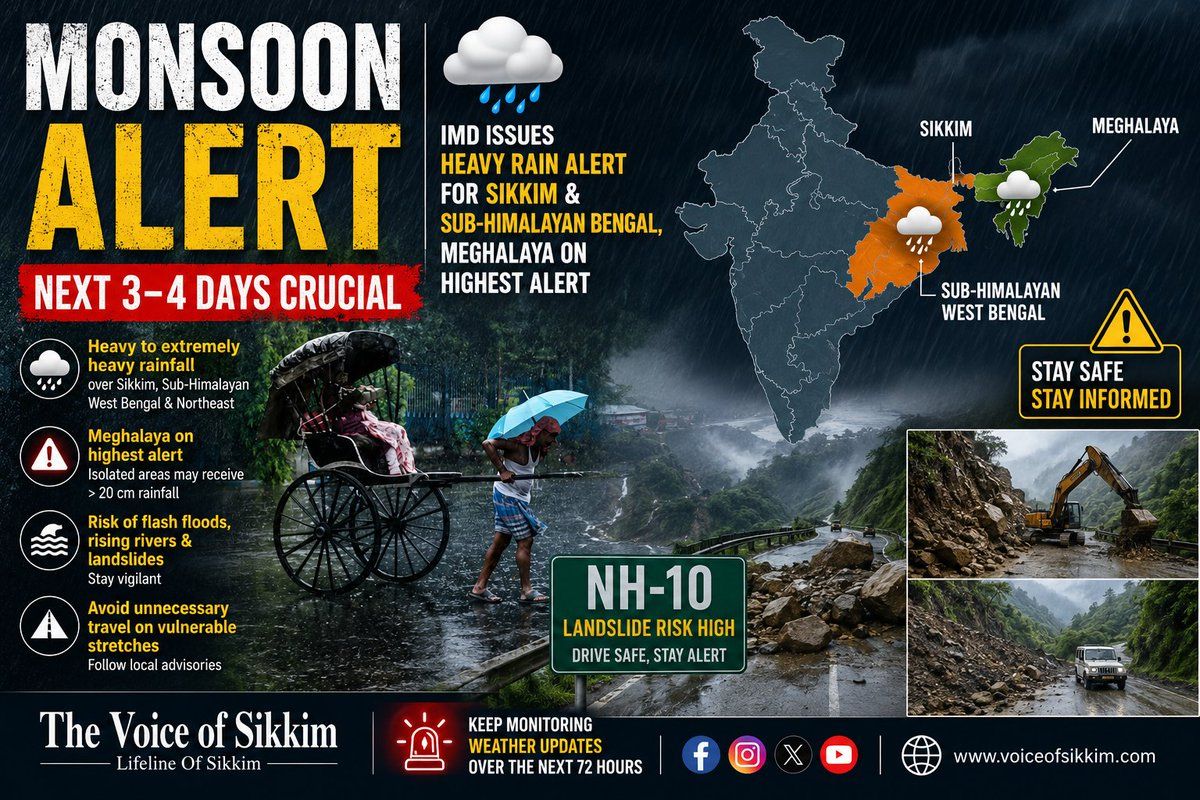
The IMD has issued a red alert for Sub-Himalayan West Bengal and Sikkim, forecasting extremely heavy rainfall through July 20, 2026. Driven by a well-marked low-pressure system, the weather event poses significant risks of landslides and flooding, prompting authorities to urge extreme caution for residents and travelers in the region.
Authorities issue urgent warnings as extreme rainfall triggers high-alert status across Sub-Himalayan West Bengal and Sikkim.
SILIGURI — The India Meteorological Department (IMD) has issued a red-coded warning for Sub-Himalayan West Bengal and Sikkim, forecasting heavy to very heavy rainfall, with isolated pockets expected to receive extremely heavy precipitation through July 20, 2026. This escalation in weather warnings follows a prolonged period of intense monsoon activity across East and Northeast India.
The weather agency’s latest bulletin emphasizes that the "red" status—which signifies a mandate for immediate action—is due to the risk of significant disruption caused by continuous, high-volume rainfall. Residents and local authorities have been advised to remain on high alert as the region contends with the combined impact of the monsoon trough and a well-marked low-pressure system moving across the territory.
A Systemic Monsoon Intensification
According to the IMD, the current weather volatility is driven by a well-marked low-pressure area that originated over the Northwest Bay of Bengal. As this system moves northwestwards, it has significantly enhanced moisture incursion from the Bay of Bengal into the Himalayan foothills.
The IMD noted that the atmospheric conditions are primed for sustained, widespread rainfall. Beyond Sub-Himalayan West Bengal and Sikkim, neighboring states including Bihar, Assam, Meghalaya, and Arunachal Pradesh are also bracing for continued wet spells. In its latest assessment, the IMD cautioned that the saturation of soil in high-altitude areas of Sikkim and North Bengal increases the vulnerability to landslides and infrastructure instability.
Impact on Residents and Travelers
For the residents of Siliguri, Gangtok, and surrounding districts, the red alert serves as a stark reminder of the monsoon's peak intensity. Local district administrations have been directed to ensure emergency response teams are positioned to manage potential waterlogging and road blockades.
Travelers planning excursions into the Sikkim Himalayas have been strongly advised to reconsider non-essential movement. The region is particularly susceptible to frequent roadblocks during this period, and high-altitude passes may be inaccessible due to thick cloud cover and torrential rain. Tourism boards and local operators are emphasizing the need for flexible itineraries, noting that the combination of heavy rain and landslide risks can lead to sudden travel disruptions.
Why It Matters
The practical implications of this red alert are significant. With widespread, heavy rain anticipated, the region faces an elevated risk of flash floods and structural damage to low-lying infrastructure. For the agricultural sector, while monsoon rain is essential, the intensity of this current spell poses a threat to standing crops and requires vigilant water management. For the general public, the focus remains on safety, avoiding flood-prone areas, and monitoring official weather channels for real-time evacuation or safety guidance.
Key Facts at a Glance
Alert Level: A "red" warning—the highest level for rainfall intensity—is currently in effect for Sub-Himalayan West Bengal and Sikkim.
Duration: The heavy to extremely heavy rainfall conditions are expected to persist through July 20, 2026.
Regional Impact: The system is also contributing to widespread rainfall across Bihar, Assam, Meghalaya, and other parts of Northeast India.
Primary Hazards: Authorities have flagged risks of landslides in hilly terrain, urban waterlogging, and significant disruptions to road transportation.
FAQ
What does a "red" weather warning mean?
A red warning from the IMD indicates that hazardous weather is imminent or occurring, and residents are advised to "take action" to stay safe and follow instructions from local authorities.
How long will the heavy rainfall last?
The IMD forecast indicates that extreme rainfall conditions are likely to continue across the specified regions until at least July 20.
Is travel to Sikkim advised during this time?
Officials advise caution; non-essential travel is discouraged due to the risk of landslides and roadblocks in the Himalayan region.
Are other states affected by this weather system?
Yes, the low-pressure system is driving widespread monsoon activity across Bihar, Jharkhand, and the Northeastern states.
Source: India Meteorological Department (IMD), IMD National Weather Forecasting Centre, News On AIR