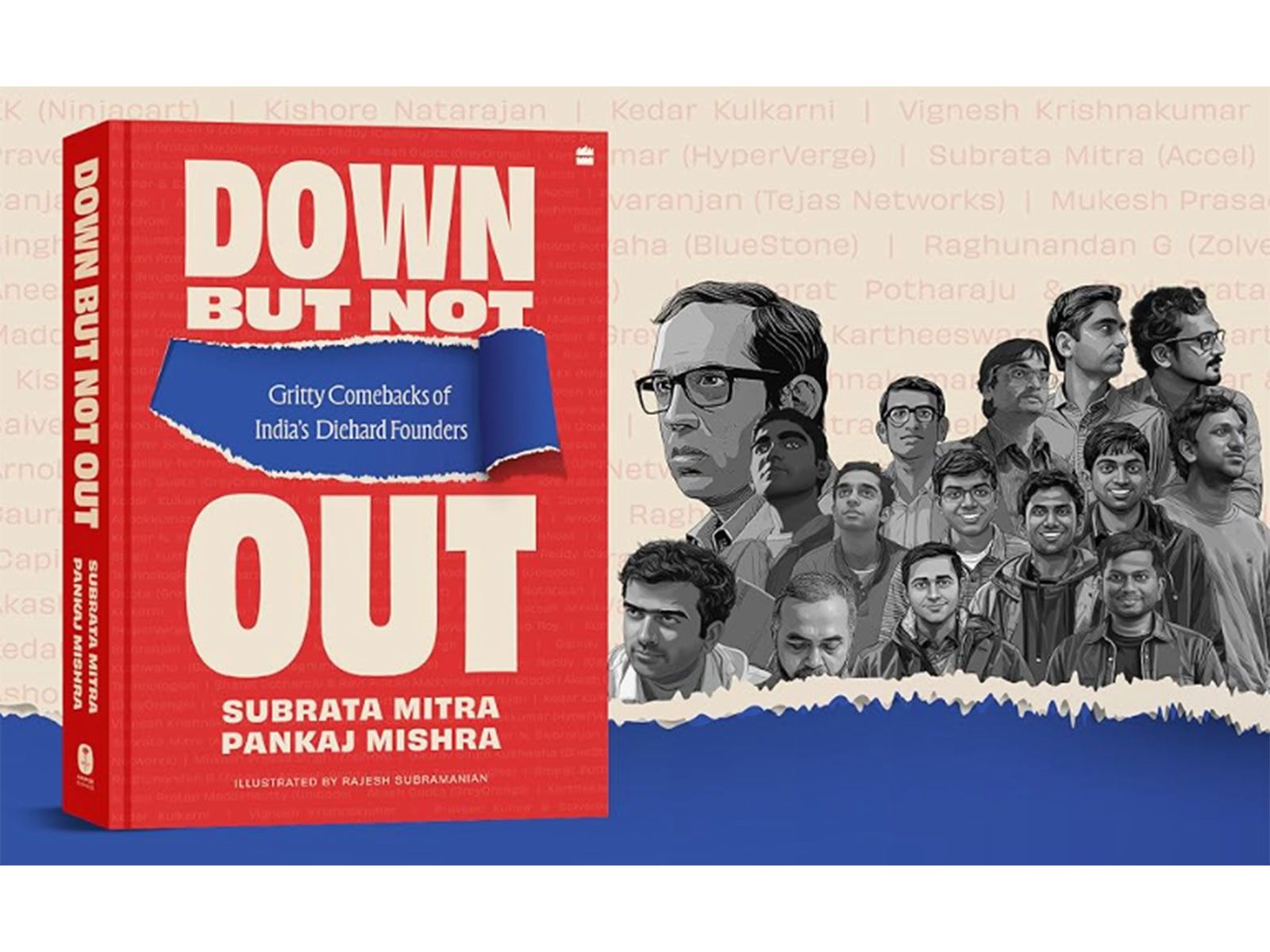
Subrata Mitra and Pankaj Mishra have launched "Down But Not Out," a book documenting the near-death crises faced by India’s top founders. Moving away from typical success narratives, the book focuses on resilience and grit, offering lessons on how to build enduring companies through extreme uncertainty and persistent challenges.
BENGALURU — In a market often obsessed with funding rounds and unicorn valuations, a new book titled Down But Not Out: Gritty Comebacks of India's Diehard Founders aims to shift the narrative toward the often-invisible struggle of entrepreneurship. Co-authored by Subrata Mitra, Founding Partner at Accel, and Pankaj Mishra, entrepreneur and founder of FactorDaily, the book was officially launched this month, providing a deep dive into the "near-death moments" that defined the journeys of some of India’s most successful companies.
Published by HarperBusiness, the work draws on extensive conversations with founders who navigated severe crises—from financial collapses and regulatory freezes to natural disasters—before eventually achieving market leadership. By documenting these "scar tissue" moments, the authors seek to demystify the path to building a category-defining business.
Beyond the Unicorn Narrative
The book diverges from typical success-story tropes by focusing on the mechanics of resilience. Featured companies include Tejas Networks, which survived the Lehman Brothers crash and a massive fire in its R&D labs; BlueStone, which underwent a dramatic downsizing before scaling into a leading jewelry platform; and TaxiForSure, which navigated the high-stakes landscape of the ride-hailing industry before its eventual acquisition.
"The defining moments were rarely the successes that made headlines, but the setbacks, doubts, and failures they quietly endured," said Subrata Mitra during the book’s launch. Mitra, who has spent two decades working with founders through various market cycles, argues that endurance—rather than mere speed—is the true hallmark of an enduring business.
Insights for the Startup Ecosystem
Down But Not Out provides a tactical look at the decisions that turn a failing company into a success story. The book explores:
The Courage to Pivot: How founders adapt when their initial model is rendered obsolete by market shifts or external disasters.
The Power of Conviction: Lessons on "long-term greed"—Mitra’s term for building value through patience and trust rather than short-term gains.
Organizational Resilience: The role of first employees and steady families in sustaining a startup during its most volatile phases.
Why It Matters
This book arrives at a critical time for the Indian startup ecosystem as it matures beyond the "easy money" era. For entrepreneurs, investors, and students of business, Down But Not Out serves as a manual for navigating uncertainty. It highlights that the bedrock of India's entrepreneurial rise is not just the unicorns themselves, but the collective resilience of founders who refused to walk away when the odds were stacked against them.
Key Facts at a Glance
Authors: Subrata Mitra (Founding Partner, Accel) and Pankaj Mishra (Founder, FactorDaily).
Publication: HarperBusiness (May 2026).
Featured Founders/Companies: Includes insights from BlueStone, Tejas Networks, Ninjacart, GreyOrange, Capillary Technologies, and others.
Core Theme: The reality of "near-death" experiences in entrepreneurship and the grit required for a turnaround.
FAQ
What makes this book different from other startup biographies?
Unlike books that focus on high-valuation exits and success stories, this book focuses on the "struggle and scar tissue," chronicling failures and crises rather than just the peak moments.
Is the book only for startup founders?
While geared toward founders and investors, the authors intend the book for anyone looking to adapt and persevere in professional or personal life, regardless of industry.
Where can the book be purchased?
It is currently available through major retailers like Amazon, as well as leading online and offline bookstores across India.
Source: HarperCollins, Business Standard