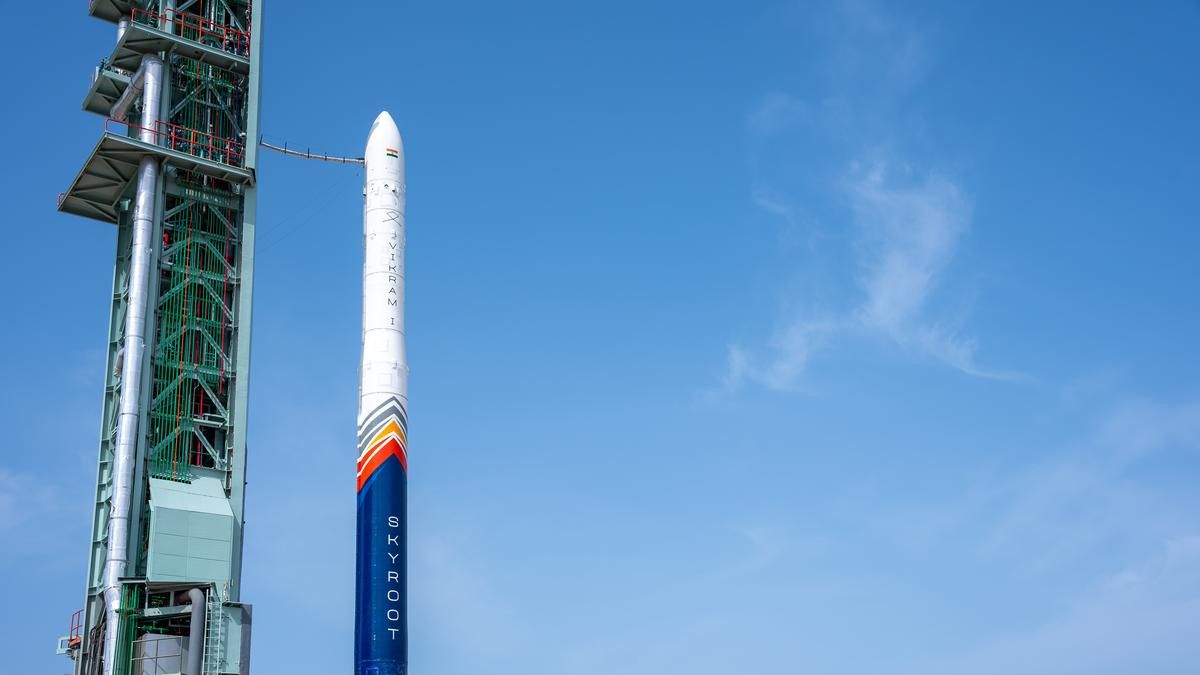
Skyroot Aerospace is set to launch its Vikram-1 rocket, India's first privately developed orbital-class vehicle, from the Satish Dhawan Space Centre today at 11:30 a.m. IST. The maiden test flight, "Mission Aagaman," aims to validate the rocket's indigenous carbon-composite design and 3D-printed engine technology for future commercial satellite deployments.
India’s private space sector reaches a historic milestone today as Skyroot Aerospace prepares to launch its Vikram-1 orbital-class rocket from the Satish Dhawan Space Centre.
SRIHARIKOTA — In a landmark moment for India's burgeoning space industry, Hyderabad-based private launch company Skyroot Aerospace is set to conduct the maiden test flight of Vikram-1 today, July 18, 2026. The launch, scheduled for 11:30 a.m. IST from the First Launch Pad at the Satish Dhawan Space Centre, represents the first time a privately developed Indian orbital-class vehicle will attempt to reach space.
A Defining Milestone for Private Space
Following the success of its suborbital Vikram-S mission in 2022, Skyroot Aerospace has spent years refining the technology for Vikram-1, a seven-storey-tall, multi-stage launch vehicle. Built with an all-carbon composite structure, the rocket utilizes advanced propulsion systems, including 3D-printed engines and high-thrust solid-fuel boosters, to deliver small satellites into Low Earth Orbit (LEO).
"The clearance of Vikram-1 for flight following rigorous testing is a defining milestone in India's space journey," said Pawan Kumar Chandana, co-founder and CEO of Skyroot Aerospace. According to the company, the mission—codenamed "Aagaman" (Sanskrit for "Arrival")—is designed to gather critical in-flight data on propulsion, stage separation, and guidance systems, which will serve as the foundation for the company's future commercial launch operations.
Mission Objectives and Payload
The Vikram-1 test flight is targeting a 450 km orbit at a 60-degree inclination. Beyond testing the vehicle's performance, the rocket is carrying several technology demonstration payloads, including:
Solaras S3: A satellite developed by Bengaluru-based start-up Grahaa Space.
Embrace: An in-orbit debris-clearing robotic arm developed by Cosmoserve Space.
SCOPE: A proprietary technology demonstration satellite by Skyroot Aerospace.
Artistic Payloads: Including Cosmos Diamonds' "Cosmic Bloom" and microscopic 18-carat gold sculptures honoring legendary Indian scientists.
Why It Matters
The maiden flight of Vikram-1 is more than a technical test; it signifies the arrival of India's private sector in the highly competitive global small-satellite launch market. With the demand for satellite-enabled services growing rapidly, Skyroot’s ability to establish a reliable launch cadence could transform India into a global hub for on-demand space access.
Key Facts at a Glance
Vehicle: Vikram-1, a multi-stage orbital launch vehicle.
Capacity: Designed to carry small satellites weighing up to 350 kg to LEO.
Launch Site: First Launch Pad, Satish Dhawan Space Centre, Sriharikota.
Mission Goal: To validate flight systems and establish commercial launch readiness.
Frequently Asked Questions
Q: Is this India's first private rocket launch?
A: It is the first orbital-class private rocket launch. Skyroot previously made history in 2022 with the suborbital flight of Vikram-S.
Q: Where can I watch the launch?
A: Skyroot Aerospace is providing live coverage of the Vikram-1 mission, with streams available through official company channels and space-industry news platforms.
Q: What happens if the launch is delayed?
A: Skyroot has stated that the current launch window remains open through August 4, 2026.
Source: The Hindu, Hindustan Times, Space.com