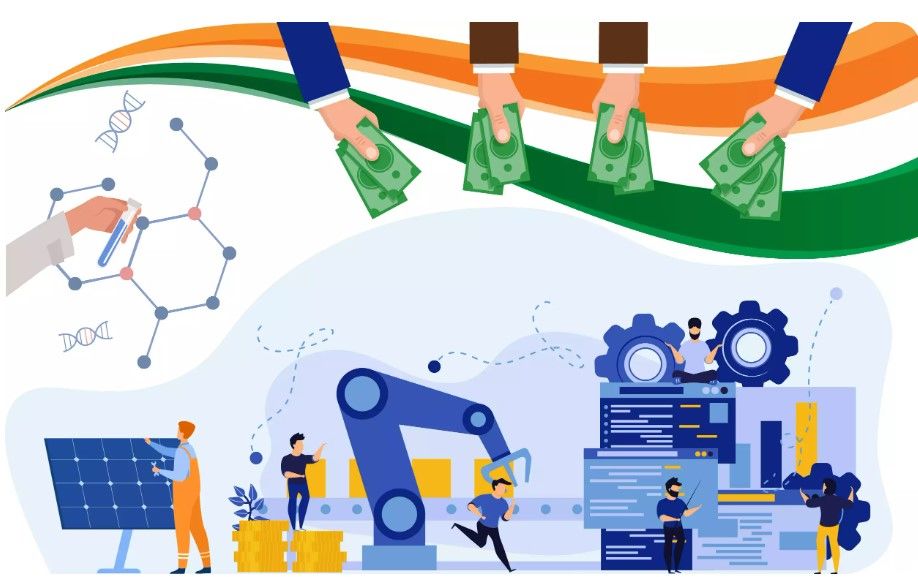
The PLI 2.0 scheme aims to transform India into a global manufacturing hub, yet experts identify high operational costs and scaling challenges as significant hurdles. While the government provides fiscal incentives, firms urge for improved infrastructure and lower logistics costs to make domestic production truly competitive on the global stage.
As India pushes forward with the second iteration of its Production Linked Incentive (PLI 2.0) scheme, industry experts and analysts warn that significant challenges in scale and cost-efficiency remain obstacles to global manufacturing dominance.
NEW DELHI — The Indian government’s ambitious Production Linked Incentive (PLI 2.0) scheme, designed to bolster domestic manufacturing and integrate India into global supply chains, has reached a critical juncture. While the initiative has successfully attracted global electronics and component manufacturers to set up facilities, officials and business leaders acknowledge that achieving the necessary scale to compete with established manufacturing powerhouses like China and Vietnam remains a complex task.
Assessing the PLI 2.0 Landscape
The PLI 2.0 scheme focuses on high-value sectors, including semiconductor manufacturing, advanced chemistry cell batteries, and specialized steel. According to recent disclosures from the Ministry of Commerce and Industry, the government has disbursed significant incentives to companies that have met incremental investment and sales targets.
However, market analysts point out that despite these fiscal levers, the "cost of doing business" remains elevated. Factors such as logistics, energy costs, and land acquisition delays continue to dampen the competitive edge that the PLI 2.0 aims to provide. While the scheme encourages local value addition, manufacturers argue that the lack of an integrated "plug-and-play" industrial ecosystem forces firms to absorb higher operational overheads during the initial scaling phase.
Infrastructure and Regulatory Hurdles
For many investors and domestic businesses, the primary barrier is the gap between policy intent and ground-level execution. Official regulatory filings indicate that while the PLI 2.0 framework is comprehensive, the multi-departmental approval process for specific industrial zones can extend lead times by several months.
"The aspiration is to move from being an assembly hub to a manufacturing powerhouse," stated a senior official from the Department for Promotion of Industry and Internal Trade (DPIIT). "However, the transition requires a synchronized effort to lower logistical costs, which currently remain higher than regional benchmarks."
Impact on Domestic Ecosystems
The PLI 2.0 scheme is also intended to stimulate local MSMEs (Micro, Small, and Medium Enterprises) by encouraging them to become tier-2 and tier-3 suppliers for global OEMs (Original Equipment Manufacturers). By localizing the supply chain, the government hopes to reduce import dependency for critical components.
Nevertheless, industry fans and investors are watching closely to see if the incentive structure will be enough to offset the current capital expenditure (CapEx) requirements. As of July 2026, several large-scale electronics manufacturers have expressed concerns that without further rationalization of customs duties on essential raw materials, the margin benefits intended by the PLI 2.0 could be neutralized.
Why It Matters
The success of the PLI 2.0 scheme is vital for India’s goal of becoming a $5 trillion economy. If the government can successfully address these scaling hurdles, the country stands to attract a significant portion of global manufacturing operations looking to diversify away from traditional hubs. Failure to lower costs and increase industrial throughput, however, may limit the scheme's impact to niche sectors rather than the broad-based industrial revolution the government envisions.
Key Facts at a Glance
Primary Objective: To incentivize large-scale manufacturing and boost domestic value addition in high-growth sectors.
Current Challenges: Higher logistical costs, complex land acquisition, and elevated initial CapEx requirements.
Strategic Goal: Integrating Indian firms into global value chains as a manufacturing alternative.
Focus Areas: Semiconductors, green energy components, and specialized industrial equipment.
Frequently Asked Questions
Q: What is the main difference between PLI 1.0 and PLI 2.0?
A: PLI 2.0 refines the incentive structure by targeting specific sub-sectors and prioritizing deeper value addition, whereas the initial phase focused on broader entry into the manufacturing sector.
Q: Why is scale considered a hurdle for the PLI 2.0 scheme?
A: Indian manufacturing often faces fragmented production capacities, leading to higher unit costs compared to global competitors who benefit from massive economies of scale and integrated ecosystems.
Q: How is the government addressing these concerns?
A: Officials state that the government is working on streamlining logistics, reducing electricity tariffs for industrial zones, and digitizing regulatory clearances to improve the ease of doing business.
Source: Ministry of Commerce and Industry, Department for Promotion of Industry and Internal Trade (DPIIT), Invest India