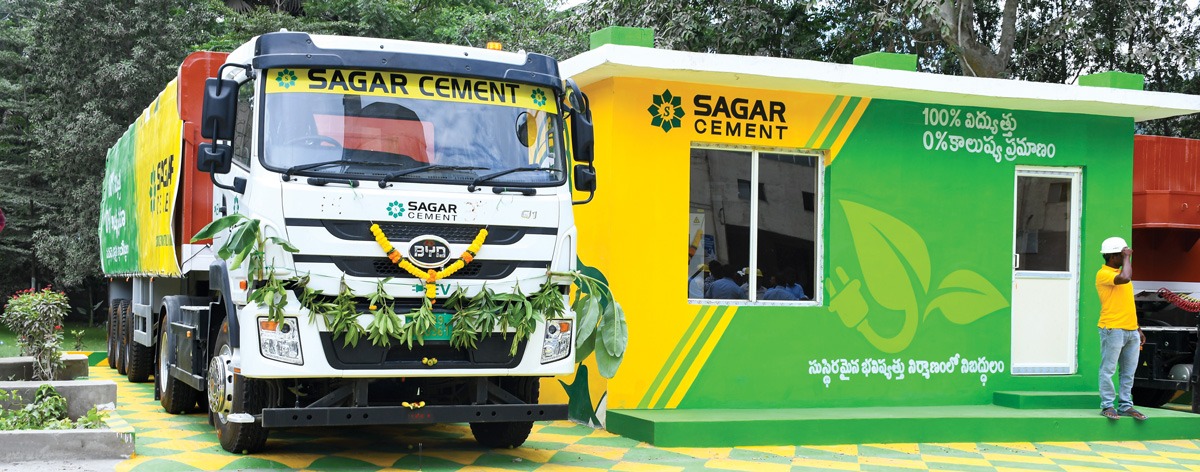
Sagar Cements Limited has successfully commissioned the balance capacity of a 1.55 MW Waste Heat Recovery Power System at its plant in Gudipadu, Andhra Pradesh. This final phase completes the facility's 4.35 MW project, allowing the manufacturer to optimize production costs, lower grid dependency, and advance its sustainability goals.
HYDERABAD — In a major boost to its sustainable manufacturing goals and operational cost optimization, leading regional producer Sagar Cements Limited has officially announced the successful commissioning of its balance capacity of 1.55 MW Waste Heat Recovery Power System (WHRS) at its integrated cement manufacturing plant in Gudipadu village, Ananthapur District, Andhra Pradesh.
The green energy milestone, submitted to the stock exchanges via an official compliance disclosure on June 24, 2026, marks the complete commercial rollout of the site's targeted 4.35 MW WHRS infrastructure. By utilizing a high-efficiency preheater boiler mechanism, the newly integrated power block captures residual thermal exhausts from the industrial clinker manufacturing process, directly converting waste heat into internal captive electricity.
Technical Integration and Achieving Full Operational Scale
The newly operationalized 1.55 MW installation completes a multi-phase clean energy infrastructure rollout at the Gudipadu manufacturing facility. Previously, on May 14, 2026, Sagar Cements had informed capital market regulators that it had commissioned the initial 2.80 MW phase of the project, which utilized an Air Quenching Cooler (AQC) boiler configuration.
The successful balancing addition of the 1.55 MW preheater system allows the plant to run its waste-to-energy lifecycle at maximum engineering capacity. According to regulatory disclosures filed under Regulation 30 of the SEBI (Listing Obligations and Disclosure Requirements) Regulations, 2015, the facility can now run entirely self-sustained thermal loops, minimizing dependency on expensive grid tariffs and volatile external commercial coal procurement channels.
Strategic Shift Toward Green Energy and Cost Optimization
The operationalization of the full 4.35 MW Gudipadu infrastructure aligns directly with Sagar Cements' broader strategy to mitigate severe input cost pressures. Throughout recent accounting cycles, the southern Indian cement industry has faced compressed realizations caused by competitive local pricing environments, alongside volatile prices for imported petcoke and industrial thermal coal.
By scaling up its consolidated green energy capacity—which includes extensive captive solar layouts and multiple WHRS configurations across its regional plants—the company is actively increasing its alternative power share toward a target threshold of over 20% of total electrical energy requirements. In its recently published Business Responsibility and Sustainability Report (BRSR), the company highlighted that thermal efficiency projects helped boost its operating EBITDA by 107% year-over-year to ₹29,199 lakhs, proving that decoupling production from fossil fuels yields tangible balance sheet advantages.
Corporate Expansion and the Andhra Cements Amalgamation
The infrastructural completion at Gudipadu lands during a highly active phase of corporate restructuring for the company. The Board of Directors recently granted executive clearance for a comprehensive scheme of amalgamation to legally merge its subsidiary, Andhra Cements Limited (ACL), directly into the main corporate entity.
For institutional equity investors tracking the stock on the National Stock Exchange of India (NSE), this structural consolidation simplifies manufacturing metrics, rationalizes marketing and brand distribution networks, and places all high-margin regional green power units under a single, transparent financial balance sheet. The ongoing operational upgrades support management's forward-looking commercial guidance, which aims to expand total consolidated sales volume to approximately 7 million metric tonnes over the upcoming cycle.
Official Sources Section
The underlying industrial parameters, specific megawatt generation statistics, compliance regulations, and financial performance metrics detailed in this report are verified directly from listing notifications submitted by Sagar Cements Limited to the corporate desks of the BSE Limited.
Management Declaration
"According to officials familiar with the green power project roadmap, the commissioning of the balance 1.55 MW preheater boiler satisfies our stated timeline for the facility. This complete 4.35 MW captive loops model lowers our reliance on external energy purchases, effectively insulates our core processing margins against external energy market shocks, and advances our environmental sustainability mandate."
Why It Matters
This successful energy commissioning delivers practical operational benefits by turning industrial waste heat into free power. By generating 4.35 MW of electricity directly on-site, Sagar Cements slashes its factory electricity bills, lowers the carbon footprint per bag of cement, and helps the manufacturer maintain stable product prices for regional construction and real estate businesses.
Key Facts at a Glance
Project Completion: Sagar Cements successfully operationalizes the balance capacity of 1.55 MW waste heat recovery system in Andhra Pradesh.
Full Load Achieved: The milestone completes the total planned 4.35 MW green power framework at the Gudipadu factory.
Technology Deployed: The latest 1.55 MW phase integrates a specialized preheater boiler to capture thermal manufacturing exhaust.
Financial Shielding: The captive asset lowers manufacturing dependency on expensive grid tariffs and volatile commercial coal imports.
Regulatory Compliance: The corporate action was executed under Regulation 30 mandates of the Securities and Exchange Board of India (SEBI).
FAQ Section
Q1: How does a Waste Heat Recovery Power System (WHRS) operate in a cement plant? A1: A WHRS captures the hot gases and thermal exhaust naturally released during the clinker baking process in a cement kiln. Instead of venting this heat into the atmosphere, it is channeled into specialized boilers to generate clean, emission-free steam electricity.
Q2: What is the total green energy capability of the Gudipadu production plant now? A2: Following the successful commissioning of the balance 1.55 MW preheater boiler block, the Gudipadu manufacturing facility possesses a fully operational, consolidated captive WHRS asset totaling 4.35 MW.
Q3: How does this environmental investment impact retail equity investors of Sagar Cements? A3: Captive power generation directly lowers the cash cost of production per tonne of cement. For stock market investors, this efficiency improves the company's operating EBITDA margins and insulates its earnings profile against sudden spikes in global fuel costs.
Source: National Stock Exchange of India Listing Portal, BSE Limited Corporate Announcements Centre, Sagar Cements Limited Governance Disclosures.