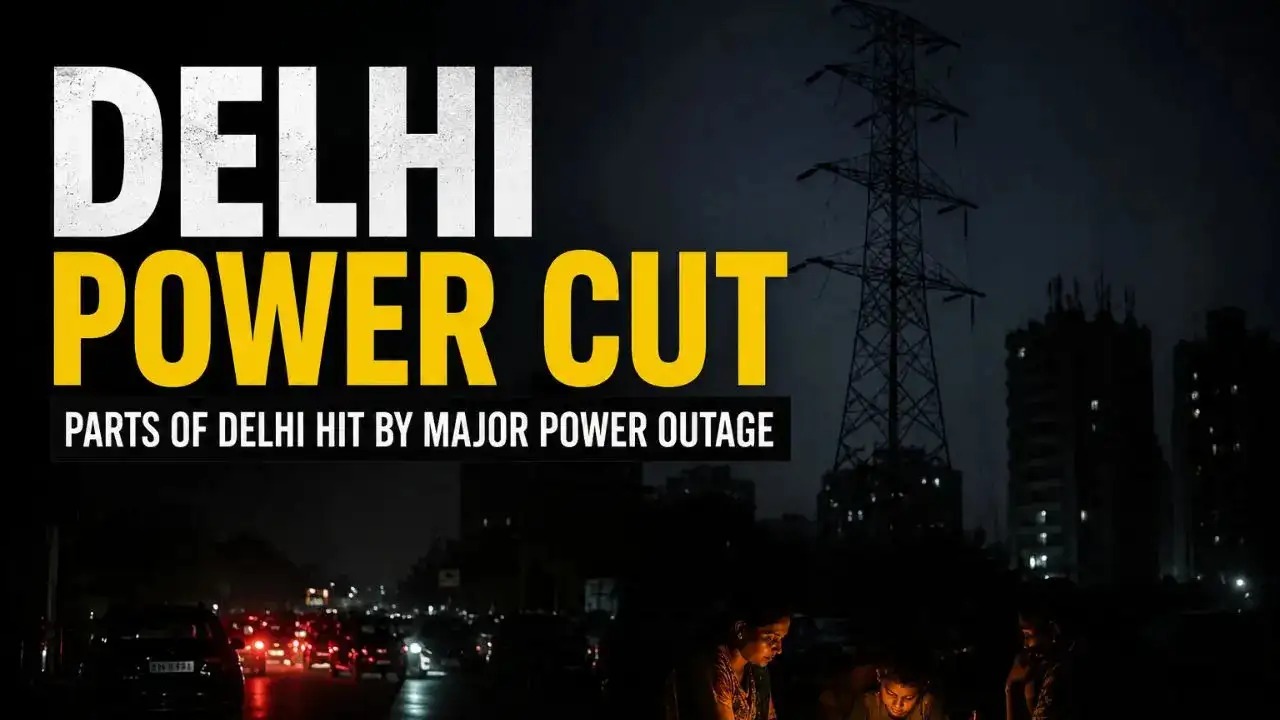
Delhi's West and North-West areas, including Mundka and Janakpuri, face scheduled power cuts today, June 14, 2026, for critical maintenance. BSES and Tata Power are upgrading infrastructure to prevent transformer failures amid a severe heatwave that has pushed the city's power demand toward record levels.
NEW DELHI — Several residential and commercial pockets across West Delhi, including Mundka, Janakpuri, and Nangloi, are set to experience scheduled power disruptions today, June 14, 2026. The outages, coordinated by BSES Rajdhani Power Limited (BRPL), are part of an emergency maintenance and infrastructure upgrade drive designed to prevent large-scale grid failures as the city’s electricity demand reaches record-breaking levels.
With Delhi grappling with an intensified June heatwave and temperatures hovering near 45°C, the power distribution network is facing unprecedented thermal stress. According to officials, these planned shutdowns are necessary to identify and rectify overloaded transformers and aging cables before they succumb to the evening peak-load surge.
Areas and Timings of Scheduled Outages
The power cuts will be implemented in staggered time slots across different zones to minimize total downtime for individual blocks. Residents in the following areas are advised to prepare for supply interruptions:
Janakpuri: Staggered outages are expected between 10:00 AM and 3:00 PM in various blocks (primarily C and D blocks) to facilitate feeder maintenance.
Mundka: Industrial and residential segments may face cuts from 9:30 AM to 1:30 PM as part of infrastructure reinforcement works.
Nangloi & Najafgarh: Disruptions are slated for the early morning window (8:00 AM to 12:00 PM) to address localized voltage fluctuations and preventive hardware replacement.
Other Affected Pockets: Minor disruptions are also reported in parts of Dwarka (Sector 7 and 8), Palam, and Mohan Garden throughout the afternoon.
Rising Heatwave and Grid Stability Challenges
The 2026 summer has seen a compounding supply-demand gap in the national capital. According to reports from the Delhi Electricity Regulatory Commission (DERC), the city's peak power demand has surged past 8,000 MW this season. The current crisis is being driven by a "triple-threat" of high ambient temperatures, fuel shortages at gas-based plants due to ongoing regional conflicts, and the inability of renewable solar capacity to meet post-sunset peaks.
Utility engineers have highlighted that sustained temperatures above 40°C significantly reduce the cooling efficiency of transformers. By executing these scheduled outages, BSES aims to perform "load-shifting" and hardware cooling, which protects the distribution equipment from catastrophic failure that would result in much longer, unscheduled blackouts.
Official Sources Section
According to official maintenance schedules published on the BSES Rajdhani Power Limited (BRPL) portal and the Tata Power-DDL Outage Tracker, these shutdowns are documented under "Preventive Maintenance" and "Project Work." Consumers can check the specific status of their locality by entering their Consumer Account (CA) number on the respective discom (distribution company) websites.
Quote Section
According to officials at the Delhi Power Department:
"The distribution companies are working around the clock to manage the record-breaking demand. While we understand the discomfort caused by scheduled outages during a heatwave, these short interventions are vital to prevent transformer burnouts and ensure the overall integrity of the Delhi grid during the crucial evening hours."
Sarnath Ganguly, a senior power distribution expert, stated:
"Utilities must identify overloaded infrastructure and build capacity well before summer peaks. Preventing large-scale outages requires a combination of proactive utility discipline and demand-side moderation from consumers during extreme heat conditions."
Why It Matters
For residents and small businesses, these outages during a heatwave present immediate health and operational risks. Practically, these shutdowns allow for the replacement of vulnerable components that could otherwise cause prolonged, multi-day outages if they were to catch fire or fail under peak load. For hospitals and essential services, these notices serve as a critical cue to verify backup generator fuel levels. For the broader economy, maintaining grid frequency above the critical 50 Hz threshold is essential to avoid cascading failures across the Northern Grid.
Key Facts at a Glance
Affected Zones: Major pockets of Janakpuri, Mundka, Nangloi, Dwarka, and Najafgarh.
Duration: Most outages are scheduled for 4 to 6 hours during daylight windows.
Primary Cause: Preventive maintenance to protect the grid from heatwave-induced thermal overloading.
Peak Demand: Delhi’s electricity consumption is currently tracking near historical highs of 8,000+ MW.
Contact Info: Residents can dial 19123 (BSES Rajdhani) or 19124 (Tata Power-DDL) for status updates or to report faults.
FAQ Section
Q: How can I find out if my specific street will have a power cut?
A: You can visit the Scheduled Outage page of your discom or send a WhatsApp message to 9999919123 (for BSES Rajdhani) with your CA number to get real-time updates.
Q: Why are power cuts happening even though India has enough power plants?
A: While total generation capacity is high, localized distribution infrastructure (transformers and wires) can only handle a certain amount of electricity at once. Extreme heat causes this equipment to overheat, requiring scheduled "cool-down" periods or upgrades.
Q: What precautions should I take during the scheduled outage?
A: Authorities advise charging mobile devices and power banks in advance, keeping refrigerator doors closed to maintain cooling, and unplugging sensitive electronic equipment (like computers) to protect them from potential voltage surges when power is restored.
Source: BSES Rajdhani Power Limited (BRPL) Outage Management, Tata Power Delhi Distribution Limited (TPDDL), Delhi Electricity Regulatory Commission (DERC).