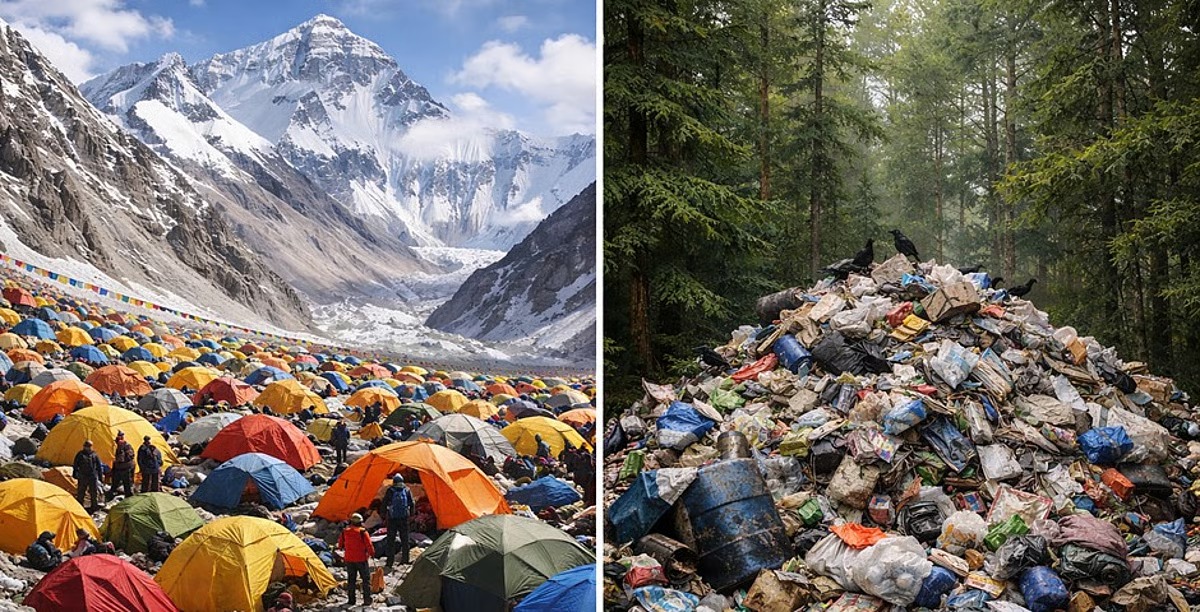
India's booming Himalayan trekking sector faces intense scrutiny as high-altitude trails grapple with severe plastic pollution, waste management crises, and animal welfare issues. Backed by a ₹2,500 crore budget and National Green Tribunal interventions, authorities are pushing for a transition toward strict carrying-capacity limits and sustainable, "Leave No Trace" adventure tourism.
NEW DELHI — India’s rapidly growing adventure tourism industry is confronting a major sustainability crisis as hundreds of thousands of recreational hikers flood high-altitude Himalayan trails. Data compiled by regional tourism boards and environmental monitoring units reveals that popular paths across Uttarakhand, Himachal Pradesh, and Sikkim are experiencing unprecedented volumes of solid waste, trail erosion, and localized resource depletion.
As the Union Government expands budgetary allocations to develop new mountain routes, a growing consensus among environmental scientists, local communities, and policy makers warns that unregulated commercial trekking is turning a pursuit of mental peace into an unsustainable ecological footprint on a highly climate-sensitive ecosystem.
The Ecological Footprint of High-Altitude Foot Traffic
The traditional perception of trekking as a low-impact, environmentally benign activity is being challenged by the realities of mass commercial tourism. Environmental impact audits conducted across sensitive alpine zones show that the influx of seasonal hikers has introduced significant urban pollution variables into remote catchments.
Research data shows that individual trekkers in sensitive zones generate between 200 and 288 grams of solid waste per day. Along highly frequented routes, such as the 19-kilometer trail to the Valley of Flowers and Hem Kund Sahib in Uttarakhand, this cumulative output reaches a staggering 29 metric tonnes of trash within a brief four-month operational window. Non-biodegradable materials primarily single-use glass bottles, multi-layer plastic food packaging, and synthetic equipment fibers comprise 96.3% of this total weight, presenting long-term contamination risks as they degrade into microplastics within mountain water tables.
Animal Exploitation and Hygiene Hurdles on Popular Routes
Beyond structural waste accumulation, the commercialization of popular trails has drawn heavy criticism over animal welfare standards and systemic sanitation breakdowns. To support the physical comfort of urban travelers, operators deploy thousands of mules, horses, and donkeys daily to haul heavy luggage, camping gear, and luxury provisions up steep inclines.
Critical operational choke points have emerged across prime corridors:
The Mule Economy: On routes like Goechala in Sikkim and Kedarkantha in Uttarakhand, heavy reliance on pack animals has severely degraded trail hygiene and caused widespread soil compaction.
Pilgrimage Death Marches: The crisis is most visible along high-altitude pilgrimage routes like Kedarnath, where thousands of equines face intense physical exhaustion, leading to frequent collapses and documented instances of illicit drugging by handlers seeking to maximize daily trips.
Human Waste Complications: On specialized winter routes like the frozen Zanskar River (Chadar) trek, sub-zero conditions prevent natural decomposition, turning human waste management into a severe logistical hurdle for local administrations.
This human-driven transformation has even altered local wildlife behaviors. Scavenger species, such as the high-altitude Alpine chough, have systematically pivoted away from natural foraging habits, nesting instead around commercial campsites to feed on discarded processed food waste like instant noodles and plastics.
Regulatory Interventions and Sovereign Mandates
The escalating crisis has forced apex regulatory institutions to intervene to prevent irreversible environmental damage. The National Green Tribunal (NGT) has taken active suo motu cognizance of the ecological degradation across the Indian Himalayan Region.
In a series of recent judicial directives, the NGT impleaded the Ministry of Environment, Forest and Climate Change (MoEFCC) and regional tourism development boards to strictly enforce carrying-capacity limits and compliance codes under the Environment (Protection) Act, 1986.
Concurrently, international stakeholders operating across the contiguous mountain chains have ratified the historic Namche Action Plan 2026–2030. This multilateral framework legally mandates the adoption of circular economy models, the implementation of localized plastic bans, and the strict protection of fragile cryosphere environments from expanding tourism infrastructure.
Official Sources Section
According to policy outlines published by the Ministry of Tourism and status updates from the National Green Tribunal, future structural grants for adventure tourism will be tied directly to "Leave No Trace" operational certifications.
The government’s recent budgetary allocations include a ₹2,500 crore funding pool aimed at diversifying tourist traffic by developing alternative, less-congested trekking routes. A key component of this initiative includes an academic partnership with the Indian Institutes of Management (IIM) to formally train 10,000 local guides in sustainable group management and sensitive wilderness ethics.
Quote Section
Highlighting the immediate structural danger to high-altitude settlements, the Principal Bench of the National Green Tribunal stated during a recent environmental review:
"The rapid escalation of human exposure and unregulated infrastructure development in high-altitude areas has significantly amplified ecological risks. We must focus immediate resources on identifying the most hazardous and overloaded sectors, ensuring compliance with environmental norms to protect both the fragile terrain and the local populations."
Reflecting on the shifting ethical paradigm of mountain exploration, a senior environmental coordinator with the Sagarmatha Pollution Control Committee (SPCC) remarked:
"We are operating in an era where glacier retreat and biodiversity loss are accelerating rapidly. Tourism remains a vital economic lifeline for mountain communities, but it cannot continue under a model of unmitigated exploitation. Trekkers must shift their mindset from consumption to active stewardship, ensuring that their presence does not compromise the survival of the very landscapes they claim to love."
Why It Matters
The ecological re-evaluation of Himalayan trekking directly affects the entire eco-tourism supply chain, from outdoor equipment brands to local operators and travelers. For the adventure travel industry, tightening carrying-capacity caps and mandatory waste buy-back rules mean that operational costs will rise, shifting the market toward higher-value, low-volume models.
For consumers, it requires a conscious transition toward ethical trekking practices, including self-managed waste disposal, avoiding the use of luggage mules, and supporting locally owned, welfare-conscious operators. On a grander scale, protecting these upper watersheds is a matter of survival for hundreds of millions of people downstream who rely on the unpolluted flow of major Himalayan river systems for agriculture, drinking water, and energy security.
Key Facts at a Glance
High Waste Metrics: Modern trekking zones generate an average of 200g to 288g of solid waste per visitor every day, with plastics and glass forming over 90% of the total volume.
Sovereign Scale-Up: The Union budget has earmarked ₹2,500 crore for sustainable route development and specialized IIM-backed training for 10,000 local mountain guides.
Judicial Intervention: The National Green Tribunal has initiated suo motu proceedings against multiple ministries over environmental violations in high-altitude sectors.
Animal Welfare Crisis: Popular routes face sharp criticism for the severe physical exploitation and overworking of transport mules and horses.
Global Policy Framework: The newly signed Namche Action Plan 2026–2030 mandates zero single-use plastic targets across major Himalayan trekking zones.
FAQ Section
Q: How can modern trekkers actively reduce their environmental impact while in the mountains?
A: Trekkers can significantly mitigate their footprint by using portable water filters or purification tablets instead of buying bottled water, packing out all non-degradable personal waste, staying strictly on established trails to prevent soil erosion, and choosing operators that limit the use of pack animals.
Q: What are the primary legal consequences for tour operators who violate mountain dumping rules?
A: Under the Environment (Protection) Act, 1986, and localized state regulations backed by the NGT, operators found guilty of dumping non-biodegradable waste in eco-sensitive zones face severe financial penalties, cancellation of commercial operating licenses, and potential criminal prosecution.
Q: Why are mules and horses considered harmful to fragile mountain trail systems?
A: Beyond animal welfare concerns, thousands of hard-hooved animals walking the same narrow paths cause severe soil compaction, destroy native flora, accelerate mountain slope erosion during monsoons, and introduce high concentrations of animal waste into local freshwater springs.
Source: National Green Tribunal Principal Bench Orders, Ministry of Tourism Adventure Travel Division, The Economic Times Industry Desk, Himalayan Climate Charter Summit Research Registries.