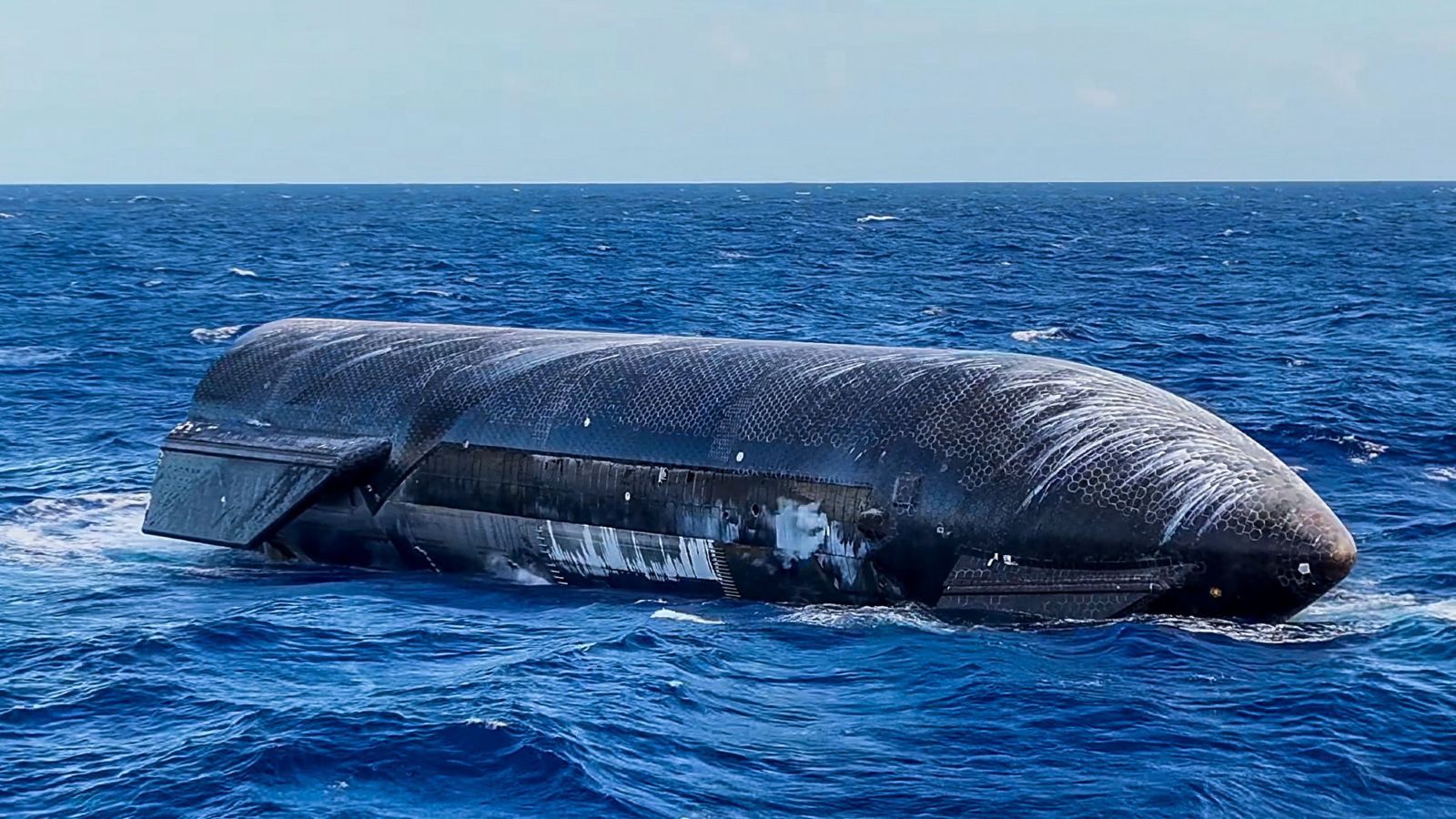
SpaceX’s Starship upper stage remains afloat in the Indian Ocean five days after its successful Flight Test 13 on July 24, 2026. The vehicle executed an unprecedented, soft water landing after deploying next-generation Starlink satellites. SpaceX has dispatched a recovery team to retrieve the remarkably intact spacecraft for detailed engineering analysis.
SpaceX's latest flight test delivers an unexpected bonus as an intact Starship upper stage continues floating in the Indian Ocean days after re-entry.
Opening Paragraph
In an unprecedented milestone for commercial aerospace engineering, a SpaceX Starship upper stage remains remarkably intact and afloat in the Indian Ocean five days after completing its latest test mission. Launched on July 24, 2026, from Spacebase in Boca Chica, Texas, the 13th integrated flight test of the world's most powerful megarocket pushed engineering boundaries by successfully deploying 20 next-generation Starlink Version 3 satellites into suborbital trajectories. According to official flight updates and media disclosures released by SpaceX, the spacecraft executed the softest controlled splashdown in the program's history, remaining upright and seaworthy off the coast of Western Australia.
Technical Performance and Flight Test 13 Milestones
The successful outcome of Flight Test 13 marks a radical departure from earlier developmental launches, which typically resulted in the fragmentation or immediate sinking of the vehicle upon impact. Official statements from SpaceX engineering leads highlighted several key operational achievements:
Intact Water Landing: The 171-foot stainless steel upper stage achieved a controlled, gentle touchdown on the ocean surface rather than breaking apart under high-velocity entry stresses.
Continuous Telemetry: For the first time during an ocean landing, the spacecraft continued transmitting real-time operational data and video footage while bobbing on ocean waves.
Thermal Protection Inspection: The prolonged survival of the vehicle gives recovery engineers a rare opportunity to inspect thousands of ceramic heat shield tiles that endured atmospheric temperatures exceeding 1,400 degrees Celsius.
Raptor Engine and Subsystem Data: Data gathered from in-flight relights and structural performance metrics will directly inform manufacturing refinements for upcoming orbital missions.
Recovery Operations and Fleet Implications
Following confirmation that the vehicle remained buoyant, SpaceX CEO Elon Musk announced that a dedicated recovery vessel has been dispatched to retrieve the spacecraft from the Indian Ocean. Transporting the hardware back to a testing facility will allow metallurgists and structural engineers to examine actual flight-tested hardware rather than relying solely on telemetry logs. For the aerospace industry and regulatory stakeholders, this development accelerates data collection for future reusable rocket designs, supporting long-term objectives for deep-space exploration and lunar cargo logistics under NASA-associated frameworks.
Why It Matters
For commercial spaceflight operators, satellite internet consumers, and aerospace investors, the unexpected longevity of a splashed-down Starship signals rapid maturation in reusable rocketry. Transitioning toward fully intact vehicle recovery significantly reduces prototype testing cycles, lowers launch costs, and brings heavy-lift cargo transport to the Moon and Mars closer to commercial reality.
Key Facts at a Glance
Vehicle & Mission: Starship Version 3 (V3) upper stage during Flight Test 13.
Launch Date: July 24, 2026, from Starbase, Texas.
Current Status: Floating intact in the Indian Ocean more than five days post-splashdown.
Primary Objective: Deployed next-gen Starlink satellites and validated extreme re-entry durability.
FAQ Section
Why is the SpaceX Starship still floating in the ocean?
The Starship upper stage executed the softest splashdown in the program's history on July 24, 2026, remaining structurally intact, airtight, and buoyant rather than breaking apart upon water impact.
What mission did Starship perform before landing?
During Flight Test 13, the megarocket launched from Texas and successfully deployed 20 next-generation Starlink Version 3 satellites on a suborbital trajectory.
What are SpaceX's next steps regarding the floating spacecraft?
SpaceX has dispatched a recovery vessel to hoist the vehicle from the Indian Ocean so engineers can inspect its heat shield and structural integrity.
Where can official mission photos and flight updates be viewed?
Official photographs, including the Space Photo of the Day updates, are available via Space.com and SpaceX Official X Feed.
Source: Space.com, Astronomy Magazine, SpaceX Official X Feed