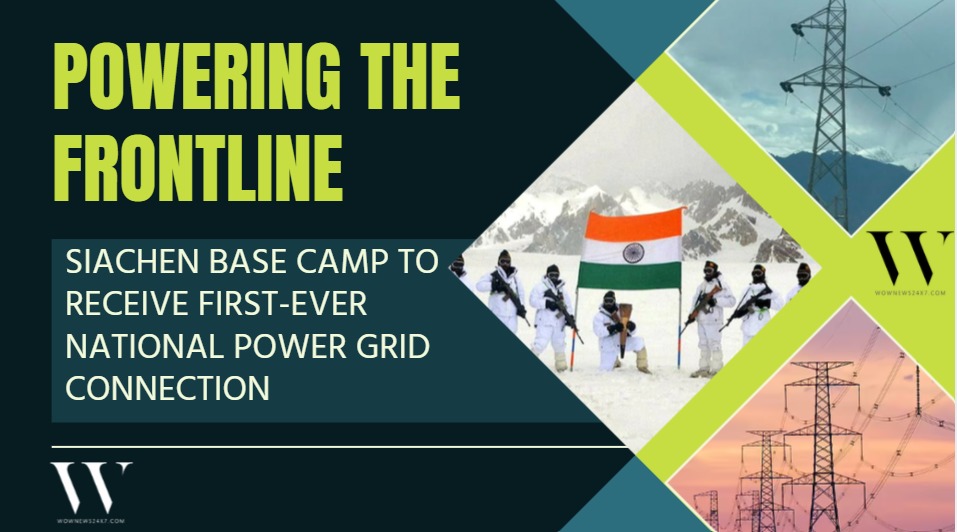
India is set to integrate the Siachen Base Camp into the national power grid by September 2026. This infrastructure milestone, led by the Power Grid Corporation of India, replaces reliance on diesel generators, enhancing the operational sustainability and logistics efficiency of troops in the challenging Eastern Karakoram region.
In a strategic infrastructure milestone, the Siachen Base Camp will receive a reliable power grid connection by September 2026 to support high-altitude operations.
LEH — The Siachen Base Camp, the gateway to the world’s highest battlefield, is set to be integrated into the national power grid for the first time by September 2026. This significant infrastructure upgrade replaces the reliance on traditional diesel generators, marking a shift toward more sustainable and reliable energy solutions for troops stationed in the challenging terrain of the Eastern Karakoram range.
The project, overseen by the Ministry of Power and the Power Grid Corporation of India Limited (PGCIL), involves laying high-altitude transmission lines that navigate some of the most difficult geography in the Himalayas. The connection aims to ensure uninterrupted electricity for heating, medical facilities, and communication equipment at the base camp, which sits at an altitude of approximately 11,800 feet.
Strengthening Operational Readiness
The move to provide a grid-connected power supply is part of a broader government initiative to improve logistics and living conditions for personnel serving in extreme high-altitude areas. Previously, the Siachen Base Camp relied heavily on diesel fuel transported via road convoys—a logistically complex and weather-dependent process.
According to officials, the new grid connectivity will significantly reduce the carbon footprint of the base camp and alleviate the stress on the supply chain. By minimizing fuel reliance, the army can reallocate logistics resources to other critical operational requirements, thereby enhancing the overall efficiency of the military presence in the region.
Overcoming Engineering Challenges
Building a power grid in the Ladakh region presents unique engineering hurdles, ranging from sub-zero temperatures and high-speed winds to the fragile Himalayan ecology. The project has involved the installation of specialized high-tension pylons designed to withstand heavy snow loads and seismic activity common in the Karakoram zone.
The implementation team, working alongside the Border Roads Organization (BRO), has navigated these environmental constraints by utilizing advanced materials and construction techniques. The PGCIL has confirmed that the final phase of stringing the high-voltage conductors is nearing completion, keeping the project on track for its September 2026 deadline.
Official Sources
The development was confirmed by government sources familiar with the defense infrastructure projects in Ladakh. The Ministry of Power has coordinated with military logistics planners to ensure that the power grid integration meets the specialized requirements of the Siachen Base Camp. Officials stated that the final testing of the transformers and distribution substations will take place throughout August to ensure stability before the winter onset.
Why It Matters
This grid connection is a game-changer for the personnel stationed at the Siachen Base Camp. Beyond the immediate benefit of reliable power for critical equipment, it represents a commitment to modernizing the infrastructure of India’s most remote frontier. For the local population and regional authorities in Ladakh, the expansion of the power grid into this sector also holds potential for future connectivity upgrades in neighboring civilian outposts.
Key Facts at a Glance
Target Completion: The Siachen Base Camp grid connection is scheduled for completion by September 2026.
Infrastructure Shift: The project replaces the aging, high-cost diesel generator system with a permanent national grid link.
Strategic Importance: Reliable power enhances the operational capabilities of military units by securing energy for communications and life-support systems.
Logistical Relief: The reduction in diesel demand simplifies supply chain operations in the harsh, high-altitude environment of the Karakoram.
Frequently Asked Questions
Why is the Siachen power grid project significant?
It provides the Siachen Base Camp with its first-ever reliable, grid-connected power, reducing logistical reliance on diesel fuel and improving the facility's overall sustainability and efficiency.
How will the power reach such a remote location?
The project involves a complex network of high-altitude transmission lines constructed by the Power Grid Corporation of India to withstand the extreme weather conditions of the Karakoram range.
When will the project be completed?
Official reports indicate that the grid connection is expected to be fully operational by September 2026.
Does this affect the local civilian population in Ladakh?
While the primary focus is military infrastructure, the expansion of grid capabilities in the region sets the groundwork for further infrastructure development that could benefit civilian areas in the long term.
Source: Ministry of Power, Power Grid Corporation of India Limited (PGCIL), Press Information Bureau (PIB)