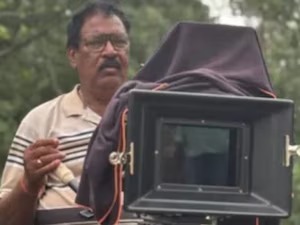
Veteran cinematographer Dillip Ray, aged 72, has passed away in Bhubaneswar after a brief illness. A five-time state award winner, Ray was a cornerstone of Odia and Bengali cinema, having lensed over 100 feature films and numerous documentaries throughout his distinguished four-decade career in the Indian film industry.
Renowned for his extensive contributions to Indian regional cinema, the award-winning cinematographer passed away in Bhubaneswar following a brief illness.
BHUBANESWAR — Veteran cinematographer Dillip Ray, a prominent figure in the Odia and Bengali film industries, died on Friday night at a private hospital in Bhubaneswar. He was 72. His death, confirmed by family members and industry associates, marks the end of a prolific four-decade career that helped define the visual aesthetic of regional Indian cinema.
Ray, who had been receiving treatment for a brief illness, is survived by his wife and three daughters. His passing has triggered an outpouring of tributes from the artistic community, with state leaders and industry peers mourning the loss of a technician who played a pivotal role in the evolution of Odisha’s film landscape.
A Legacy of Visual Storytelling
Born on July 27, 1954, in Cuttack, Ray’s passion for visual arts led him to the Film and Television Institute (FTI) in Bengaluru, where he earned a diploma in motion picture photography in 1982. This foundational training launched a career that would see him work on more than 80 Odia feature films, approximately 15 Bengali productions, and several Chhattisgarhi projects.
Throughout his career, Ray became known for his versatile lens work, contributing significantly to documentaries, television serials, and mainstream cinema. His notable Odia filmography includes critically acclaimed titles such as Tisandhya, Baje Bainsi Nache Ghungura, Chaka Bhaunri, Ei Ta Dunia, Mamata Ra Dora, Majhi Pahacha, and Bidhira Bidhana.
Accolades and Recognition
Ray was a five-time recipient of the Odisha State Film Award for Best Cinematography, a testament to his technical mastery and artistic vision. His ability to capture the nuance of rural and urban landscapes alike earned him respect among both established directors and younger filmmakers.
Beyond his work behind the camera, Ray was also a mentor to many, having dabbled in directing documentaries and television series for Doordarshan. His peers often described him as a dedicated craftsman whose work prioritized the integrity of the story above all else.
Official Tributes
Chief Minister Mohan Charan Majhi expressed his deep condolences, characterizing the veteran cinematographer's death as an "irreparable loss to the state's cultural and artistic fraternity." In a social media statement, the Chief Minister lauded Ray’s extraordinary artistic contributions, noting that his body of work would remain a lasting memory for generations of cinephiles.
"Organizers stated that the industry has lost a brilliant technician and a humble human being whose impact on regional cinema will be felt for years to come," said a representative for the local film association.
Why It Matters
For the Indian film industry, the loss of Ray highlights the passing of a generation of technicians who were instrumental in elevating regional cinema during the late 20th century. His work was pivotal in bridging the gap between traditional storytelling and modern cinematic techniques, particularly within the Ollywood industry.
Key Facts at a Glance
Career Span: Over four decades of work in cinema and television.
Filmography: Contributed to more than 80 Odia films, 15 Bengali films, and multiple Chhattisgarhi projects.
Awards: Five-time recipient of the Odisha State Film Award for Best Cinematography.
Education: Alumnus of the Film and Television Institute (FTI), Bengaluru.
Frequently Asked Questions
Who was Dillip Ray?
Dillip Ray was a renowned veteran cinematographer celebrated for his extensive work in Odia, Bengali, and Chhattisgarhi cinema.
What were some of his most notable films?
His notable works include Tisandhya, Baje Bainsi Nache Ghungura, Chaka Bhaunri, and Bidhira Bidhana.
How long was his career?
Ray’s career spanned more than 40 years, beginning shortly after his graduation from the Film and Television Institute in 1982.
Source: The Telegraph Online, The Sakala