India has officially become the top smartphone supplier to the United States, overtaking China and marking a transformative leap in its electronics manufacturing journey. Union Minister Ashwini Vaishnaw announced this milestone during a public address in Bengaluru, highlighting the country’...
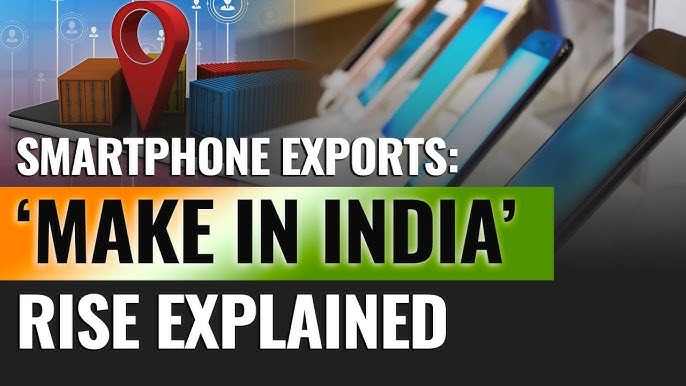
India has officially become the top smartphone supplier to the United States, overtaking China and marking a transformative leap in its electronics manufacturing journey. Union Minister Ashwini Vaishnaw announced this milestone during a public address in Bengaluru, highlighting the country’s rapid rise in production, exports, and global relevance. Once considered a fragile economy, India now stands as a bright spot in the global tech landscape.
Key highlights from Vaishnaw’s announcement
- India now leads as the number one smartphone supplier to the US
- Electronics manufacturing has grown sixfold in the last 11 years, reaching a value of Rs 12 lakh crore
- Electronic exports have surged eightfold, now valued at Rs 3 lakh crore
- India is the world’s second-largest mobile phone manufacturer
- Over 300 mobile manufacturing units are operational in India, compared to just 2 in 2014
- 99.2 percent of mobile phones sold in India are now made domestically
From import-dependent to export powerhouse
In 2014–15, only 26 percent of mobile phones sold in India were manufactured locally. The rest were imported, primarily from China. Fast forward to 2025, and the landscape has dramatically shifted. Today, nearly every mobile phone sold in India is made within its borders. This shift is not just a domestic achievement—it has global implications.
India’s export strength is now being felt in the US market, where it has surpassed China to become the leading supplier of smartphones. This change reflects a broader realignment in global supply chains, driven by geopolitical tensions, trade diversification, and India’s aggressive push for self-reliance.
Manufacturing boom and policy support
1. The Production Linked Incentive (PLI) scheme has played a pivotal role in attracting investments and boosting local manufacturing
2. Karnataka’s Devanahalli is emerging as a major iPhone production hub, hosting key players like Foxconn and Tata Electronics
3. The manufacturing value of mobile phones has skyrocketed from Rs 18,900 crore in FY14 to Rs 4,22,000 crore in FY24
4. India’s electronics sector is now a magnet for foreign direct investment, with over USD 4 billion received in the past five years
5. The government’s vision includes democratizing access to technology, with initiatives like the India AI Mission offering 34,000 GPUs at less than USD 1 per hour
Global implications and strategic positioning
India’s rise as a smartphone supplier to the US is not just a trade statistic—it’s a strategic shift. With China facing increasing tariffs and scrutiny, global tech giants are looking for alternative manufacturing bases. India’s scale, skilled workforce, and policy incentives make it a compelling choice.
This shift also strengthens India’s position in global trade negotiations and enhances its leverage in shaping future tech standards. The country’s ability to produce high-quality smartphones at scale is a testament to its evolving industrial capabilities.
Challenges ahead
- Sustaining this growth will require continued investment in infrastructure, logistics, and component manufacturing
- India must also address skill gaps and ensure consistent quality standards to maintain global competitiveness
- The electronics ecosystem needs deeper integration across states to support end-to-end production and innovation
Looking forward
India’s transformation from a fragile economy to a global tech supplier is one of the most compelling economic stories of the decade. With continued government support, strategic investments, and a focus on innovation, India is poised to not only lead in smartphones but also expand into semiconductors, wearables, and AI hardware.
As Vaishnaw emphasized, this is just the beginning. India’s ambition is to become a global hub for technology production—one that is inclusive, resilient, and future-ready.
Sources: Times of India, News18, The Hindu BusinessLine, Mint, NewsBytes, ANI, Ministry of Electronics and IT, MSN India