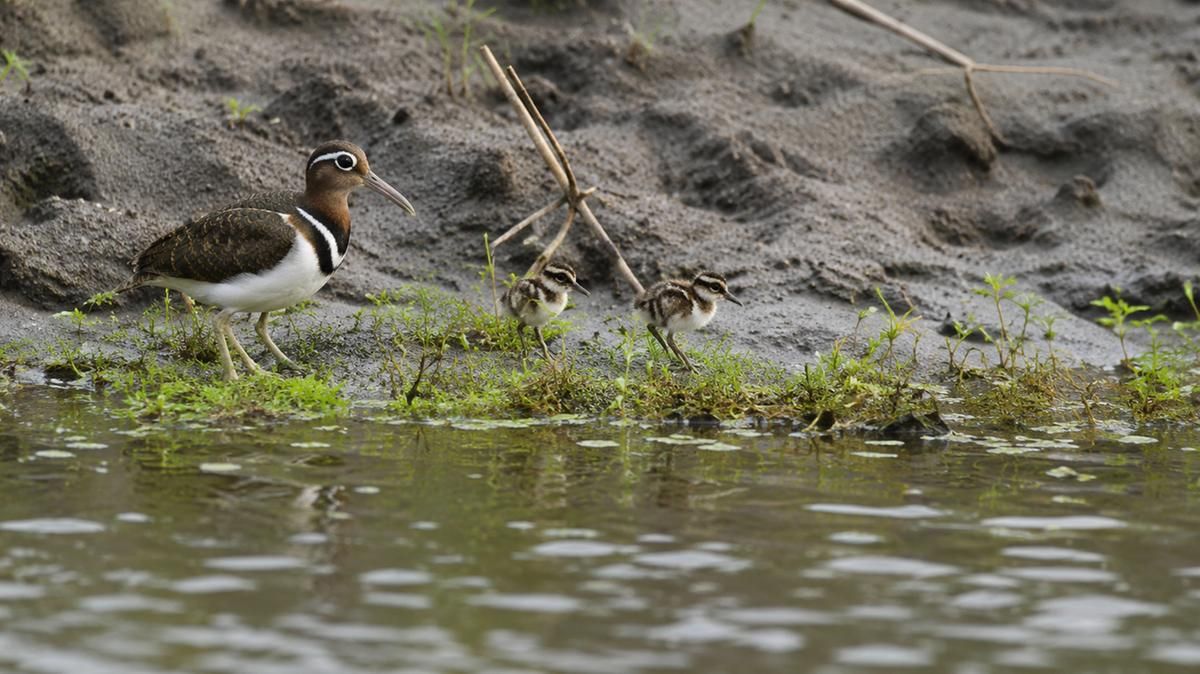
A rare Greater Painted-Snipe has been documented with two chicks at Jim Corbett National Park, providing a significant boost to avian conservation records. The sighting underscores the success of the park's wetland management initiatives, as researchers continue to monitor the family under protected, disturbance-free conditions within the reserve.
Wildlife enthusiasts and researchers have captured rare footage of a Greater Painted-Snipe family at Jim Corbett, confirming a successful nesting.
RAMNAGAR — In a significant boost for regional biodiversity, a rare Greater Painted-Snipe (Rostratula benghalensis) has been sighted with two chicks at the Jim Corbett National Park in Uttarakhand. The observation, confirmed by park officials on Thursday, July 9, 2026, marks a noteworthy record for the reserve, as these elusive, wetland-dependent birds are seldom documented breeding within the park’s primary sanctuary zones.
The sighting was made by a team of field researchers and local forest rangers during a routine hydrological survey near the Ramganga reservoir. The Greater Painted-Snipe, known for its cryptic plumage and nocturnal habits, is a species that typically occupies marshy habitats, making the successful nesting of the parent with two chicks a vital indicator of the health of Corbett's riparian ecosystems.
A Rare Insight into Nesting Behavior
The Greater Painted-Snipe is biologically distinctive due to its role-reversal nesting behavior. Unlike most avian species, the female is more brightly colored, and it is the male that primarily handles the responsibilities of incubation and chick-rearing. Wildlife biologists state that capturing photographic evidence of a male snipe with two foraging chicks is an invaluable addition to the scientific record of the species’ reproductive cycle in the Himalayan foothills.
Corbett officials noted that the presence of these birds suggests that the park's wetland management and water body restoration initiatives are successfully providing the necessary sanctuary for ground-nesting waterbirds. The birds were spotted in an undisturbed, low-lying grassland area that remains shielded from high-traffic tourist routes, a factor that experts believe was critical for the survival of the chicks.
Ecological Significance of the Sighting
The Greater Painted-Snipe is considered a "secretive" species that thrives in areas with shallow water and dense reed beds. Their presence is often regarded by ornithologists as a barometer for wetland stability. As Jim Corbett continues to face the challenges of invasive plant species and fluctuating water levels in the Ramganga river, the successful breeding of this species provides empirical data on the park's capacity to maintain specialized micro-habitats.
"According to officials, the Corbett administration has prioritized the preservation of these seasonal wetlands, as they are crucial for both resident waterbirds and migratory species during the monsoon recharge period," a park spokesperson said. The forest department has implemented temporary movement restrictions in the immediate vicinity of the nesting site to ensure the family remains undisturbed.
Why It Matters
This sighting is more than just a win for local birdwatchers; it highlights the critical need to preserve diverse wetland environments. The Greater Painted-Snipe relies on specific environmental conditions that are increasingly under threat from habitat encroachment and climate-driven hydrological changes. For researchers, this nesting event serves as a high-value data point for creating broader, landscape-level conservation strategies for wetland birds in northern India.
Key Facts at a Glance
Rare Sighting: Greater Painted-Snipe spotted with two chicks in the Jim Corbett National Park.
Distinctive Behavior: The species is known for role-reversal, with males performing the majority of incubation and rearing.
Habitat Indicator: The birds serve as a biological indicator for the quality and health of freshwater marshland ecosystems.
Conservation Action: Park authorities have cordoned off the area to provide the species with a disturbance-free nesting environment.
FAQ
Why is the Greater Painted-Snipe considered rare?
It is a secretive, primarily nocturnal bird with camouflage that makes it difficult to spot. Additionally, its reliance on specific marshy habitats often makes it sensitive to environmental disruption.
How does the Greater Painted-Snipe differ from other birds?
The species exhibits role-reversal; the female is often more vividly colored, while the male takes the lead in nesting, incubating eggs, and caring for the chicks.
Is the nesting site accessible to tourists?
No, park authorities have restricted access to the identified nesting zone to ensure the safety and survival of the chicks.
Source: Jim Corbett National Park, Wildlife Institute of India, The Hindu, BirdLife International