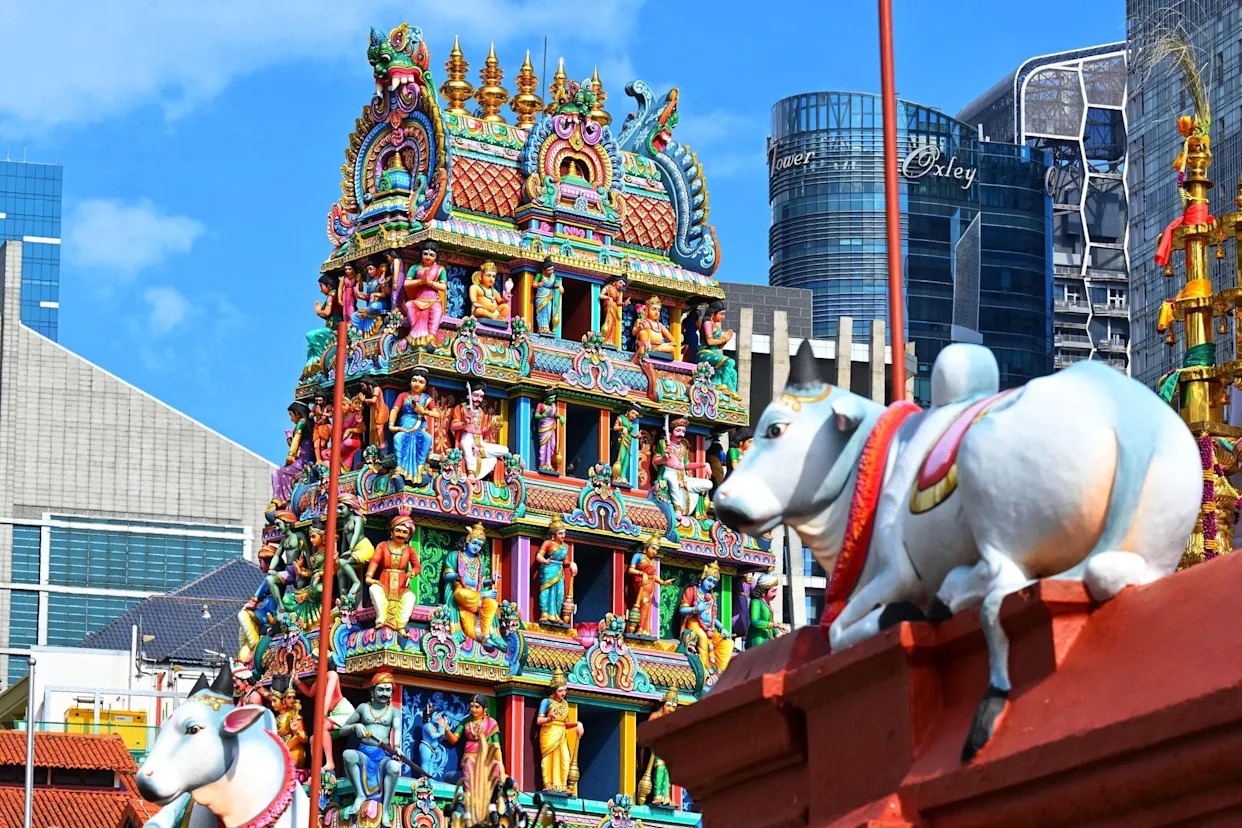
Singapore's oldest Hindu house of worship, the Sri Mariamman Temple, will mark its 200th anniversary with a year-long celebration in 2027. The "SMT 200" initiative features a silver chariot procession, multi-site historical exhibitions, a bilingual heritage book, and a public archive drive for community artifacts starting in July 2026.
SINGAPORE — The Sri Mariamman Temple, Singapore’s oldest Hindu temple, has officially announced a year-long series of public commemorations scheduled throughout 2027 to mark its 200th anniversary. The major cultural milestone, organized under the central theme of the "SMT 200" initiative, was made public by temple administrators in an official statement on July 1, 2026. The planned events will honor two centuries of religious, architectural, and civic history that shaped the institution from its humble origins in 1827 into a modern national monument.
This development is highly important today as it highlights the historic endurance and multicultural integration of the South Asian diaspora within Southeast Asia. By transforming the bicentennial milestone into a decentralized public festival across the island nation, the temple administration and state heritage partners aim to foster interfaith awareness, preserve early migrant narratives, and offer residents an immersive look into Singapore’s shared colonial and modern identity.
Year-Long Bicentennial Calendar Unveiled for 2027
The SMT 200 initiative is designed as a year-long cultural framework, launching in January 2027 to coincide with the traditional four-day Tamil harvest festival of Pongal. According to the strategic event outline released by the temple board, the upcoming programs are structured to deepen spiritual engagement while encouraging multi-ethnic civic participation across local neighborhoods.
A marquee highlight of the religious calendar will be a grand silver chariot procession. The sacred procession will travel across various prominent Hindu temples throughout Singapore, tracing historical migrant paths. In addition to these spiritual ceremonies, the landmark anniversary will feature a broad public educational push, utilizing multi-site mobile exhibitions from February to December 2027 to display rare photographs, structural blueprints, and historic ceremonial treasures.
Collaborative Archival Drive and Public Heritage Projects
To anchor the historical authenticity of the multi-site exhibition, the temple has formed an official partnership with Tamil Murasu, Singapore's sole Tamil-language daily newspaper, to gain exclusive access to centuries of media photo archives. The traveling exhibitions will operate with a zero-cost entry barrier for the public, rotating through major civic spaces managed by the National Library Board (NLB), regional public libraries, and the Indian Heritage Centre. A static, dedicated master collection will also remain open to the public inside the temple grounds from April to June 2027.
Concurrently, a major bilingual heritage publication titled Amman's Home, People's Temple is scheduled for a late-2027 launch. Authored by a dedicated team of regional academics and professional historians, the print and digital volume will explore the sociological evolution of the temple alongside Singapore's growth from a British East India Company colonial port settlement into a sovereign global financial hub.
In preparation for this publication and the upcoming exhibitions, administrators launched an immediate public appeal on July 1, 2026, calling on families to donate or loan historical artifacts. Members of the public have until September 2026 to submit family wedding invitations connected to the temple, vintage festival keepsakes, and early generational photographs.
From Wood-and-Attap Refuge to National Monument
The history of the Sri Mariamman Temple is deeply intertwined with the foundational layout of modern Singapore. Established in 1827 by Naraina Pillai, a government clerk from Penang who originally accompanied Sir Stamford Raffles to the island in 1819, the institution began as a simple structure composed of wood and attap (palm thatch). Located at 244 South Bridge Road in the heart of Chinatown, the site was officially set aside in Lieutenant Philip Jackson's historic 1823 town plan.
Throughout the 19th and early 20th centuries, the temple functioned as far more than a house of worship. It served as a vital sanctuary for fresh South Indian immigrants, offering free shelter, medical assistance, and employment mediation. Furthermore, the temple operated as the de facto Registry of Marriages for Hindus during the colonial era, when only the temple's chief priest possessed the administrative authority to solemnize marriages under local personal laws. Recognizing this immense civic value, the Singapore government officially gazetted the temple as a National Monument on July 6, 1973.
Official Sources Section
The organizational schedules, commemorative timelines, and archive submission parameters detailed in this report are sourced directly from public press statements issued by the Sri Mariamman Temple Administration and the Hindu Endowments Board, a statutory board operating under the Ministry of Culture, Community and Youth. Historical architectural milestones, colonial urban planning records, and monument designation parameters are cross-verified using the official cultural registry databases maintained by the National Heritage Board (NHB) of Singapore.
Quote Section
In the official bicentennial prospectus distributed to media outlets and community organizations, representatives for the Sri Mariamman Temple management detailed the vision behind the SMT 200 campaign:
"The SMT 200 initiative honors the generations of devotees, volunteers, and community leaders who shaped the Sri Mariamman Temple into a living institution that has accompanied Singapore's growth from a colonial port settlement into a modern multicultural nation. Through these year-long programs, exhibitions, and historical preservation efforts, we aim to ensure that our rich two-century legacy remains accessible, vibrant, and deeply connected to the broader fabric of Singaporean society."
Why It Matters
For citizens, local history enthusiasts, and international travelers, the upcoming bicentennial provides an unprecedented educational window into the cross-cultural dynamics of early Southeast Asian societies. Practically, the open call for ancestral artifacts helps prevent the loss of fragile immigrant history, transforming private family memories into a formalized digital archive. For local businesses and the regional tourism sector within the Chinatown district, the sustained influx of visitors throughout the year-long festival is expected to drive substantial commercial footprint gains.
Key Facts at a Glance
Bicentennial Timeline: The official "SMT 200" celebration will run throughout the entire calendar year of 2027, marking two centuries since the temple's 1827 founding.
Marquee Events: Highlights include a nationwide silver chariot procession and a year-long, multi-site public exhibition displaying rare historical artifacts.
Public Call to Action: The temple has opened a public submission window from July to September 2026, inviting community members to loan or donate vintage photographs and wedding memorabilia.
Literary Launch: A bilingual academic heritage book titled Amman's Home, People's Temple will debut in the final quarter of 2027.
Protected Status: Originally built as a thatched wood shelter by Naraina Pillai, the Dravidian-style structure has been protected as a Singapore National Monument since 1973.
FAQ Section
Q1: Where will the traveling bicentennial exhibitions be located?
A1: The free public exhibitions will rotate through the Indian Heritage Centre and several public and regional libraries across Singapore from February to December 2027. A central static exhibition will also be hosted on-site at the Sri Mariamman Temple from April to June 2027.
Q2: How can individuals submit historical items for the archive project?
A2: Members of the public can contact the temple administration directly between July and September 2026. The temple is looking to collect or borrow historical photographs, descriptions of evolving rituals, multi-generational family wedding invitations, and vintage festival objects.
Q3: What deity is the Sri Mariamman Temple dedicated to?
A3: The temple is dedicated to Goddess Mariamman, a South Indian mother goddess revered for her power to heal illnesses and grant protection against diseases. The small statue of the deity installed in the inner sanctum by founder Naraina Pillai in 1827 remains the original principal icon used today.
Q4: Is the temple open to non-Hindu visitors during the celebrations?
A4: Yes. As a gazetted National Monument and a major cultural pillar in the Chinatown heritage district, the temple routinely welcomes international travelers and local non-Hindu visitors. All traveling and static exhibitions scheduled for 2027 will be free and fully open to the general public.
Source: Sri Mariamman Temple Official Portal, Singapore Hindu Endowments Board, National Heritage Board Roots Database.