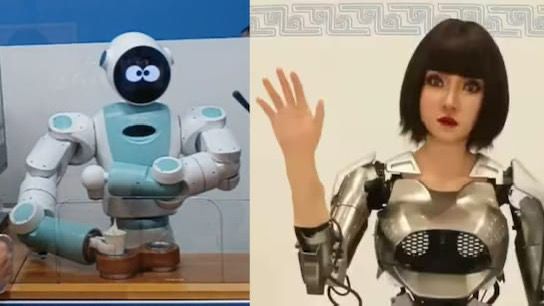
At the 2025 Shanghai Cooperation Organisation (SCO) Summit held in Tianjin, China, the merging of cutting-edge artificial intelligence with high-stakes geopolitics took center stage through an unexpected yet impactful ambassador: a humanoid AI robot named Xiao He. Designed to assist media personn...
At the 2025 Shanghai Cooperation Organisation (SCO) Summit held in Tianjin, China, the merging of cutting-edge artificial intelligence with high-stakes geopolitics took center stage through an unexpected yet impactful ambassador: a humanoid AI robot named Xiao He. Designed to assist media personnel and interact with delegates, Xiao He not only showcased China’s strides in AI technology but also symbolically conveyed China’s message of technological prowess and diplomatic engagement—particularly toward India, a key SCO member and regional rival.
Key Highlights of Xiao He’s Role and Capabilities
Xiao He was stationed at the media center during the summit to provide multilingual support in Chinese, English, and Russian, answering delegates’ and journalists’ queries in real-time.
The robot demonstrated sophisticated functions including emotional recognition algorithms, adaptive learning modules, and an extensive knowledge base enabling protocol-compliant and culturally neutral interaction.
Beyond language support, Xiao He provided real-time information about summit schedules, venues, and event guidelines, ensuring smooth communication in the diplomatic milieu.
The robot’s presence reflected China's ambition to integrate AI into statecraft, emphasizing precision, reliability, and cultural fluency in international gatherings.
Media coverage captured instances where Xiao He adeptly handled complex questions, though it notably refrained from offering opinions on sensitive geopolitical matters such as India-China relations.
The summit was a high-profile event, attended by more than 20 world leaders including India’s Prime Minister Narendra Modi and China’s President Xi Jinping, with discussions focusing on security, trade, energy cooperation, and regional stability.
Alongside Xiao He, China also showcased advanced robotic systems like automated drone stations capable of sequential charging and deployment, robotic arms for electric vehicle charging, and immersive tech exhibitions highlighting cultural heritage.
Symbolism and Strategic Messaging to India
Deploying Xiao He at an event where India’s leadership was present was a subtle demonstration of China’s technological leap and readiness to lead in AI-driven diplomacy.
The robot’s impartial, neutral stance embodied the “Shanghai Spirit” of cooperation, tolerance, and dialogue that underpin SCO’s mission amid geopolitical rivalries.
By blending tradition and innovation, China aimed to send a message of peaceful progress and cutting-edge capabilities while reinforcing its image as a responsible global power.
The robot’s refusal to comment on India-China tensions reflected diplomatic decorum and underlines the complex balance China seeks to maintain between assertiveness and engagement.
Geopolitical Context and SCO’s Relevance
The 2025 SCO Summit marked the 25th meeting of heads of state from major Asian powers including China, India, Russia, Pakistan, Iran, and several Central Asian nations.
The summit focuses on collective security, anti-terrorism, economic cooperation, and sustainable development in a contested geopolitics marked by shifting alliances and border tensions.
India-China relations, particularly post-2020 border clashes, remain sensitive topics with efforts ongoing to deescalate tensions while exploring avenues for economic collaboration.
The use of AI technology at the summit reflects broader trends where diplomacy increasingly intersects with technology, cyber governance, and digital diplomacy norms.
Future Outlook: AI and Diplomacy
Xiao He’s debut illustrates how AI will feature increasingly in international forums, from translation and information assistance to complex scenario simulations supporting policymaking.
Sino-Indian interactions are likely to be shaped by such soft power displays alongside traditional statecraft and bilateral negotiations.
Continued technological showcases will serve as venues for states to project influence, build trust, and manage multi-layered diplomacy using transparency and innovation.
Human-machine collaboration at multilateral summits may become standard, augmenting communication, enhancing inclusivity across languages, and improving operational efficiency.
Conclusion
The introduction of humanoid robot Xiao He at the SCO Summit seamlessly combined China’s aspirations in AI technology with the nuanced demands of geopolitics. Serving as a cultural and technological ambassador, Xiao He symbolized China’s readiness to innovate in diplomacy and send calculated messages to key partners and rivals alike. As the summit unfolded, the interplay between AI and international relations underscored a new era where emerging technologies will redefine how nations interact, negotiate, and cooperate on the global stage.
Sources: Hindustan Times, Times of India, NDTV, India Today