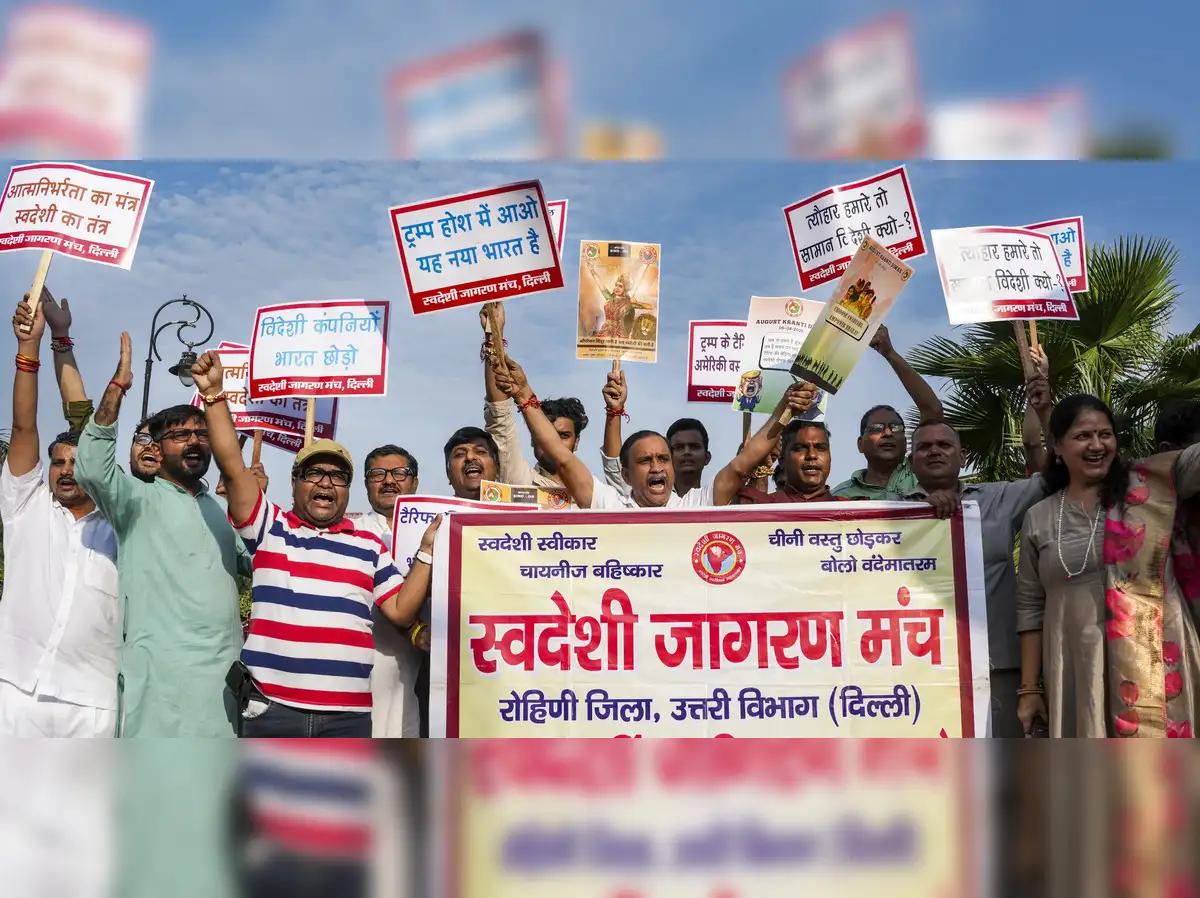
The Swadeshi Jagran Manch (SJM), affiliated with the RSS, organized a symbolic protest on August 10, 2025, in New Delhi, vocally condemning the recent US-imposed tariffs on Indian exports as illegal, unethical, and protectionist barriers undermining India's economic interests. This demonstrat...
The Swadeshi Jagran Manch (SJM), affiliated with the RSS, organized a symbolic protest on August 10, 2025, in New Delhi, vocally condemning the recent US-imposed tariffs on Indian exports as illegal, unethical, and protectionist barriers undermining India's economic interests. This demonstration, part of the ongoing 'Swadeshi, Suraksha and Swavlamban' campaign, highlights growing trade tensions and the SJM’s push for strengthening indigenous industries and national self-reliance amidst challenging global trade dynamics.
Key Highlights: Protest Event and SJM’s Strong Stance
The protest was orchestrated by SJM volunteers, emphasizing opposition to what they call "unreasonable and illegal" tariffs imposed by the United States on Indian goods, which they argue harm Indian exporters and industries.
Ashwani Mahajan, SJM national co-convenor, outlined the protest’s core message, linking the tariffs to rising global protectionism that weaponizes trade barriers and disrupts global value chains, especially impeding developing economies like India.
The organization urged Indian citizens to embrace swadeshi products — indigenous goods — and participate actively in the campaign to encourage self-reliance, extending the government’s 'Make in India' and 'Atmanirbhar Bharat' visions.
SJM called upon the Indian government to curb excessive imports from China, secure favorable bilateral and multilateral trade agreements, and strictly regulate dominant e-commerce platforms accused of monopolistic, predatory pricing strategies that marginalize small traders.
Backdrop: Rising Protectionism and Trade Barriers
The US recently imposed tariffs up to 50% on a range of Indian products, citing measures to protect domestic industries, leading to retaliatory sentiment in India and heightened calls for economic nationalism.
Mahajan highlighted that as global currencies, payment protocols, and supply chains become global geopolitical tools, countries like the US increasingly resort to tariff and non-tariff barriers, disrupting market access for Indian manufacturers, exporters, and workers.
The protest mirrors wider concerns about unilateral trade measures harming developing nations’ growth prospects and challenges calls for reform in global trade frameworks to ensure fair and equitable treatment.
Campaign Goals: Economic Sovereignty and Digital Trade Regulation
The broader campaign aims to reduce dependency on foreign goods, promote indigenous industries, and protect local economy segments suffering from unfair competition.
A significant focus is on reigning in multinational e-commerce giants such as Amazon, Flipkart (owned by Walmart), and other Western digital platforms described by SJM as "21st-century East India Companies" undermining traditional retail and small traders through monopolistic practices.
SJM demands government policy interventions to regulate these entities, curb predatory pricing, and foster level playing fields for Indian businesses.
Symbolism and Wider Movement Impact
The protest is symbolic of an assertive stance to defend India's economic sovereignty amid growing international trade frictions.
It strengthens the narrative of swadeshi as not merely a consumer choice but a strategic imperative tied to national security, cultural identity, and economic dignity.
SJM’s call for citizen participation aims to build grassroots support for a more resilient Indian economy less vulnerable to foreign policy shifts in major economies.
Government and Public Responses
The movement echoes and supports Prime Minister Narendra Modi’s frequent exhortations for choosing Indian products and achieving economic self-reliance.
Officials within government and trade bodies face mounting pressure to respond diplomatically while developing strategies to shield Indian industries and promote exports under these challenging conditions.
Public sentiment, reflected in SJM’s activism, indicates a rising assertiveness to protect domestic industries while engaging with global markets cautiously.
Looking Ahead: Strategic and Policy Implications
The protest signals sustained resistance against protectionist trade measures perceived as unjust and a push for a more equitable global trade regime.
It foreshadows potential escalation in trade friction and a call for India to diversify trade partners, strengthen domestic manufacturing, and implement protective yet growth-supportive economic policies.
SJM’s activism may influence policy debates, contributing to shaping India’s trade negotiations and internal reforms in e-commerce and industrial policies.
In summary, the Swadeshi Jagran Manch’s symbolic protest against the US tariffs is a clarion call for trade fairness, economic self-reliance, and protection of indigenous industries. It encapsulates a growing movement striving to safeguard India’s economic sovereignty amid a turbulent global trade environment marked by protectionism and monopoly concerns.
Sources: The Economic Times, The New Indian Express