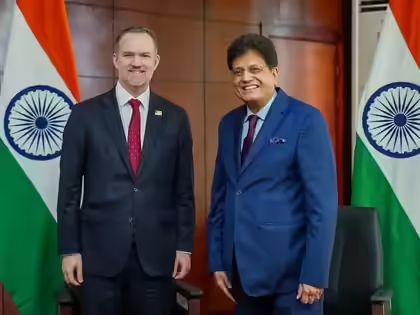
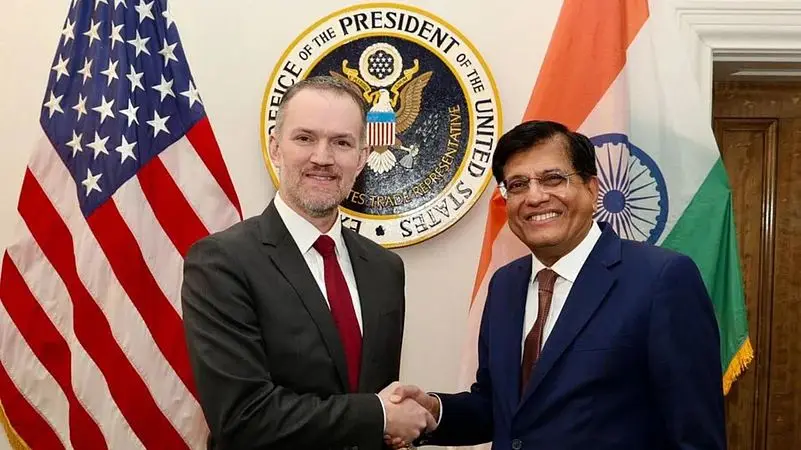
U.S. Trade Representative Jamieson Greer is visiting India on June 23–24 for crucial trade talks with Commerce Minister Piyush Goyal. The high-level meeting aims to finalize the first phase of an interim bilateral trade agreement while resolving complex U.S. Section 301 tariff investigations affecting bilateral manufacturing supply lines.
NEW DELHI — United States Trade Representative (USTR) Jamieson Greer is scheduled to land in the national capital today to begin a high-stakes, two-day diplomatic mission aimed at finalizing the initial tranche of a major bilateral trade agreement. According to comprehensive technical briefings delivered by Commerce Secretary Rajesh Agrawal, the cabinet-level American trade attorney will engage in intense ministerial negotiations with Union Commerce and Industry Minister Piyush Goyal on June 23 and 24, 2026.
This diplomatic push carries significant economic urgency as both global super-economies race to give final touches to an interim framework deal before an impending July 24 U.S. tariff deadline. The meetings come immediately following direct reviews between Prime Minister Narendra Modi and U.S. President Donald Trump on the sidelines of the G7 Summit in France, signaling a shared intent to reset supply-chain integration amid shifting transatlantic trade rules.
Finalizing the Contours of the Interim Trade Deal
The arrival of USTR Jamieson Greer marks the first instance of a cabinet-level American trade chief visiting India since structural negotiations for the Bilateral Trade Agreement (BTA) initially commenced in February last year. The high-level encounter follows sequential foundational rounds managed by Assistant USTR Brendan Lynch from June 1 to June 4, during which technical negotiators hammered out terms surrounding market access, non-tariff measures, and customs facilitation.
Under the broad parameters agreed upon during the initial February framework, New Delhi outlined intentions to reduce or eliminate tariffs on all U.S. industrial goods and a wide spectrum of agricultural products. These items include dried distillers' grains, tree nuts, red sorghum for livestock feed, and premium wines and spirits.
In exchange, India is seeking a concrete reciprocal concession: the reduction of base tariffs on Indian outbound shipments down to 18 percent. This mechanism would insulate Indian exporters from the uniform 10 percent flat tariffs currently face-lifted across standard non-treaty global trading partners by Washington.
Navigating the Pressures of Section 301 Investigations
A primary point of tension hanging over the New Delhi summit is the lingering shadow of legal investigations conducted by Washington under Section 301 of the U.S. Trade Act of 1974. In March, the USTR launched sweeping statutory probes into 60 nations over concerns regarding forced labor tracking and global industrial overcapacity.
Following those initial findings, the USTR proposed an additional 12.5 percent penal duty on 54 countries—including India—alleging systemic gaps in localized enforcement protocols. Public registries note that the submission deadline for counter-testimony closed on June 22, with formal judicial hearings slated in Washington for July 7.
Indian administrative officials maintain that securing a carved-out legal exemption from these upcoming penal tariffs remains a non-negotiable component of a balanced trade pact. New Delhi has already compiled comprehensive legal defense portfolios to demonstrate strict statutory compliance with global labor conventions, aiming to resolve the investigation within the holistic architecture of the final bilateral trade agreement.
Impact on Industry, Investors, and Consumers
For manufacturing enterprises, multi-national corporations, and institutional investors, the outcomes of the Greer-Goyal ministerial will dictate long-term supply chain planning. The U.S. stood as India's second-largest trading partner during the 2025-26 fiscal year, with Indian outbound shipments reaching 87.3 billion USD and imports rising 15.95 percent to 52.9 billion USD.
A stabilized trade deal ensures that high-volume sectors—specifically Indian pharmaceuticals, textiles, and information technology components—retain a comparative cost advantage over direct regional export competitors like Bangladesh and Sri Lanka. Conversely, Indian consumers can anticipate lower retail price points on imported premium American agricultural commodities, technology hardware, and specialized industrial tools.
Quote Section
"Our expectation is that discussions will be centred around giving final touches to the framework deal, which has been discussed during the visit of their delegation, and also on the larger BTA that has also been under discussions between the two sides," stated Commerce Secretary Rajesh Agrawal during a state press briefing. "According to officials, these are legal probes under Section 301. We have made our formal submissions and remain thoroughly engaged for further proceedings. When the final deal is executed, we will have clear answers on 301."
Why It Matters
The rapid finalization of this agreement holds profound practical implications for transpacific supply networks. If negotiations break down and the U.S. applies the proposed Section 301 penalties next month, Indian exporters could face a combined tariff wall that severely impacts profitability in crucial Western consumer markets. A successful resolution, however, provides legal certainty to commercial entities, lowering barriers to cross-border capital investment and allowing India to import roughly 500 billion USD of American energy, aerospace components, and coking coal over the next five years.
Key Facts at a Glance
High-Level Visit: U.S. Trade Representative Jamieson Greer will conduct official ministerial trade talks in New Delhi on June 23–24.
Interim Focus: The discussions seek to finalize the first phase of the India-US Bilateral Trade Agreement (BTA).
Tariff Reciprocity: India aims to secure preferential import tariffs of 18 percent to protect its manufacturing edge over neighboring export competitors.
Section 301 Dispute: Negotiators are working to resolve a proposed 12.5 percent U.S. duty stemming from Washington’s global forced labor and industrial overcapacity probes.
Energy Integration: The framework includes a long-term roadmap for India to buy 500 billion USD of American energy and technology assets over five years.
FAQ Section
Why is USTR Jamieson Greer visiting India at this specific time?
The visit is designed to iron out remaining open ends of the interim trade agreement following discussions between Prime Minister Modi and President Trump at the G7 Summit, ensuring lines are cleared before upcoming tariff deadlines in July.
What concessions is India offering to the United States under the proposed framework?
India has proposed eliminating or reducing existing tariffs on an array of U.S. industrial goods and agricultural imports, alongside an intention to acquire 500 billion USD in American aerospace, energy, and coking coal commodities.
How do the Section 301 investigations affect ordinary businesses?
Section 301 investigations give Washington the legal authority to impose additional tariffs or non-tariff barriers on imports. If unresolved, these measures could increase the cost of Indian goods entering the U.S. market, affecting corporate margins and consumer pricing.
Source: Ministerial briefing logs distributed by the Ministry of Commerce and Industry and foreign trade policy manifestos published by the Office of the United States Trade Representative.