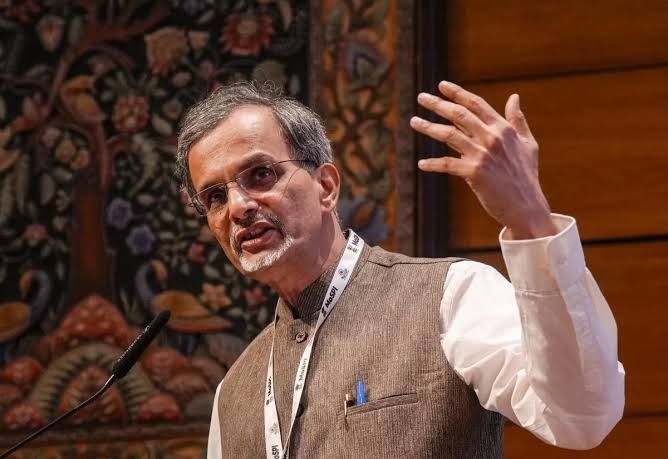
Chief Economic Advisor V Anantha Nageswaran cautioned that free public services carry hidden economic costs, arguing that below-cost utility pricing deters private capital and damages infrastructure. Speaking in Chennai, he emphasized that someone always pays—either taxpayers through hidden subsidies or public assets through decay—urging fair, honest pricing structures.
Warning that below-cost utility pricing drains balance sheets and deters long-term capital, Chief Economic Advisor V Anantha Nageswaran calls "free" the costliest word in policy.
Challenging prevailing political approaches to utility pricing and welfare distribution, Chief Economic Advisor (CEA) V Anantha Nageswaran declared that "free is the most expensive word in public policy." Addressing the CII Tamil Nadu Infrastructure Summit 2026 in Chennai on August 3, 2026, Nageswaran cautioned that infrastructure built on the promise of free or heavily subsidized services creates an unsustainable contradiction on national and state balance sheets. Explaining that essential resources priced at zero are systematically overconsumed and wasted, the senior government official emphasized that fair and honest utility pricing is essential to securing long-term economic growth and attracting patient capital.
The Economic Fallacy of Below-Cost Infrastructure
According to official policy breakdowns presented at the summit, underpricing core services like water and power distorts market incentives and undermines maintenance frameworks. Nageswaran noted that capital is inherently non-sentimental and will only flow toward projects capable of yielding predictable returns over a 20-to-30-year horizon.
Key structural concerns highlighted by the CEA include:
The Three-Way Burden: When utilities are provided below cost, the financial shortfall is inevitably absorbed in one of three ways: users pay a fair charge, taxpayers cover a hidden burden, or public assets decay through lack of maintenance.
Skewed Social Safety Nets: Providing free water often subsidizes comfortable households with existing piped connections, while vulnerable families without access are left to purchase water from private tankers at inflated rates.
Urban Sprawl and Flooding: Restricting vertical growth via low Floor Space Index (FSI) caps forces cities to spread horizontally, driving developers to build over historical water bodies and natural catchment areas.
Deterring Patient Capital: Durable infrastructure requires quality engineering, contract certainty, and pricing structures that cover true economic costs.
Impact on Citizens, Businesses, and Investors
For everyday citizens, the illusion of free public services frequently translates into compromised service quality, acute water shortages during summer months, and severe urban flooding during monsoons. For corporate investors and infrastructure developers, policy uncertainty and below-cost mandates discourage private participation, forcing state treasuries to shoulder heavy capital expenditure burdens alone. Nageswaran urged policymakers to embrace the courage of honest pricing, allowing governments to directly target financial support to the needy while letting utility providers generate adequate revenue for network expansion.
Why It Matters
Public utilities form the foundational bedrock of a modern economy. Relying on populist freebies without calculating long-term economic upkeep leads to resource depletion, deteriorating infrastructure, and fiscal strain, ultimately harming the very citizens safety nets are designed to protect.
Key Facts at a Glance
Core Statement: "Free is the most expensive word in public policy".
Speaking Venue: CII Tamil Nadu Infrastructure Summit 2026 in Chennai.
Key Speaker: V Anantha Nageswaran, Chief Economic Advisor, Government of India.
Core Problem: Below-cost pricing discourages private investment and causes asset decay.
FAQ Section
What did Chief Economic Advisor V Anantha Nageswaran mean by his statement on "free" public services?
He cautioned that services priced at zero or below cost carry hidden financial burdens, leading to resource waste, asset decay, or heavy taxpayer-funded subsidies.
How do free utility policies affect low-income households?
According to the CEA, free utilities often benefit households already connected to municipal grids, while un-serviced vulnerable populations pay high rates to private water tankers.
Why are private investors hesitant to fund below-cost infrastructure projects?
Investors require stable returns over 20 to 30 years, which is impossible when public services are priced below their actual economic cost.
Where can readers access official economic policy updates and announcements?
Complete financial reports and government releases are accessible via the Ministry of Finance Portal and the Press Information Bureau (PIB).
Source: Ministry of Finance, Press Information Bureau (PIB), The Times of India, Business Standard