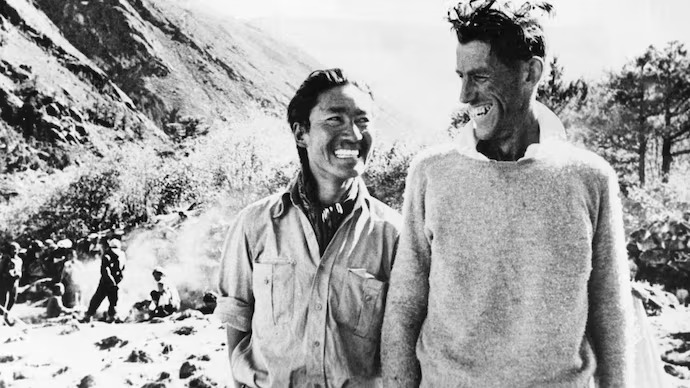
On this day, May 29, 1953, two men stood atop the world for the very first time. Edmund Hillary, a beekeeper from New Zealand, and Tenzing Norgay, a Sherpa from Nepal’s Khumbu Valley, etched their names into history by becoming the first confirmed humans to reach the summit of Mount Everest...
On this day, May 29, 1953, two men stood atop the world for the very first time. Edmund Hillary, a beekeeper from New Zealand, and Tenzing Norgay, a Sherpa from Nepal’s Khumbu Valley, etched their names into history by becoming the first confirmed humans to reach the summit of Mount Everest—the highest point on Earth. Their triumph was not only a feat of human endurance but a symbol of international cooperation, courage, and the indomitable spirit of adventure.
The Road to the Summit: A Global Quest
The 1953 British Mount Everest Expedition, led by Colonel John Hunt, was the ninth attempt to conquer the 8,848-meter (29,032-foot) peak. Nearly 400 climbers, porters, and guides assembled in Kathmandu in March, carrying the hopes of a world still recovering from war and yearning for inspiration. The team’s strategy was meticulous: establish a series of camps up the treacherous slopes, acclimatize, and launch successive summit bids.
The first summit attempt by Tom Bourdillon and Charles Evans on May 26 nearly succeeded—they reached the South Summit, just 100 meters below the top, but were forced to turn back due to exhaustion and oxygen failure. The torch was then passed to Hillary and Norgay, chosen for their resilience and complementary skills.
The Final Assault: Six Hours in the Death Zone
On May 28, after days of waiting for a break in the weather, Hillary and Norgay set out from their high camp at 27,900 feet with only a support trio to help them pitch their tent. The night was bitterly cold—Hillary famously spent two hours thawing his frozen boots over a stove before they could even begin their final ascent.
At 6:30 a.m. on May 29, they left Camp IX, burdened by 30-pound packs and dwindling oxygen. The climb was perilous: the infamous “Hillary Step,” a 40-foot vertical rock face at 28,800 feet, loomed as the last great obstacle. With Tenzing anchoring the rope, Hillary wedged himself into a crack between the rock and an ice cornice, painstakingly inching upward. After a tense, breathless struggle, he pulled himself over the top and hauled Tenzing up after him.
The Final Steps: Triumph on the Roof of the World
The last 250 feet to the summit were agonizing. Every step was a battle against exhaustion, thin air, and the numbing cold. The pair, roped together, encouraged each other onward—when one faltered, the other lent strength. At 11:30 a.m., Hillary stepped onto the small, snowy dome of Everest’s summit, soon joined by Norgay. They embraced, overwhelmed by relief and quiet joy.
For 15 minutes, they savored their victory. Hillary snapped photos of Norgay waving his ice axe, adorned with the flags of Britain, Nepal, India, and the United Nations. Norgay buried sweets as a Buddhist offering; Hillary left a small cross given by Colonel Hunt. The moment was both personal and universal—a tribute to faith, teamwork, and the human spirit.
Descent and Legacy
With only an hour’s supply of oxygen left, they began their descent, retracing their steps over snow now drifting and covering their tracks. They were greeted by their teammate George Lowe with hot soup—a small comfort after their ordeal.
News of their success reached London just in time for Queen Elizabeth II’s coronation on June 2, turning Hillary and Norgay into global celebrities. Hillary was knighted, Norgay received the George Medal, and both became lifelong symbols of perseverance and humility.
The Climb’s Enduring Impact
The 1953 ascent of Everest remains a defining moment in exploration. It was a triumph of international teamwork, meticulous planning, and sheer human will. The route pioneered by Hillary and Norgay is still the main path used by climbers today, though Everest has since claimed hundreds of lives and become a symbol of both adventure and environmental challenge.
For Hillary and Norgay, the summit was not about personal glory. As Norgay later said, “Our unity was much more important.” Their partnership—across cultures, backgrounds, and continents—showed that the world’s greatest challenges can be overcome together.
Today, as climbers from every nation dream of Everest’s summit, the legacy of Hillary and Norgay endures: a testament to courage, resilience, and the power of dreams.
Sources: India Today, National Geographic, BBC, Wikipedia, Discovery World Trekking