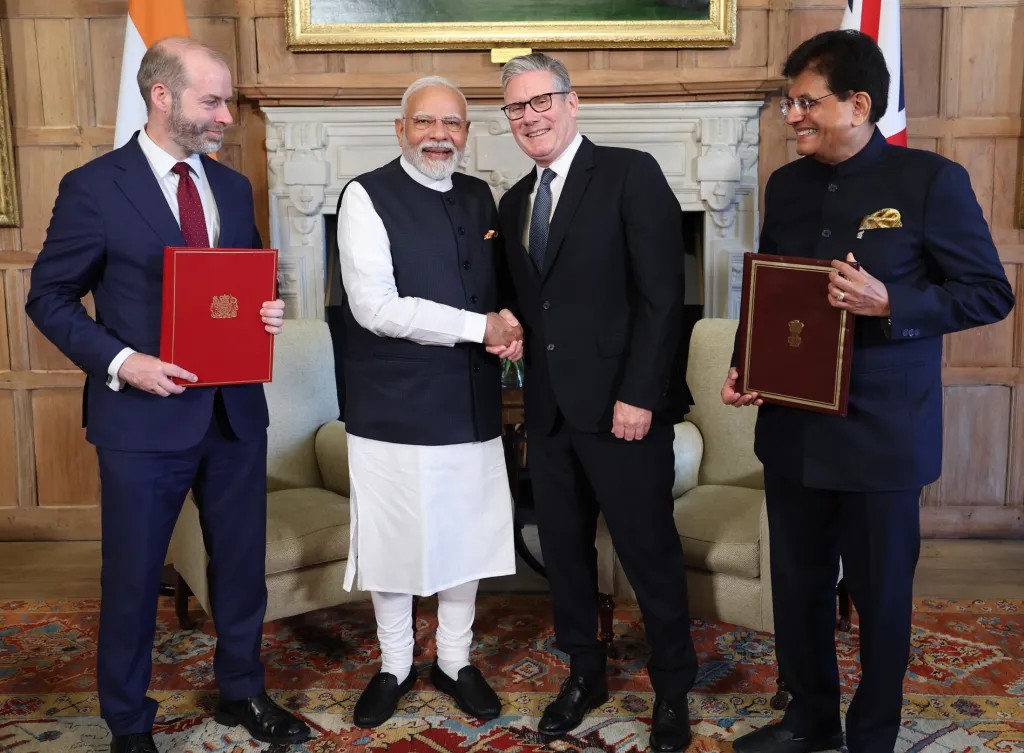
The $6.5 billion UK-India Free Trade Agreement will enter into force on July 15, 2026. The implementation timeline was finalized during bilateral discussions between Prime Ministers Keir Starmer and Narendra Modi at the G7 Summit in France, initiating sweeping tariff cuts across major manufacturing and service industries.
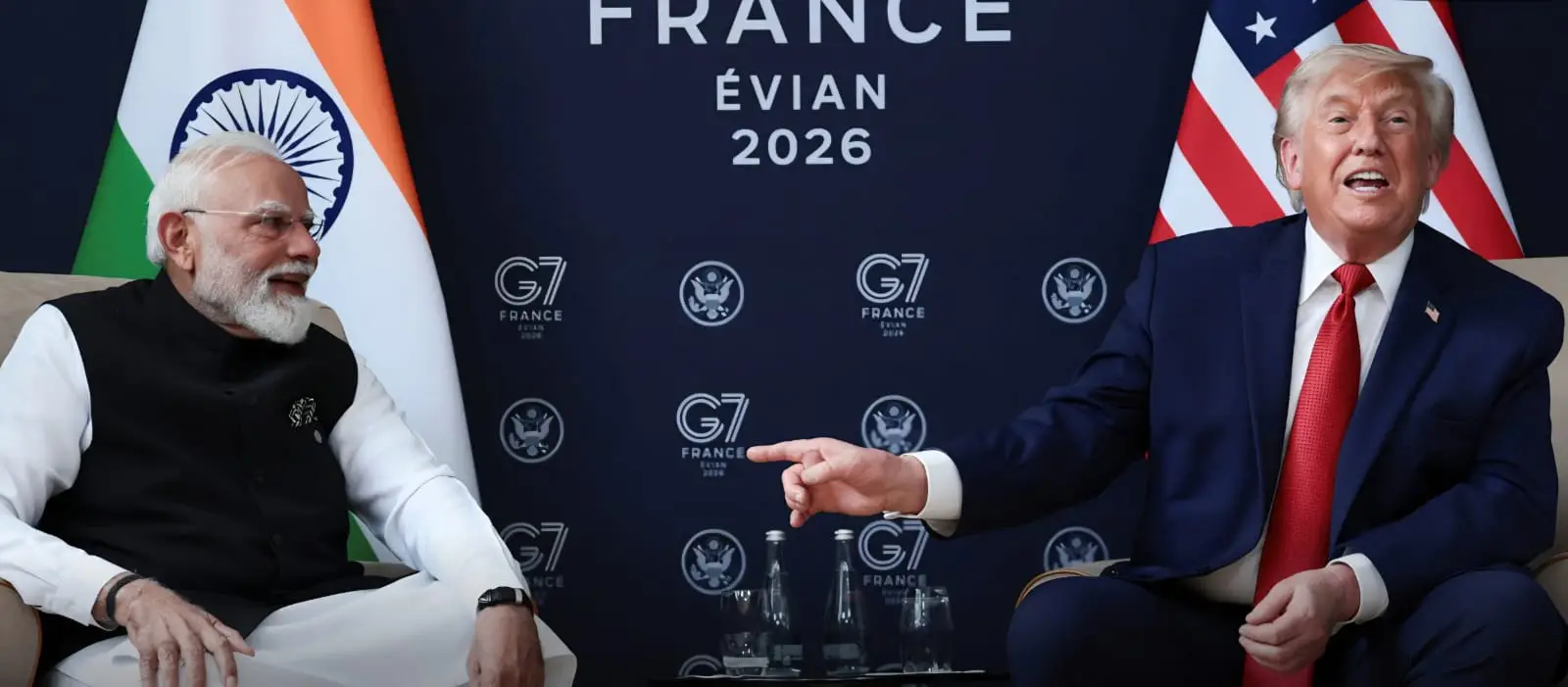
EVIAN-LES-BAINS, FRANCE — June 17, 2026 — The landmark free trade agreement between the United Kingdom and India will officially enter into force on July 15, 2026, following a decisive bilateral meeting between British Prime Minister Keir Starmer and Indian Prime Minister Narendra Modi. The final implementation timeline was cemented on Wednesday during high-level talks on the sidelines of the Group of Seven (G7) Summit in Evian-les-Bains, France.
Valued at an estimated $6.5 billion in immediate bilateral trade adjustments, the entry into force of the UK-India FTA marks the conclusion of years of complex diplomatic negotiations. The operationalization of this pact provides a significant stabilizing mechanism for international supply chains, altering tariff landscapes across crucial manufacturing, agricultural, and technological sectors at a time of broader global economic shifts.
Final Diplomatic Resolution at the G7 Summit
The definitive implementation date comes after intense technical deliberations between British and Indian commerce ministries to resolve final sticking points regarding intellectual property, temporary labor mobility, and digital trade rules. Prime Ministers Starmer and Modi utilized the diplomatic framework of the G7 outreach sessions to formally review and close out the legal text of the comprehensive economic partnership.
According to senior diplomatic officials briefed on the discussions, the meeting in France served to bridge remaining regulatory disparities, allowing both governments to finalize their respective domestic ratification processes. The implementation of the UK-India FTA marks the first comprehensive free trade agreement India has executed with a major G7 Western economy, signaling a deeper integration of supply chains between London and New Delhi.
The baseline framework of the $6.5 billion trade agreement institutes an immediate and phased reduction of import tariffs on thousands of commercial goods. For British exporters, the treaty significantly lowers the historic duties levied on automotive imports, machinery, premium Scotch whisky, and advanced medical equipment entering the Indian consumer market.
Conversely, Indian producers will gain unprecedented, zero-duty access to the British market for textiles, leather products, jewelry, and processed agricultural commodities. Furthermore, the UK-India FTA sets forth standardized operational procedures designed to eliminate non-tariff barriers, simplify customs clearance workflows, and minimize bureaucratic delays at critical maritime and aviation logistics hubs.
Impact on Services, Professionals, and Global Investors
Beyond physical commodities, the economic partnership drastically remodels bilateral trade in services, which forms the bedrock of both nations' modern GDP profiles. The agreement includes specific provisions to streamline the mutual recognition of professional qualifications across legal, accounting, and engineering fields.
For multinational corporations, digital enterprises, and financial institutional investors, the regulatory alignment offers clear corporate guardrails. Institutional investments are expected to rise as the treaty provides robust legal protections for cross-border capital allocations and intellectual property portfolios.
Additionally, simplified visa guidelines under the agreement will enable technology firms and corporate advisories to seamlessly transfer highly skilled professionals between tech corridors in Bengaluru and London to address immediate labor shortfalls.
Official Sources Section
The administrative timelines, transactional valuations, and geopolitical parameters governing the pact originate from joint bilateral statements issued by the Prime Minister's Office (PMO) India and the UK Department for Business and Trade. Statutory data points regarding tariff changes were cross-examined using corporate briefs provided by the Ministry of Commerce and Industry, India.
Quote Section
In an official joint briefing issued after the conclusion of the G7 sideline dialogue, government representatives emphasized the systemic economic transformation the treaty represents:
"According to officials, the formal implementation of the UK-India FTA on July 15, 2026, represents a historic milestone in bilateral relations, opening up fresh economic opportunities, cutting trade friction, and injecting an estimated $6.5 billion into shared trade channels."
Addressing the collaborative framework between the two heads of state during the G7 summit, organizers stated that:
"The direct engagement between Prime Minister Starmer and Prime Minister Modi ensured that all outstanding regulatory requirements were thoroughly aligned, guaranteeing a smooth and legally binding enforcement date next month."
Why It Matters
For everyday consumers, business logistics networks, and corporate boards, the practical implications of the UK-India FTA are widespread. British consumers will likely observe lower shelf prices for imported textiles and consumer goods, while Indian enterprises can scale up operations via cheaper access to high-end British engineering components, boosting competitive advantage across international manufacturing hubs.
Key Facts at a Glance
Enforcement Date: The trade agreement officially comes into effect on July 15, 2026.
Financial Scale: The pact is valued at an estimated $6.5 billion in incremental trade and investment volume.
Key Facilitators: Finalized by UK Prime Minister Keir Starmer and Indian Prime Minister Narendra Modi at the G7 Summit in France.
Primary Benefits: Drastic tariff reductions on automobiles, spirits, textiles, and advanced agricultural commodities.
Services Expansion: Introduces streamlined professional visa structures and mutual recognition of technical qualifications.
FAQ Section
When will the UK-India FTA officially go into effect?
The free trade agreement is scheduled to formally enter into force on July 15, 2026, as confirmed during the Starmer-Modi G7 summit meeting.
What is the estimated economic value of this trade agreement?
The immediate economic adjustments and trade flow expansions driven by the treaty are valued at approximately $6.5 billion.
Which specific sectors stand to gain the most from the tariff reductions?
Major beneficiaries include the automotive, Scotch whisky, pharmaceutical, and engineering sectors in the United Kingdom, alongside the textile, agriculture, and IT service sectors in India.
Does the trade agreement include provisions for labor and professional visas?
Yes, the UK-India FTA contains structured regulatory frameworks designed to simplify the cross-border movement of skilled professionals and recognize professional designations between the two countries.
Source: UK Department for Business and Trade Global Update, Ministry of Commerce and Industry, Government of India,