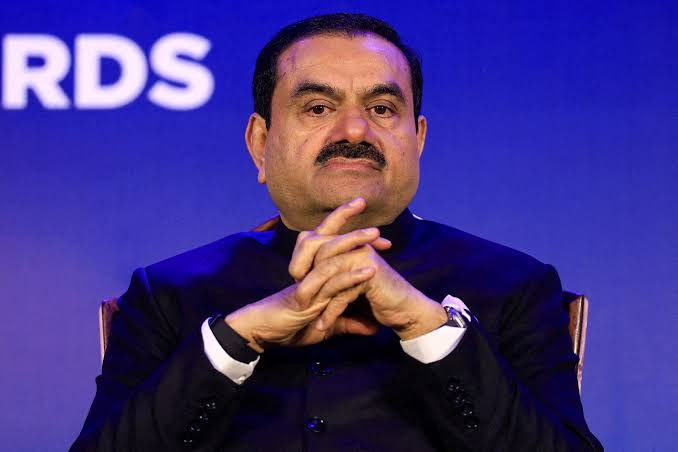
A United States federal judge has refused to immediately drop criminal fraud charges against Indian billionaire Gautam Adani. Judge Nicholas Garaufis blocked the U.S. Department of Justice’s request to dismiss the case, calling its reasoning "terse and bland." The court ordered prosecutors to provide comprehensive factual justification by July 13, 2026.
50-Word Summary:
A United States federal judge has refused to immediately drop criminal fraud charges against Indian billionaire Gautam Adani. Judge Nicholas Garaufis blocked the U.S. Department of Justice’s request to dismiss the case, calling its reasoning "terse and bland." The court ordered prosecutors to provide comprehensive factual justification by July 13, 2026.
US Court Refuses to Dismiss Gautam Adani Case, Orders DOJ to Provide Full Justification
Federal judge halts Donald Trump administration's bid to drop the high-profile criminal fraud indictment, questioning a "terse and bland" explanation.
NEW YORK — A United States federal court has thrown an unexpected roadblock into the high-profile legal saga involving Indian billionaire tycoon Gautam Adani. U.S. District Judge Nicholas G. Garaufis of the Eastern District of New York declined to immediately approve a request by the U.S. Department of Justice (DOJ) to drop all criminal charges against the Adani Group chairman and his co-defendants.
The judicial intervention pauses a sweeping effort by the Donald Trump administration to dismiss the wire and securities fraud case, which originally alleged a massive $250 million bribery scheme. Today's development holds immense significance for international financial markets, corporate compliance standards, and regulatory scrutiny surrounding one of Asia's wealthiest industrial empires.
Judge Blocks Immediate Case Dismissal
In an order issued from the Brooklyn federal courthouse, Judge Garaufis aggressively pushed back against the U.S. government's sudden shift in prosecutorial strategy. On May 18, senior DOJ officials filed a motion under Rule 48(a) of the Federal Rules of Criminal Procedure to dismiss the indictment with prejudice, stating briefly that the government had decided "not to devote further resources to these criminal charges."
Rejecting that rationale, Judge Garaufis characterized the government's explanation as unacceptably brief.
"The Government's terse, bland, and conclusory statement affords the court neither a sufficient basis to reach any conclusion, nor the opportunity to conduct any analysis of the Government's request for dismissal," Judge Garaufis stated in his order.
The court reminded prosecutors that Rule 48(a) functions as a legal "sunshine provision," intended to prevent federal agencies from acting behind closed doors without transparency. The judge ordered the DOJ to file a rigorous, point-by-point factual breakdown by July 13, 2026, detailing every underlying reason for abandoning the criminal prosecution.
Parallel SEC Settlement Bid Remains Stalled
The criminal freeze has directly impacted a parallel civil case overseen by the U.S. Securities and Exchange Commission (SEC). Prior to the DOJ’s dismissal attempt, the SEC proposed a structured civil settlement. Under the terms of the deal:
Gautam Adani agreed to pay a $6 million civil penalty.
Sagar Adani (his nephew) agreed to pay a $12 million civil penalty.
Neither individual would admit or deny the core regulatory allegations.
Both would face a permanent ban from serving as officers or directors of public companies violating specified U.S. securities laws.
Because the overarching criminal case cannot be unsealed or dropped without explicit judicial sign-off, final approval of this civil settlement bid remains completely stalled.
Background of the 2024 Indictment
The complex legal battle began in November 2024 during the final months of the Joe Biden administration. U.S. prosecutors indicted Gautam Adani, Sagar Adani, and Adani Green Energy executive Vneet Jaain, alleging they orchestrated a $250 million scheme to bribe Indian state electricity officials.
The prosecution claimed the defendants concealed these payouts from American investors while raising billions of dollars in capital through U.S. debt markets. Concurrently, Adani Enterprises Limited faced severe scrutiny, resulting in a separate $275 million settlement with the U.S. Department of the Treasury over alleged violations of Iranian oil sanctions.
Defense attorneys from Sullivan & Cromwell LLP have fiercely maintained that the U.S. has no jurisdiction over the matter. They argue that the transactions primarily occurred via foreign entities, no American investor suffered financial losses, and all underlying institutional bonds remain completely repaid or fully up-to-date.
Official Sources Section
Legal and procedural data within this report are compiled directly from public court dockets maintained by the United States District Court for the Eastern District of New York. Corporate responses and representations have been evaluated through official statutory filings processed via the U.S. Securities and Exchange Commission and official representations from the U.S. Attorney's Office for the Eastern District of New York.
Quote Section
"The Government has failed to meet its obligation to supply adequate reasoning and sufficient facts to support dismissal of the Indictment. And, without this additional information, the court cannot fulfill its own obligation to exercise sound judicial discretion."
— U.S. District Judge Nicholas G. Garaufis, in the official court order.
"The DOJ's decision reflects its careful consideration of the indictment's legal and factual weaknesses."
— Robert J. Giuffra Jr., defense counsel for Gautam Adani, in a letter to the court.
Why It Matters
For global investors and cross-border businesses, this decision underscores the independent nature of the U.S. federal judiciary. Even when an executive administration seeks to drop charges—reportedly following high-level diplomatic and economic investment proposals—the courts maintain strict oversight. This creates a temporary cloud of regulatory uncertainty for Adani Group's global capital-raising capabilities and emphasizes that cross-border enforcement remains bound to stringent transparency requirements.
Key Facts at a Glance
The Rejection: A federal judge refused to immediately dismiss the criminal fraud indictment against Gautam Adani.
The Critique: The judge labeled the Department of Justice's reasoning "terse, bland, and conclusory."
New Deadline: The DOJ must submit a comprehensive factual defense of its dismissal by July 13, 2026.
Settlement on Hold: An $18 million aggregate civil settlement with the SEC cannot move forward until the criminal case is resolved.
Defense Argument: Adani's legal team maintains the U.S. lacks jurisdiction over international transactions that resulted in zero investor losses.
FAQ Section
Q: Has Gautam Adani been cleared of charges in the United States? A: No. While the DOJ has expressed its intent to drop the criminal case, the charges remain legally active and pending until the presiding federal judge formally signs off on the dismissal.
Q: Why is the U.S. Department of Justice trying to drop the case? A: The DOJ cited its "prosecutorial discretion" and a decision not to dedicate further government resources to the prosecution. Defense attorneys state this followed months of presentations exposing legal and factual weaknesses in the original 2024 indictment.
Q: What happens if the DOJ misses the July 13, 2026 deadline? A: If the DOJ fails to provide sufficient factual backing by the deadline, the court can continue to withhold approval, keeping the indictment active and leaving the proposed SEC civil settlements in legal limbo.
Source: United States District Court for the Eastern District of New York, U.S. Securities and Exchange Commission