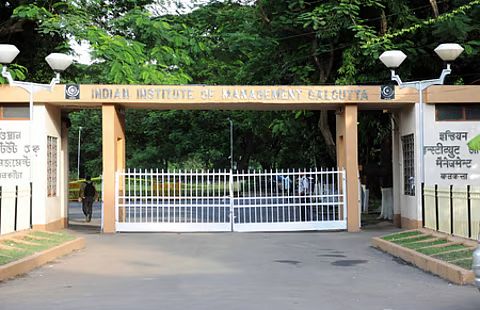
IIM Calcutta has launched a new policy allowing MBA students to forgo campus placements for one year to pursue startups, with the option to return for recruitment the following year if needed. Unveiled during the 63rd batch induction, the initiative removes career risks to foster early-stage entrepreneurship.
KOLKATA — India’s oldest elite management institute has executed a major structural shift in postgraduate business education. The Indian Institute of Management Calcutta (IIM Calcutta) has officially introduced a highly flexible deferred placement policy, permitting MBA students to entirely forgo immediate campus recruitment to build their own startup ventures without permanently losing access to institute-backed job placement channels.
Announcing the academic policy during the formal orientation ceremony of the newly inducted 63rd MBA batch, IIM Calcutta Director Alok Kumar Rai confirmed that the student-centric framework takes effect starting with the current academic year. Under this rule, a student can spend one full year working on an early-stage company; if the enterprise fails to secure market traction or the founder decides to shift professional directions, they can seamlessly re-enter the formal campus recruitment system with the following graduating batch. This protective intervention is exceptionally critical today as high educational loan liabilities frequently paralyze capable management graduates, forcing them into safe corporate careers and stifling the growth of high-potential domestic technology startups.
Technical Architecture of the Startup Deferral Program
The newly implemented guidelines systematically decouple an entrepreneur's immediate market risks from their long-term institutional career security.
According to program parameters detailed by the Indian Institute of Management Calcutta, the deferred selection track introduces a highly organized fallback option that previously did not exist for regular MBA cohorts. If a venture does not expand as planned within the initial 12-month window, the student retains full eligibility to interview alongside junior peers, effectively neutralizing the risk of long-term career disruption.
Welcoming a Diverse 63rd Batch Into Joka's Academic Ecosystem
The policy rollout coincided with the official welcoming of 480 elite postgraduate students, signaling a deliberate effort to blend diverse academic backgrounds with corporate experience.
Demographic Breakdown and Multi-Sector Collaborations
The institute's internal demographic logs highlight a highly competitive student cohort drawn across several geographic and academic lines.
According to enrollment data published by The Hindu, the structural matrix of the incoming 63rd batch reflects:
Gender Diversity Index: The cohort comprises 67% male students and 33% female students, balancing gender ratios within the classrooms.
Academic Distribution: Engineering graduates continue to represent the majority at 54.7%, followed by commerce (11.5%), science (10.27%), and arts backgrounds (10%).
The Experience Curve: Professional metrics show 41% of the class enters as freshers, while 59% possess deep prior corporate or technical work experience.
Industry Partnerships: To lower internal logistical stress, the institute signed a memorandum of understanding with corporate partners to deploy 200 shared bicycles across the sprawling Joka campus.
Boosting Local Business Incubators via Institutional Safety Nets
Regional venture funds and startup networks have strongly commended the deferred placement rule, viewing it as a significant catalyst for high-value job creation.
According to reporting by The Times of India, local business hubs emphasize that removing the fear of immediate financial distress will democratize entrepreneurship for students from humble economic background lines. Faculty members observed that many students hold exceptional business ideas but back away at checkout points due to the urgent necessity of paying off private educational credits. By providing an explicit safety valve, the institute aims to channel premium talent back into state-backed innovation cells.
Strategic Academic Integrity
The administration stated that modern business management schools must actively evolve past basic training systems to foster highly dynamic wealth creation.
"According to executive addresses preserved by the Ministry of Education, top-tier Indian management institutions must design frameworks that promote true self-reliance and active job creation. Providing student founders with structural placement protection matches national efforts to elevate the domestic digital service economy."
Director Alok Kumar Rai urged the incoming batch to approach their management terms with an open mind, stating that the curriculum serves as an extended opportunity to cultivate social responsibility and high-integrity leadership. The ceremony also featured addresses from industry veteran Ganesh Mohan, Managing Director of Bajaj Finserv Asset Management, and Pranav Adani, Managing Director of Adani Enterprises, who confirmed the continuation of full-fee merit scholarships for the institute's top performers.
Why It Matters
For ambitious MBA candidates and future startup founders, this policy shift removes the paralyzing choice between securing immediate corporate wealth and testing a disruptive business idea. It acts as an elite financial shield, letting student innovators comfortably commit their best ideas to the market during their peak creative years, knowing their multi-million rupee educational investment is completely protected by the school's placement ecosystem.
For global venture capital funds and the wider Indian startup landscape, this rule guarantees that top-tier intellectual talent from premier institutes like IIM Calcutta can enter the entrepreneurial market earlier. Instead of waiting decades for professionals to leave comfortable corporate chairs, investors can back polished, highly trained managers right out of the gate, rapidly accelerating the technical development of the country's next wave of unicorn enterprises.
Key Facts at a Glance
The Safety Net Policy: IIM Calcutta officially allows MBA students to opt out of campus recruitment for a year to build startups while retaining full placement access the next year.
Batch Onboarding: The policy coincided with the induction of the 63rd MBA batch, consisting of 480 highly competitive students from 22 states and two Union Territories.
Corporate Backing: The Adani Group extended its Accelerated Leadership Programme, providing comprehensive full-fee scholarships to six outstanding students annually.
Campus Mobility Upgrades: The institute executed a new green partnership to introduce 200 dedicated bicycles to improve student transit across the campus grounds.
Frequently Asked Questions (FAQ)
What happens if an IIM Calcutta student's startup fails within the deferral year?
If the venture does not succeed or the student founder chooses to pivot away from entrepreneurship, they can return to campus the following year and participate unconditionally in the final placement drive alongside the junior batch.
What is the exact demographic composition of the incoming 63rd MBA batch?
The batch comprises 480 students with a gender ratio of 67% male and 33% female. Academically, it is led by engineering grads at 54.7%, with 59% of the total class holding prior professional work experience.
Does the institute provide financial or infrastructural backing to these student founders?
Yes, the institute actively supports selected student-led ventures by providing workspace infrastructure, early incubation resources, and potential funding avenues through the IIM Calcutta Innovation Park.
Sources: